More findings won’t secure your product. Root-cause fixes will.
Fewer, validated findings, flaws that stop coming back, and releases that ship clean, whether you maintain a decade of code or deploy many times a day.
Niche software. Industry-sized stakes.
Vertical software companies run lean teams, but their products sit at the center of an entire industry. One platform can hold the payments, records, and pricing that thousands of businesses depend on. That’s the software we secure.
Figures as publicly reported by TrollEye customers, 2026.
Four places technology companies get exposed. Four outcomes we deliver.
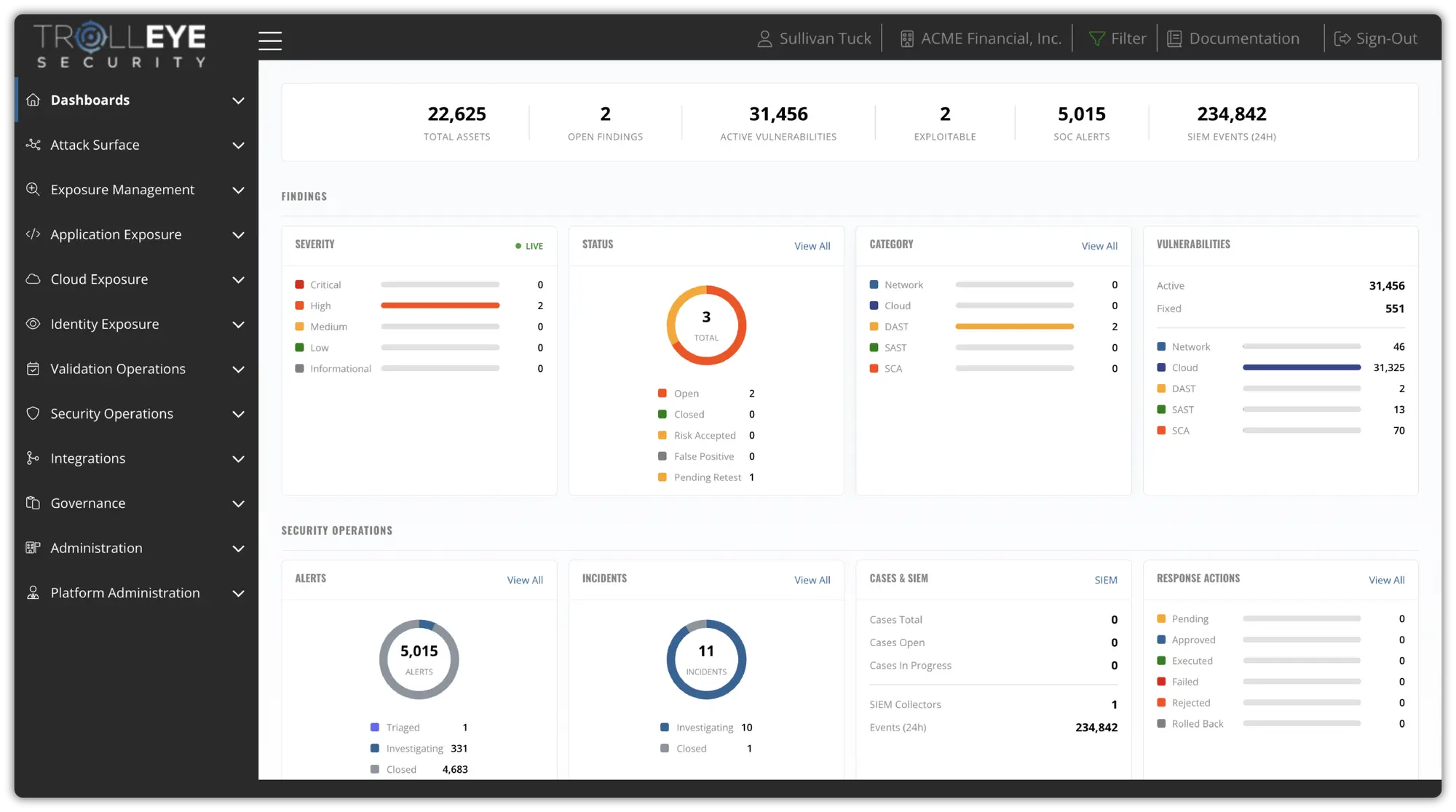
Each area runs through the TrollEye platform, from discovery and agentic and human testing to owners, deadlines, and retesting. Select an area to see where risk is going down.
Vulnerable code stops shipping
Vulnerable code and open-source components reach production because scanner output is too noisy to act on.
Testing keeps pace with releases
Code ships every day, but security feedback arrives weeks later, long after developers have moved on.
Releases ship with no known vulnerabilities
Customer-facing applications, APIs, and authentication change between annual tests, leaving new exposure untested for months.
The same flaw stops coming back
The same classes of flaws keep resurfacing, so the backlog refills faster than teams can clear it.
The evidence customers and auditors ask for. Kept current every release.
Customers, auditors, and procurement teams look for testing, validated findings, clear ownership, and proof that issues were fixed. TrollEye keeps that record in one place, release after release.
- SOC 2Type II
- ISO 27001Annex A
- PCI DSSv4.0
- HIPAASecurity Rule
- Customer ReviewsSecurity questionnaires
TrollEye provides testing evidence and remediation records that support these requirements. It doesn’t replace your compliance program or an auditor’s judgment.
- Testing history for every release
- Validated findings, not scanner noise
- Owners held to remediation SLAs
- Retest records that confirm closure
- Answers ready for customer security reviews
CTEM, built around how software teams ship.
Five stages that run continuously, not once a year.
Scoping
Start with what customers depend onDiscovery
Find every componentPrioritization
Rank by real impactValidation
Prove what’s exploitableMobilization
Fix it at the rootSee How TrollEye Secures Every Release
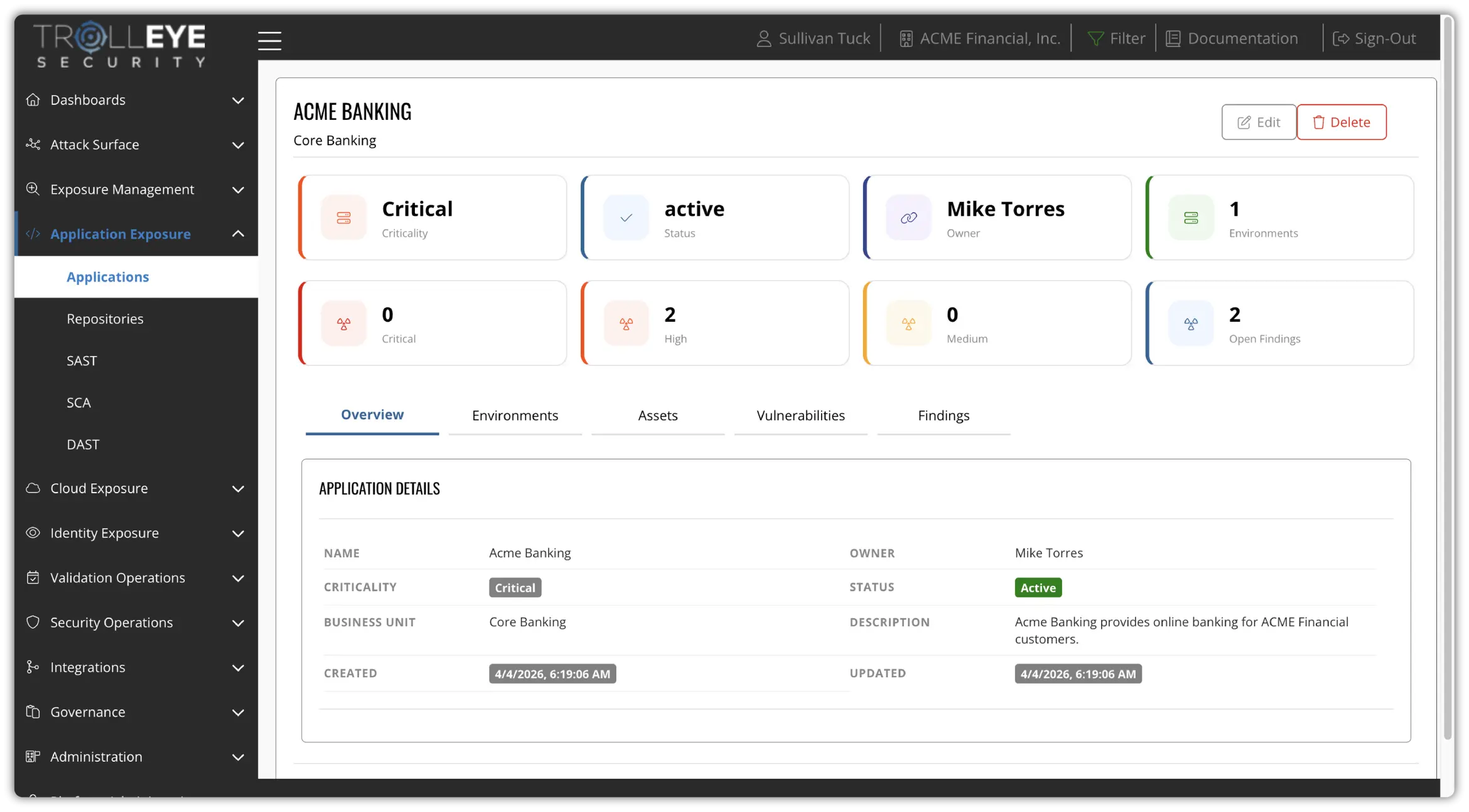
Choose a demo to see how DevSecOps, continuous testing, dependency scanning, and remediation work inside the TrollEye platform.
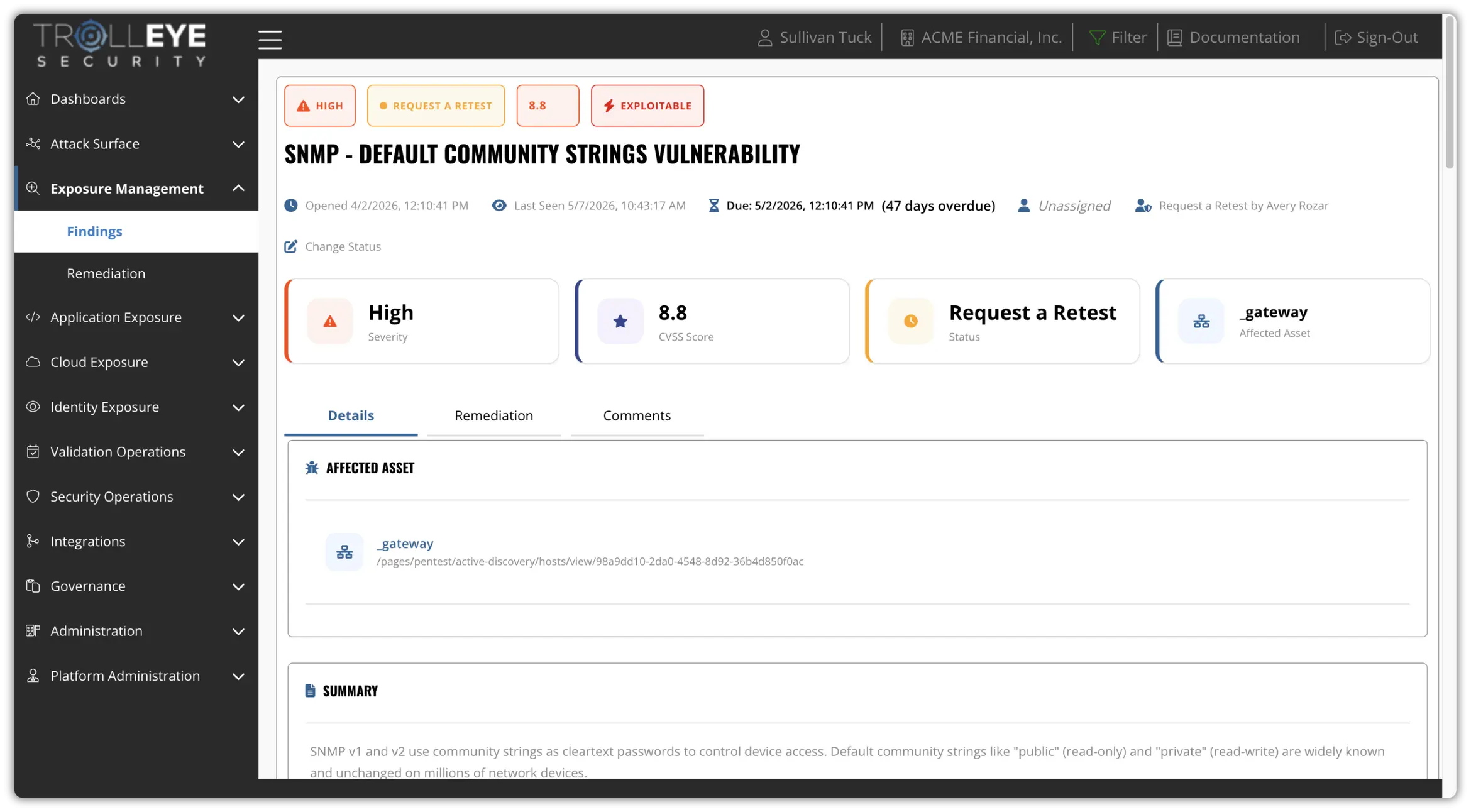
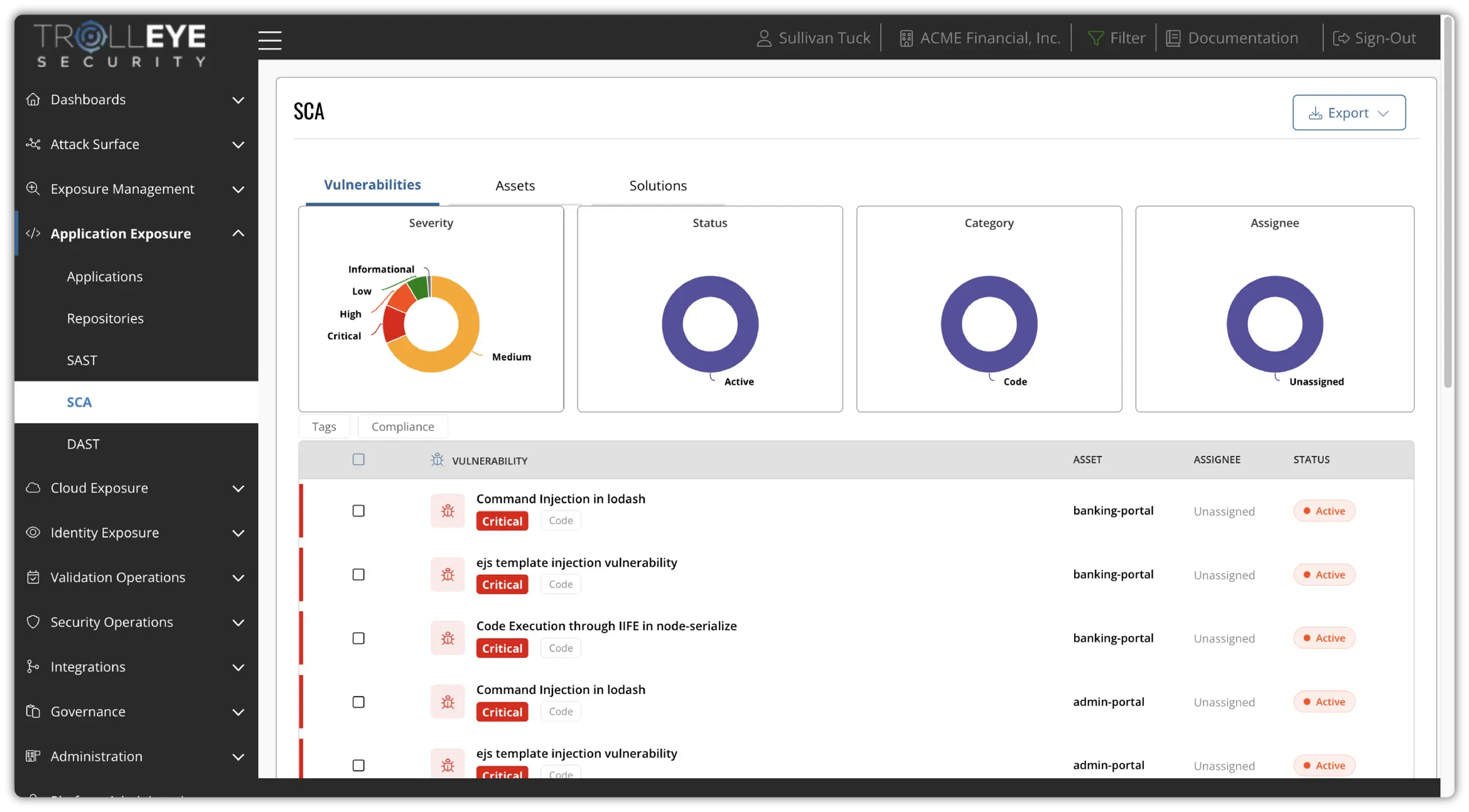
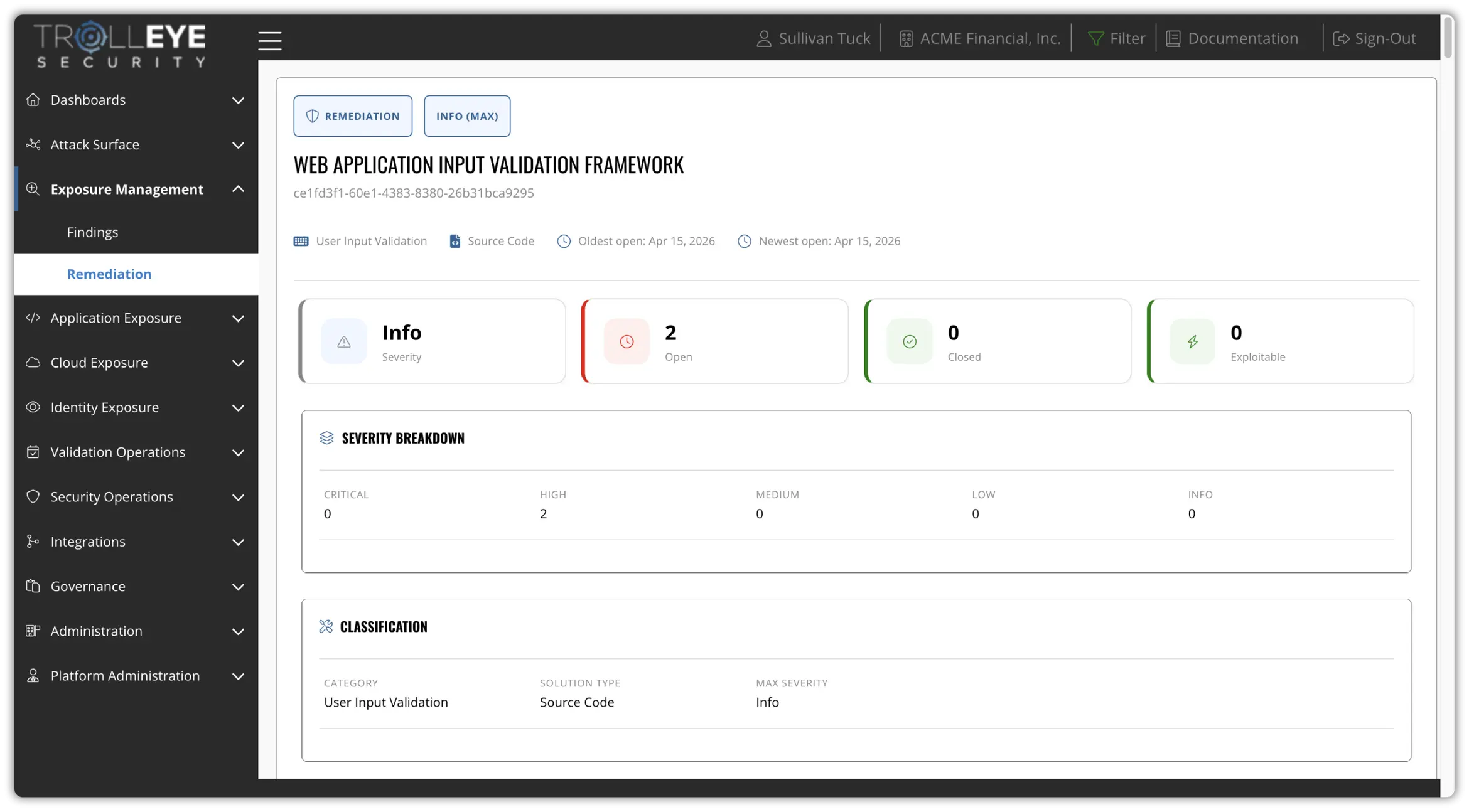
From recurring vulnerabilities to secure releases.
A software and financial technology company replaced point-in-time testing with a continuous DevSecOps program, and changed how security operated across four years of growth.
97.5% fewer vulnerabilities, sustained across four years.
- 90% of that reduction achieved in the first 12 months
- Zero critical vulnerabilities remaining
- Testing, validation, and root-cause remediation inside every release
“Our objective is to deploy products with no known vulnerabilities. By testing, finding, and fixing issues throughout the year, we’ve seen a huge reduction in the vulnerabilities identified during our annual penetration tests.”
Questions About Securing Technology Companies
A closer look at how TrollEye works for software companies: testing, release speed, customer security reviews, integrations, and how it all fits your CTEM program.
01How is this different from our annual penetration test?
An annual test shows your exposure on one day. Your product ships changes all year after it.
TrollEye delivers agentic and human testing on demand and continuously through PTaaS and DevSecOps, validates what is actually exploitable and reachable, routes fixes to developers, and retests before release.
02Will this slow down our developers?
No. Testing is built into the workflows your teams already use, so issues are caught close to the point of creation, when they are faster and less expensive to fix.
Fewer vague or duplicate tickets means less rework and fewer last-minute release delays.
03Does this help with SOC 2 and customer security reviews?
Yes. TrollEye gives you the evidence auditors and customers ask for: testing history, validated findings, ownership, remediation SLAs, and retest records, kept current every release.
Read more in How PTaaS Helps Organizations Maintain Continuous SOC 2 Compliance.
04What does TrollEye integrate with?
TrollEye connects to the repositories and pipelines you already run, including GitHub, GitLab, and Azure DevOps.
Validated findings sync to Jira, so work lands where developers already operate.
05Can our in-house team use the platform?
Yes. In-house security and red teams can use the TrollEye platform themselves, so their findings sit alongside ours with the same validation, ownership, SLAs, and retesting.
06How does this fit into a CTEM program?
TrollEye applies each CTEM stage to your organization: scoping the products, repositories, and pipelines that matter, discovering exposures as code changes, prioritizing by exploitability and product criticality, validating what is actually exploitable and reachable, and mobilizing developers to fix root causes.
Explore DevSecOps, continuous testing, dependency scanning, and remediation before starting your evaluation.
Make your next release the one with no known vulnerabilities.
See how TrollEye combines continuous testing, validation, and root-cause remediation guidance to shrink your backlog for good.