Validate Physical Security Controls with Physical Penetration Testing
Validate how easily unauthorized individuals can access your organization.
Most organizations assume badge systems, cameras, and front desk procedures are enough. But real attackers exploit human behavior, procedural gaps, and environmental weaknesses, not just locked doors.
Our physical penetration testing simulates real-world intrusion attempts to identify how someone could bypass controls, move laterally inside your facility, and access sensitive areas or infrastructure.
Real-World Intrusion Simulation
Controlled attempts to bypass perimeter defenses, badge access systems, surveillance, and on-site personnel using tactics adversaries actually employ.
Human-Focused Social Engineering Validation
Tests of tailgating, impersonation, and procedural manipulation to assess how staff response impacts overall physical security posture.
Security Hardening Guidance
Findings are prioritized based on exploitability and impact, with clear recommendations to strengthen access controls, policies, monitoring, and training.

Test Physical Security Controls Continuously as Your Environment Evolves
Physical security isn’t static. New employees are hired, contractors rotate, offices expand, and procedures shift. What worked six months ago may not hold up today.
Our physical penetration testing engagements simulate real-world adversaries attempting to bypass perimeter defenses, manipulate access controls, exploit human trust, and move laterally within your facility.
We assess not just whether controls exist, but whether they actually stop unauthorized access under realistic conditions.
Simulating Real Intrusion Attempts Against Your Facilities
We conduct controlled attempts to bypass perimeter defenses, badge systems, surveillance coverage, and on-site personnel using tactics adversaries actually employ. This includes tailgating, impersonation, lock bypass techniques, unsecured entry points, and access control weaknesses.
Rather than reviewing policy on paper, we validate whether an unauthorized individual could physically enter restricted areas, access sensitive assets, or move laterally inside your environment.
Testing How Physical Controls Hold Up Under Realistic Conditions
Physical security controls often look effective in theory but fail under real-world pressure. We assess how access control systems, guard procedures, visitor management, alarm responses, and employee awareness perform when challenged.
By combining technical bypass attempts with human-focused social engineering validation, we determine where layered defenses break down and how exposures could realistically be chained together.
Aligning Findings to Business Impact and Asset Sensitivity
Not all physical weaknesses create equal risk. We prioritize findings based on what could actually be accessed: data centers, executive offices, networking infrastructure, payment systems, or operational assets.
This ensures remediation efforts focus on exposures that meaningfully reduce risk to critical systems, intellectual property, and business continuity.
Delivering Clear Remediation Guidance That Improves Security Posture
Findings are documented with reproduction details, impact analysis, and actionable hardening guidance. Recommendations may include procedural updates, access control reconfiguration, surveillance optimization, guard training adjustments, or environmental design improvements.
The goal isn’t just to demonstrate entry, it’s to strengthen physical defenses in a way that integrates with existing operations and scales as your organization grows.
How GBC Validated Their Security Measures With Physical Penetration Testing
...TrollEye's approach of employing various attack vectors—from dark web analysis to physical breach attempts—demonstrated their understanding of the complex nature of modern cybersecurity threats facing financial institutions. It’s simple, yet powerful.
Physical Penetration Testing Focused on Mobilization
Physical security gaps rarely exist in isolation. They emerge from a combination of environmental design, access controls, human behavior, and procedural weaknesses.
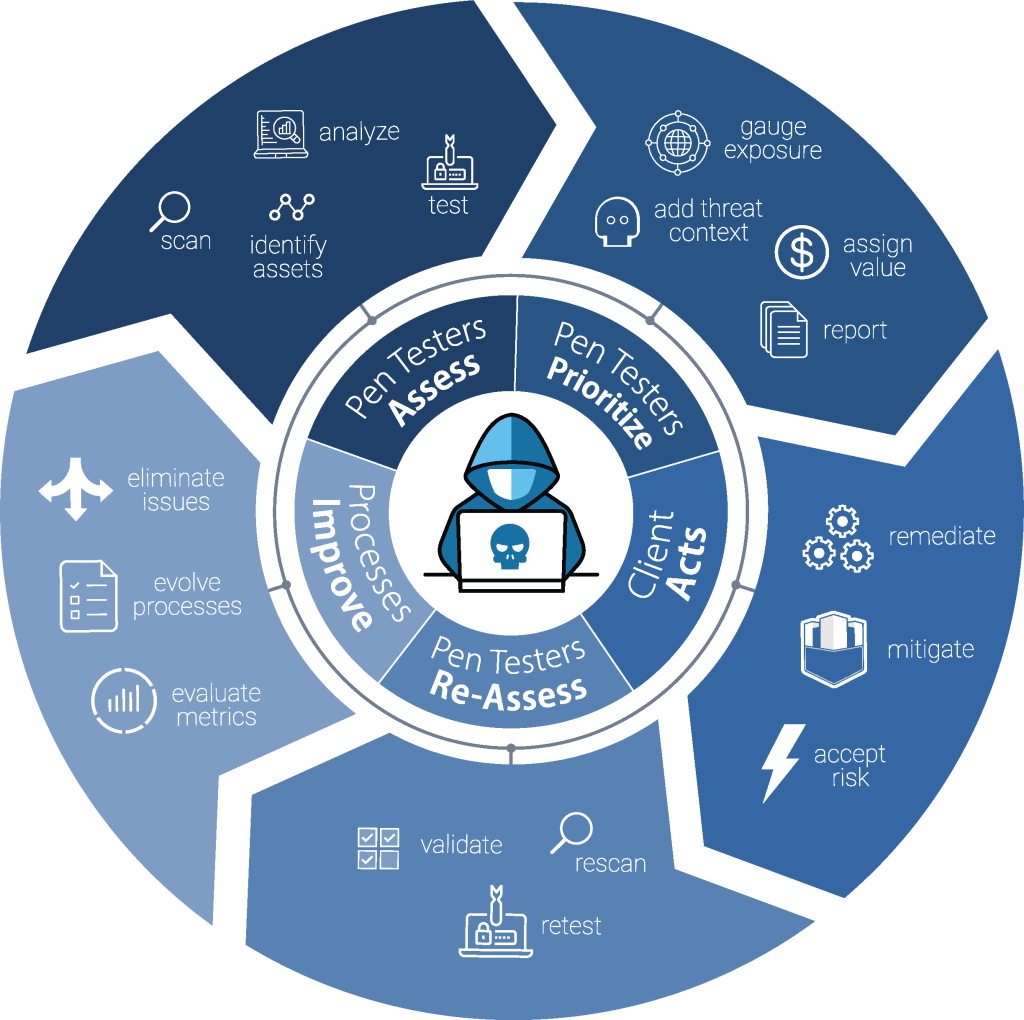
Our physical penetration testing follows a structured, repeatable cycle that validates exploitability, mobilizes remediation, and strengthens defenses over time, not just during a single engagement.
Simulating Real Intrusion Attempts Against Your Facilities
We conduct controlled attempts to bypass perimeter defenses, badge systems, surveillance coverage, and on-site personnel using tactics adversaries actually employ.
This includes tailgating, impersonation, lock bypass techniques, unsecured entry points, and access control weaknesses.
Aligning Findings to Business Impact and Asset Sensitivity
Not all physical weaknesses create equal risk. We prioritize findings based on what could actually be accessed: data centers, executive offices, networking infrastructure, payment systems, or operational assets.
This ensures remediation efforts focus on exposures that meaningfully reduce risk to critical systems, intellectual property, and business continuity.
Executing Targeted Remediation
With clear prioritization in place, your team addresses validated exposures through procedural updates, access control adjustments, guard training enhancements, surveillance optimization, or environmental design improvements.
Remediation efforts are aligned to operational realities, ensuring corrective actions strengthen layered defenses without disrupting business continuity.
Continuously Testing Evolving Physical Risk
For organizations that choose continuous physical penetration testing, we return on a scheduled cadence to reassess facilities as environments, personnel, and controls change.
This recurring validation ensures physical defenses do not degrade over time, new exposures are identified early, and layered controls continue to withstand adversarial tactics.
Strengthening Long-Term Physical Security Maturity
Beyond individual findings, we identify systemic gaps that allowed exposures to exist, including workflow breakdowns, policy misalignment, or inconsistent enforcement of controls.
The result is a more resilient physical security posture, where controls evolve, defenses become more layered, and the organization continuously improves its ability to prevent unauthorized access over time.
Specialized Testing Across Every Domain with Penetration Testing as a Service (PTaaS)
Physical penetration testing is only one component of an effective security program. While many providers treat it as a point-in-time exercise, our internal testing is delivered as part of Penetration Testing as a Service (PTaaS), providing continuous, attacker-driven validation across your internal environment.
On average, our clients see critical and high findings drop to almost zero within six months of starting PTaaS.
Learn More About Physical Penetration Testing
Use our latest resources, including articles, case studies, and white papers, to learn more about what physical penetration testing is and how it gives your security team the information they need to secure your physical perimeter.
Download Your Guide to Physical Penetration Testing
Learn how you can use physical penetration testing to identify gaps in your physical security, which is one of the most overlooked aspects of many cybersecurity strategies.
Security Leaders on Why They Choose TrollEye Security
See what our customers have to say about what it’s like working with us to assess their physical security posture.
Our Physical Penetration Testing Methods
The most effective physical penetration tests are those that simulate real-world attack scenarios as closely as possible. To do this, our team of experts employs a
variety of tried-and-true methodologies. Here are some tactics they may use when testing the strength of your property’s security.
Analyzing The Perimeter
The first step in a physical penetration test is to conduct a comprehensive analysis of the entire perimeter, including all entrances, exits, and external barriers. Our team maps the building's layout to identify potential vulnerabilities that attackers might exploit, like poorly secured doors, windows, or gates.
Conducting Surveillance
After mapping the premises, our testers conduct a thorough surveillance of the facility to observe daily operations. This involves watching for patterns of employee movement, behavior, and routine security practices. Through this process, our team will identify any gaps that exist in day-to-day security measures.

Identifying Targets
In a physical penetration test, potential targets go beyond just physical entry points. Our team evaluates entryways, security cameras, network access points, and personnel who may have valuable access and be unknowingly manipulated to grant unauthorized access.
Lock Picking
One of the most common methods of gaining unauthorized access is lock picking. Our testers will attempt to gain access to restricted areas by bypassing both manual locks and electronic systems that rely on keycards and passcodes, assessing how vulnerable your locks are to tampering.
Testing Physical Controls
Our testers simulate intrusion attempts by picking locks, bypassing access controls, and testing security guard responses. We also attempt to disable alarms and cameras to assess their effectiveness in preventing unauthorized access, evaluating the strength of your security measures against threats.

Testing Server Rooms
Our testers focus on accessing server rooms, which house critical systems and sensitive data. We attempt to bypass access controls and security measures to gain entry. Once inside, we evaluate the security of the room’s infrastructure to identify any vulnerabilities that attackers could exploit.

Testing Network Jacks
Network jacks provide attackers with a direct entry point into your organization's network infrastructure. Our testers will attempt to connect to jacks in various locations, including public or less monitored areas, to evaluate if unauthorized access to internal systems is possible.

Intercepting EM Waves
Our team attempts to capture Electromagnetic Waves to access unencrypted communications, revealing sensitive data like proprietary information or login credentials. By demonstrating how easily EM waves can be intercepted and decrypted, we highlight weaknesses in your data transmission systems.
Breaking RFID Encryption
Our testers attempt to break the encryption in RFID tags, which are common in inventory tracking and access control systems. Compromised RFID tags can make it hard to track digital and physical assets, leading to theft or loss. This shows how attackers could alter data or steal items undetected.

Dumpster Diving
Dumpster diving may seem low-tech, but it can be a surprisingly effective method. Our testers sift through dumpsters and employee trash cans, looking for discarded materials that could reveal confidential data. This includes hard drives, USB sticks, disposed ID cards, access badges, physical keys, and more.
Tailgating
Tailgating happens when an unauthorized person follows someone with valid credentials into a secure area. Our testers will attempt to tailgate employees, visitors, or delivery personnel to access restricted areas. This helps identify weaknesses in your physical security and access control measures.

Shoulder Surfing
Shoulder surfing involves discreetly watching employees as they enter sensitive information, such as passwords, PINs, or other login credentials. Our testers will position themselves in such a way that they can observe and record critical information being entered into computers or security systems.

Social Engineering
Our testers will employ social engineering, posing as legitimate individuals, like maintenance workers, delivery personnel, and employees who misplaced their badges, to gain entry to secure areas. This assesses your staff’s ability to recognize social engineering attacks.
Infiltrating Offices
Our testers target offices and meeting rooms to access sensitive information. We attempt to bypass access controls and, once inside, we simulate accessing documents, computers, and conducting further reconnaissance, demonstrating how attackers could escalate their access and gather critical data.

These are just some of the methods a physical penetration tester from TrollEye Security will use to assess the security of your physical location. If agreed upon in the Rules of Engagement (more on that below), once our team has gained access to the premises, they will collect evidence to prove their findings. This includes photos, video footage, and any physical items that could be used as proof of the security breach.
After the physical penetration test has been completed, our team will debrief you on their findings and offer detailed recommendations on how to improve your security. This assessment includes actionable ideas for physical security changes and employee training opportunities.
How safe is your facility? Find out with TrollEye’s dedicated ethical physical pen testing experts.
Managing Attack Paths That Cross Digital and Physical Boundaries
Modern attacks rarely stop at one domain. An exposed network port may lead to lateral movement. A compromised credential may enable badge cloning. An unlocked server room may expose core infrastructure. Physical and technical weaknesses often compound each other.
We help organizations manage those interconnected risks through coordinated validation across both environments.
Testing How Physical Controls Hold Up Under Realistic Conditions
Physical security controls often look effective in theory but fail under real-world pressure. We assess how access control systems, guard procedures, visitor management, alarm responses, and employee awareness perform when challenged.
By combining technical bypass attempts with human-focused social engineering validation, we determine where layered defenses break down and how exposures could realistically be chained together.
Extending Exposure Management Across Digital Systems
Attack paths rarely stop at one domain. A compromised credential can enable VPN access. An exposed service can lead to lateral movement. We evaluate how network, identity, cloud, and application controls intersect as part of a unified exposure landscape, not in isolation.
By validating how weaknesses across physical and technical environments can be chained together, we help organizations prioritize remediation holistically, reducing risk more effectively than siloed testing approaches.
Step Up Your Security Using TrollEye's Physical Penetration Testing
In today's digital world, it's not enough to just have a strong cyber defense. A business also needs to have a strong physical defense. TrollEye Security is a leading provider of physical penetration testing services, serving clients on location almost anywhere in the world. When you hire TrollEye, you're not just getting a physical security assessment. You're also getting the benefit of our intel. We have a wealth of knowledge and experience in both the digital and physical worlds that you can use to your advantage.
When it comes to your security, TrollEye Security means business. Get started today by calling our physical penetration testing team for a free consultation.