Phishing Assessments. Test The Human Layer Attackers Target First.
Most phishing programs stop at click rates. Our phishing assessments go further, deploying realistic, custom-built campaigns, validating the credentials captured during testing, and partnering with your team on targeted training improvements.
Phishing assessments are one of the core tests inside our PTaaS solution, so every phishing finding flows into the same platform, the same remediation process, and the same CTEM program as the rest of your testing.
Your Entire Human Layer.
Attackers don't need to break through your perimeter if an employee hands them the keys. Our phishing assessments test the people, identities, and processes behind your inboxes, simulating real-world attacks to show where a single click or submitted password could lead to compromise.
Testing social engineering on-site? See Physical Penetration Testing →Custom Phishing Campaigns
Campaigns built for your organization and industry, using the tactics attackers actually use.
Credential Exposure
Submitted credentials validated to show what access an attacker would realistically gain.
Susceptible Users & Identities
The users, roles, and identities most likely to be targeted and most likely to engage.
Access Controls & MFA
Weaknesses in MFA, access controls, and privileges that turn a phish into a compromise.
Reporting Processes
Whether employees recognize and report phishing, and how quickly your team responds.
Security Awareness Training
Results that show where training is working and where it needs to be more targeted.
Recognized By The Industry. Trusted By Security Teams.
A phishing program should create measurable improvement, not just another click-rate report. TrollEye combines realistic campaigns, hands-on expertise, and remediation support in a PTaaS model recognized by Gartner and trusted by security teams across multiple industries.
Representative Provider in a Recent Gartner® Report
Named a Representative Provider in Gartner research covering Penetration Testing as a Service.
Sample Vendor in Gartner’s 2025 Hype Cycle
Recognized as a Sample Vendor for Penetration Testing as a Service in Gartner’s Hype Cycle for Application Security.
Sample Vendor in Gartner’s 2025 Hype Cycle
Recognized as a Sample Vendor for Penetration Testing as a Service in Gartner’s Hype Cycle for Security Operations.
Our clients have reduced critical and high findings to almost zero within six months.
The goal is not simply to find more vulnerabilities. It is to build a repeatable testing and remediation process that continuously drives meaningful exposure down.

My speed to respond and my speed to remediate have gone down dramatically. My scalability, flexibility, and agility across the environment are much faster than with the big-box vendors.Watch Ricoh's Testimonial →

I consider TrollEye to be a true hidden gem in the realm of security solutions and an invaluable technology partner. Talquin has been utilizing TrollEye's services for over four years now, and our experience has been nothing short of exceptional. TrollEye's unwavering dedication to security has ultimately bolstered Talquin's overall security posture.

I am pleased with all the services we are receiving from the team at TrollEye Security. Being able to actively view findings from their platform gives our information security team the insight we need to ensure our security posture across the organization.

PTaaS has been a wonderful addition to our Development Lifecycle. TrollEye's platform provides a unique experience and excellent value!
Everything In PTaaS, Applied To Your Human Layer.
Phishing assessments aren't a standalone simulation. They run inside our PTaaS solution, alongside internal, external, network, IoT, web application, and physical testing, with the same platform, the same remediation workflow, and the same agentic and human testing model.
Risk-Based Prioritization
Phishing findings are enriched with threat context, privilege level, business impact, and potential attack paths, so teams focus on the exposures that create the greatest operational risk.
Owner-Routed Remediation
Credential resets, MFA hardening, access control improvements, and training recommendations are routed to the identity, IT, or security awareness owner who can act on them.
Managed, Continuous Testing
Our team designs and deploys campaigns, validates credentials, leads the debrief, and retests, so you run a continuous phishing program without building specialized internal capabilities.
From The Inbox To Your Network.
A click rate tells you who engaged. It doesn't tell you what an attacker would have gained. We follow every campaign through to its real-world impact, validating captured credentials and analyzing how phishing-based compromise could affect the organization.
- Inbox01
Build a realistic lure
Deploy custom-built campaigns tailored to your organization and industry, using the tactics attackers actually use.
- Engagement02
Measure who engages
Track which employees open, click, submit credentials, and report, giving you current data on human-layer exposure.
- Credentials03
Validate what was captured
Test submitted credentials to determine whether they work and what systems, data, and identities they unlock.
- Access04
Measure what access means
Understand how a phished identity could lead to account takeover, privilege escalation, or lateral movement.
How Phishing Findings Move Through TrollEye.
Phishing results don’t arrive as a click-rate spreadsheet. They land in the same TrollEye platform as every other PTaaS test, where your team can see who engaged, which credentials worked, who owns the fix, and when it has been retested.
- 01
Captured
Campaign results and submitted credentials are documented with evidence from every simulation.
- 02
Ranked
Findings are prioritized by privilege level, access, and business impact, not click counts alone.
- 03
Routed
Each fix goes to the owner who can make it.
IdentityITAwareness - 04
Debriefed
Our experts walk your team through results and target training where it will have the most impact.
- 05
Retested
We retest controls and run follow-up simulations to confirm exposure has been reduced.
Validating Human And Identity Exposure Within CTEM.
Phishing assessments are a core validation component of our Continuous Threat Exposure Management (CTEM) solution. By validating the credentials captured during each campaign, they show which human and identity exposures present real risk and where remediation and training effort should be focused.
Most organizations don’t have a visibility problem. They have an execution problem. Phishing assessments power the Discovery, Validation, and Mobilization stages for your human layer, while Scoping and Prioritization run across your entire attack surface in the same TrollEye platform.
Scoping
Define the users, departments, domains, and business priorities each campaign needs to cover.
Platform sets campaign scope PHISHING 02Discovery
Custom campaigns surface susceptible users, exposed identities, and gaps in reporting processes.
Phishing maps human exposure 03Prioritization
Phishing findings are ranked by privilege level, potential attack paths, and business impact.
Platform adds business context PHISHING CORE 04Validation
Captured credentials are tested to prove what access an attacker would actually gain.
Phishing proves real access PHISHING 05Mobilization
Credential resets, MFA hardening, and targeted training route to owners, then get retested.
Phishing drives the fix- Identity Exposure
- Attack Surface Visibility
- Dark Web Monitoring
- Remediation Workflows
- Continuous Reporting
Learn More About Phishing Assessments
Use our latest resources, from white papers to articles, to learn what phishing assessments are and how they give your security team the information it needs to enhance your training strategy and reduce successful phishing attacks.
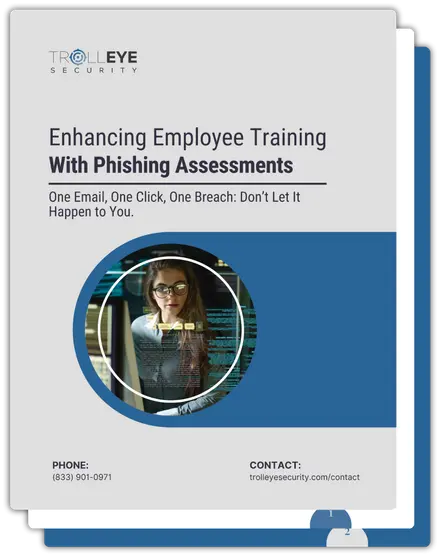
Enhancing Employee Training With Phishing Assessments
Learn how you can use phishing assessments to identify risks in your human firewall and improve your training program to reduce successful attacks.
How to Use Phishing Data to Improve Training
See how campaign results can guide more targeted security awareness training and reduce phishing susceptibility over time.
Read the ArticleHow to Minimize Phishing Attacks
Learn the controls, processes, and training practices that reduce the likelihood and impact of successful phishing attacks.
Read the ArticleQuestions About Phishing Assessments
How phishing assessments work, what they test, and where they fit in a Continuous Threat Exposure Management (CTEM) program.
01 What is a phishing assessment?
A phishing assessment uses realistic, custom-built campaigns to test how your employees, identities, and security processes respond to the phishing attacks your organization is most likely to face.
02 How is a phishing assessment different from a standard phishing simulation?
Standard simulations are generic, one-off tests that stop at click rates. Our assessments mimic real-world tactics, validate the credentials captured during testing, and include an expert debrief after every campaign, so you see actual risk, not just who clicked.
03 What does credential validation involve?
We test submitted credentials to see what an attacker could actually reach, including which systems, data, and identities they unlock. That turns click counts into a clear picture of real impact you can share with stakeholders.
04 What happens after each phishing campaign?
Our experts walk your team through the results and recommend next steps, such as credential resets, MFA hardening, access control changes, reporting workflow improvements, and where to target training. Once fixes are in place, we retest and run follow-up campaigns to confirm exposure has dropped.
05 How do phishing assessments fit into PTaaS and CTEM?
Phishing assessments are delivered through our Penetration Testing as a Service (PTaaS) model, so findings land in the same platform and remediation process as every other test. Within Continuous Threat Exposure Management (CTEM), they power the Discovery, Validation, and Mobilization stages for your human layer.
06 How often are phishing campaigns run?
Campaigns run continuously, not once a year, and each one is built for your organization and industry using current attacker tactics. Frequency depends on how you use your service credits, so you can focus testing on the teams, roles, and risks that matter most.
See how phishing, internal, external, network, and IoT testing run together in one platform and one remediation process.
Go On The Offensive. Strengthen Your Human Firewall Today.
Forward-thinking security teams are turning to continuous phishing assessments, delivered through Penetration Testing as a Service (PTaaS), to raise employee awareness, uncover real credential exposure, and reduce successful phishing attacks. See how phishing assessments fit into a complete CTEM program.
- 01Custom-built phishing campaigns
- 02Credential validation beyond click rates
- 03Expert debriefs after every campaign
- 04Retesting that confirms every fix