Internal Penetration Testing. Break Attack Paths Before They Spread.
Once attackers gain a foothold, internal weaknesses determine how far they can go. Our internal penetration testing combines agentic and human testing to validate what an attacker could actually exploit after initial access, across systems, identities, and trusted relationships.
It is one of the core tests inside our PTaaS solution, so every internal finding flows into the same platform, the same remediation process, and the same CTEM program as the rest of your testing.
Your Entire Internal Attack Surface.
Once an attacker is inside, every system, identity, and trust relationship becomes a potential path forward. Automated enumeration combined with hands-on testing maps your internal environment the way adversaries move through it, so testing covers what an attacker could actually reach after initial access.
Starting from the outside? See External Penetration Testing →Active Directory & Identity
Directory services, accounts, groups, and permissions tested for weaknesses that turn a foothold into control.
Network Segmentation
Network segments and trust boundaries tested to confirm whether an attacker can pivot between them.
Servers & Endpoints
Workstations, servers, and internal services probed for exploitable vulnerabilities and misconfigurations.
Internal Applications
Internal-only applications and services tested for flaws a compromised user could abuse across on-prem, cloud, and hybrid environments.
Credentials & Privileged Access
Credential reuse, exposed secrets, and privileged accounts tested for paths to administrative control.
Trust Relationships
Service accounts, delegated permissions, and system-to-system trust exercised the way real adversaries abuse them.
Recognized By The Industry. Trusted By Security Teams.
An internal testing program should create measurable improvement, not just another report. TrollEye combines continuous testing, hands-on expertise, and remediation support in a model recognized by Gartner and trusted by security teams across multiple industries.
Representative Provider in a Recent Gartner® Report
Named a Representative Provider in Gartner research covering Penetration Testing as a Service.
Sample Vendor in Gartner’s 2025 Hype Cycle
Recognized as a Sample Vendor for Penetration Testing as a Service in Gartner’s Hype Cycle for Application Security.
Sample Vendor in Gartner’s 2025 Hype Cycle
Recognized as a Sample Vendor for Penetration Testing as a Service in Gartner’s Hype Cycle for Security Operations.
Our clients have reduced critical and high findings to almost zero within six months.
The goal is not simply to find more vulnerabilities. It is to build a repeatable testing and remediation process that continuously drives meaningful exposure down.

My speed to respond and my speed to remediate have gone down dramatically. My scalability, flexibility, and agility across the environment are much faster than with the big-box vendors.Watch Ricoh's Testimonial →

I consider TrollEye to be a true hidden gem in the realm of security solutions and an invaluable technology partner. Talquin has been utilizing TrollEye's services for over four years now, and our experience has been nothing short of exceptional. TrollEye's unwavering dedication to security has ultimately bolstered Talquin's overall security posture.

I am pleased with all the services we are receiving from the team at TrollEye Security. Being able to actively view findings from their platform gives our information security team the insight we need to ensure our security posture across the organization.

PTaaS has been a wonderful addition to our Development Lifecycle. TrollEye's platform provides a unique experience and excellent value!
Everything In PTaaS, Applied Inside Your Network.
Internal penetration testing isn't a standalone engagement. It runs inside our PTaaS solution, alongside external, network, IoT, and phishing testing, with the same platform, the same remediation workflow, and the same agentic and human testing model.
Risk-Based Prioritization
Findings are prioritized by their role in real attack paths and the blast radius they create, not just severity scores, so teams fix the weaknesses that stop attackers from spreading.
Owner-Routed Remediation
Validated findings arrive with exploit evidence, attack path context, and clear guidance, routed to the infrastructure, identity, or application owner who can fix them.
Managed, Continuous Testing
Our team manages execution, validation, guidance, and retesting, so you run a continuous internal testing program without building or staffing specialized in-house capabilities.
From Initial Access To Critical Assets.
Every finding is validated to confirm exploitability and how weaknesses interact across the environment. We map how attackers could pivot between systems, escalate access, and reach sensitive assets, so your team knows which paths represent real risk.
- Initial Access01
Establish a foothold
Start from the position of a compromised user or device, the way most real internal attacks begin.
- Lateral Movement02
Move between systems
Test whether an attacker can pivot across systems, segments, and trust boundaries using credential reuse and misconfigured services.
- Privilege Escalation03
Escalate privileges
Confirm which identity and permission weaknesses chain together to turn a low-level foothold into administrative control.
- Critical Assets04
Measure the blast radius
Show how far a single compromise can spread and which sensitive systems and data an attacker could reach.
How Internal Testing Works Inside TrollEye.
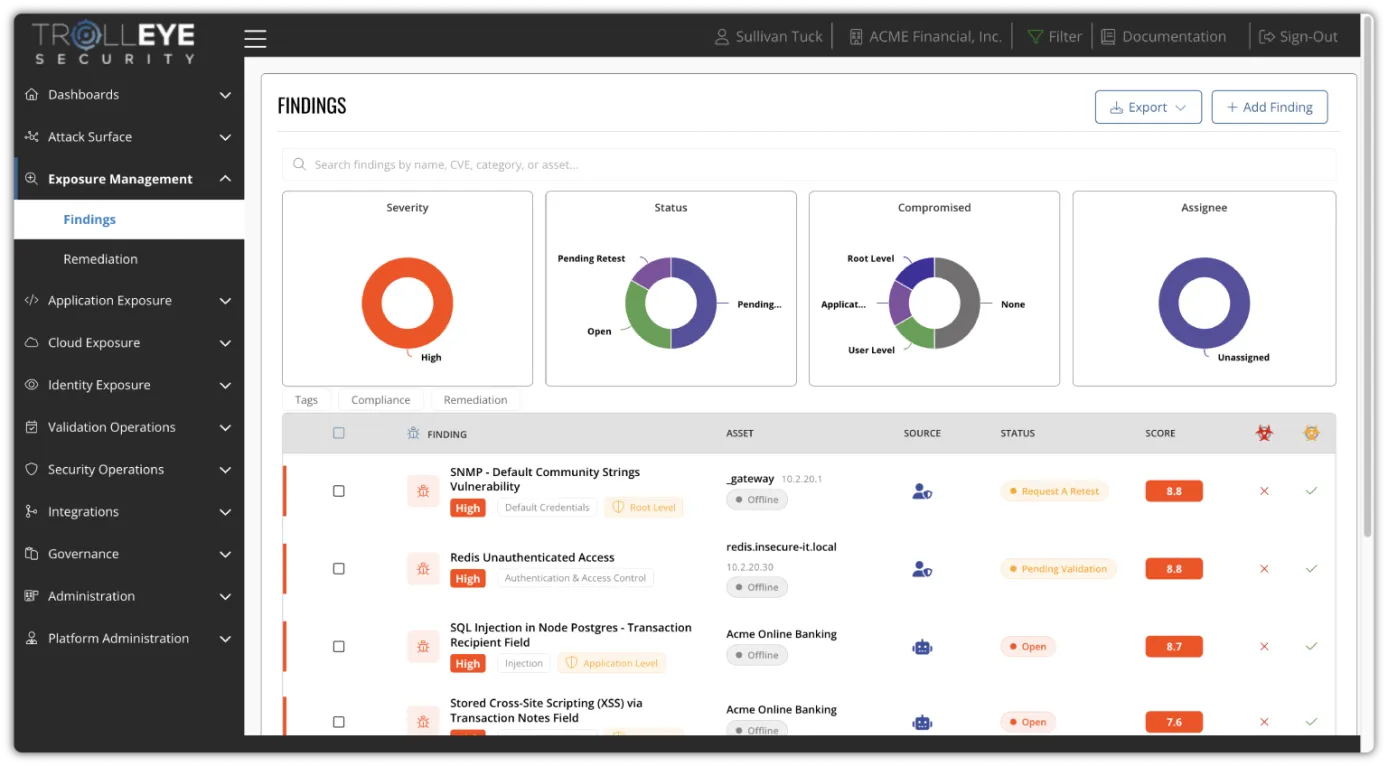
Internal findings don't arrive as a PDF. They land in the same TrollEye platform as every other PTaaS test, where your team can see what was found, which attack paths are exploitable, who owns the fix, and when it has been retested.
Internal Assets
Every internal host, service, and account discovered during testing is tracked in one inventory, so your team can see what an attacker could reach once inside.
- Hosts, services, and accounts in one view
- Unmanaged and forgotten internal systems surfaced
- Coverage that adapts as the environment changes

Validated Findings
Each internal finding arrives with exploit evidence, reproduction detail, and attack path context, so teams see how weaknesses chain together instead of relying on scanner severity alone.
- Exploitability confirmed by our testers
- Risk-ranked by attack path impact and blast radius
- Evidence attached to every finding
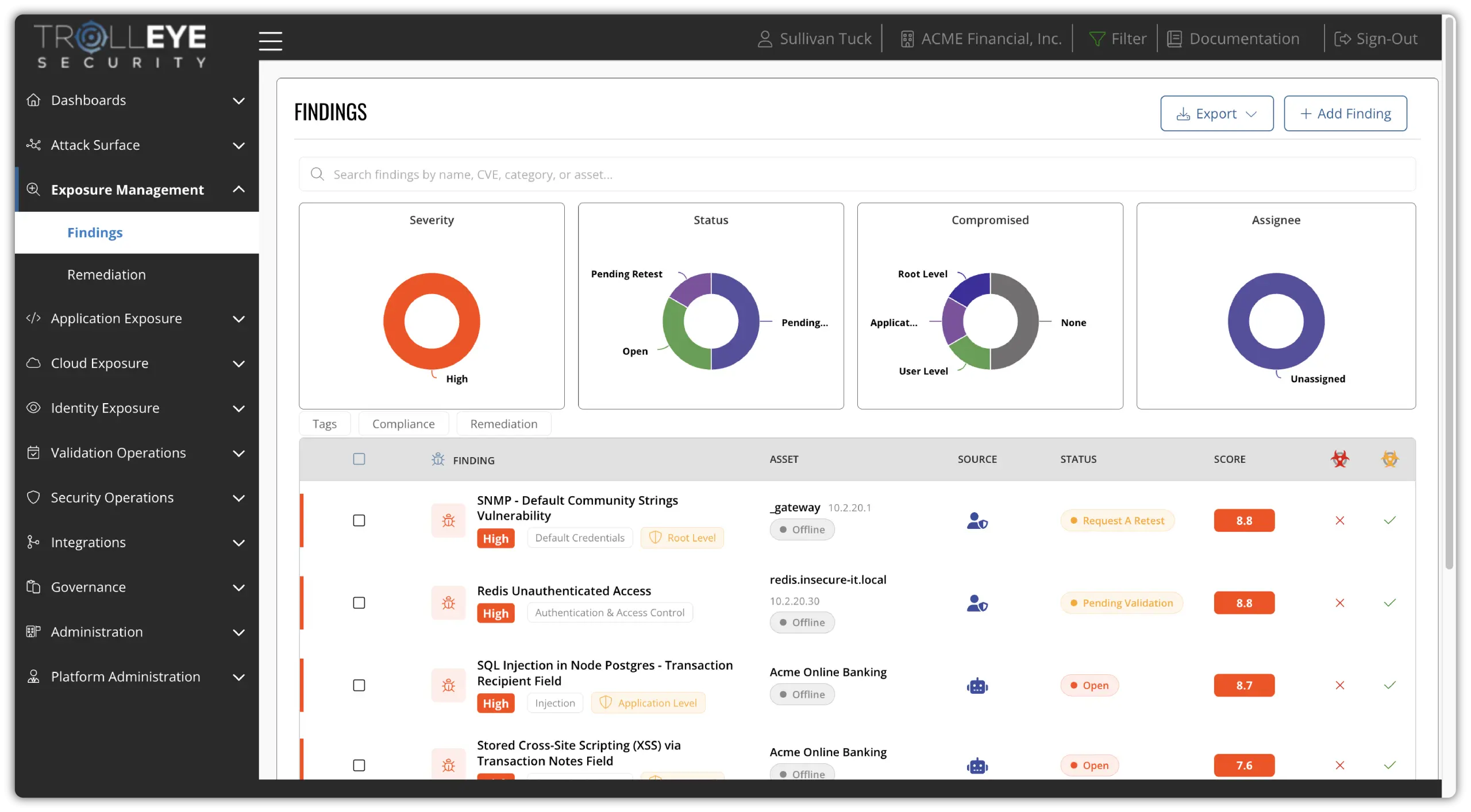
Remediation
Findings route to the infrastructure, identity, or application owner responsible for the fix, with clear remediation guidance and progress tracked centrally.
- Role-based task distribution
- Step-by-step remediation guidance
- No validated attack path lost in a backlog
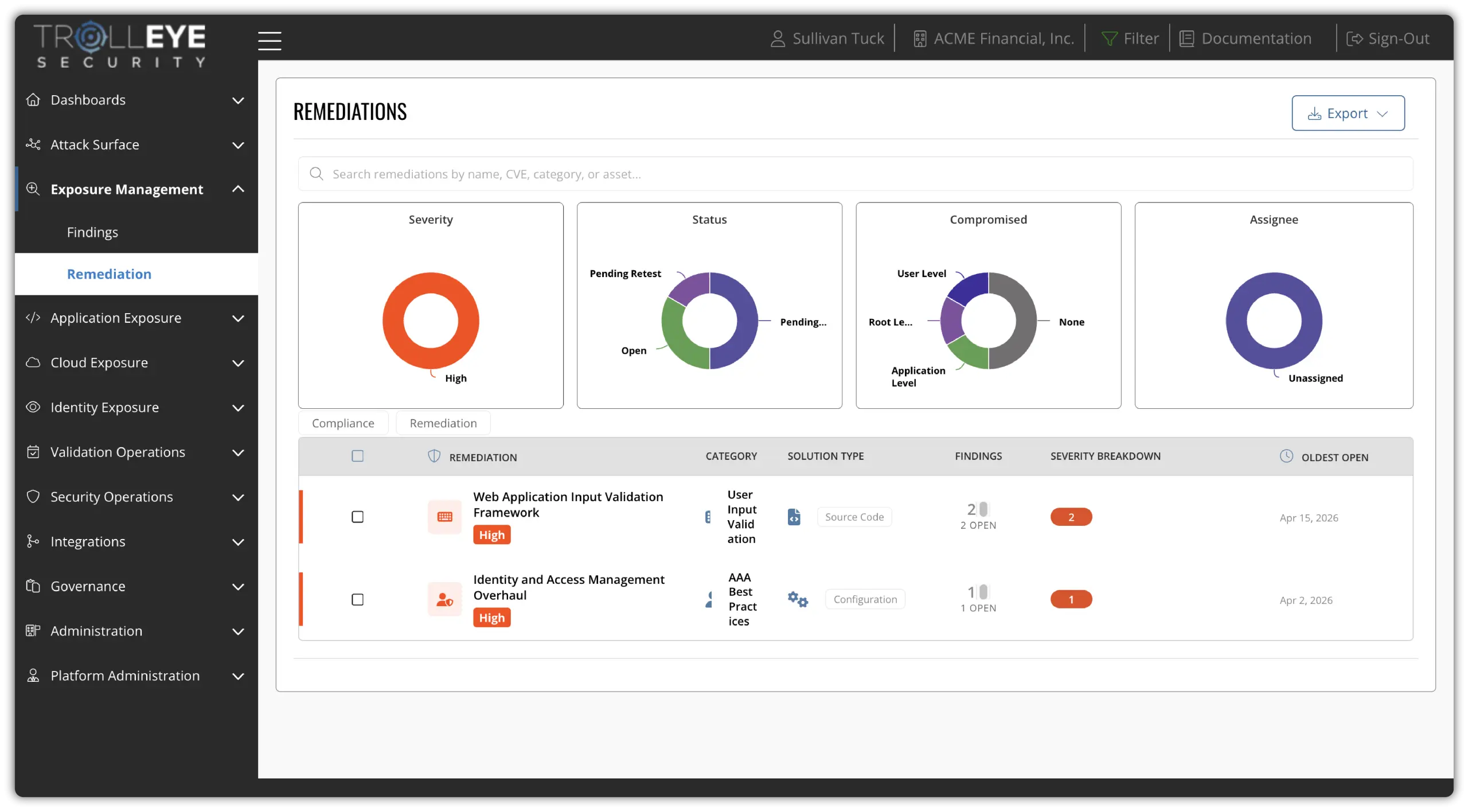
Retesting
Once a fix is in, request a retest directly from the platform and our team confirms whether the attack path has been broken.
- Retests requested in one click
- Status updated on every finding
- Closure confirmed by the same team that found it
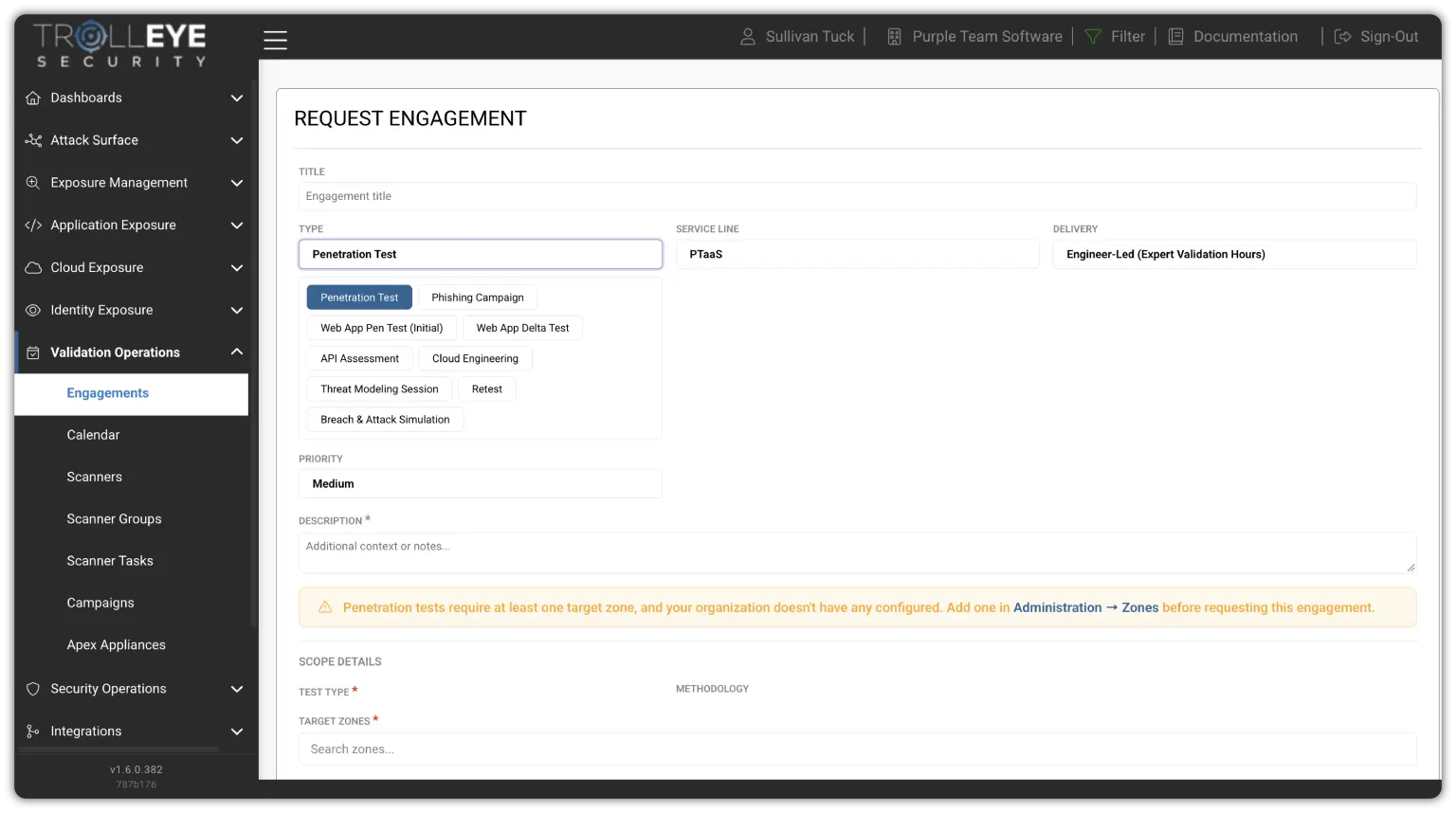
Reporting
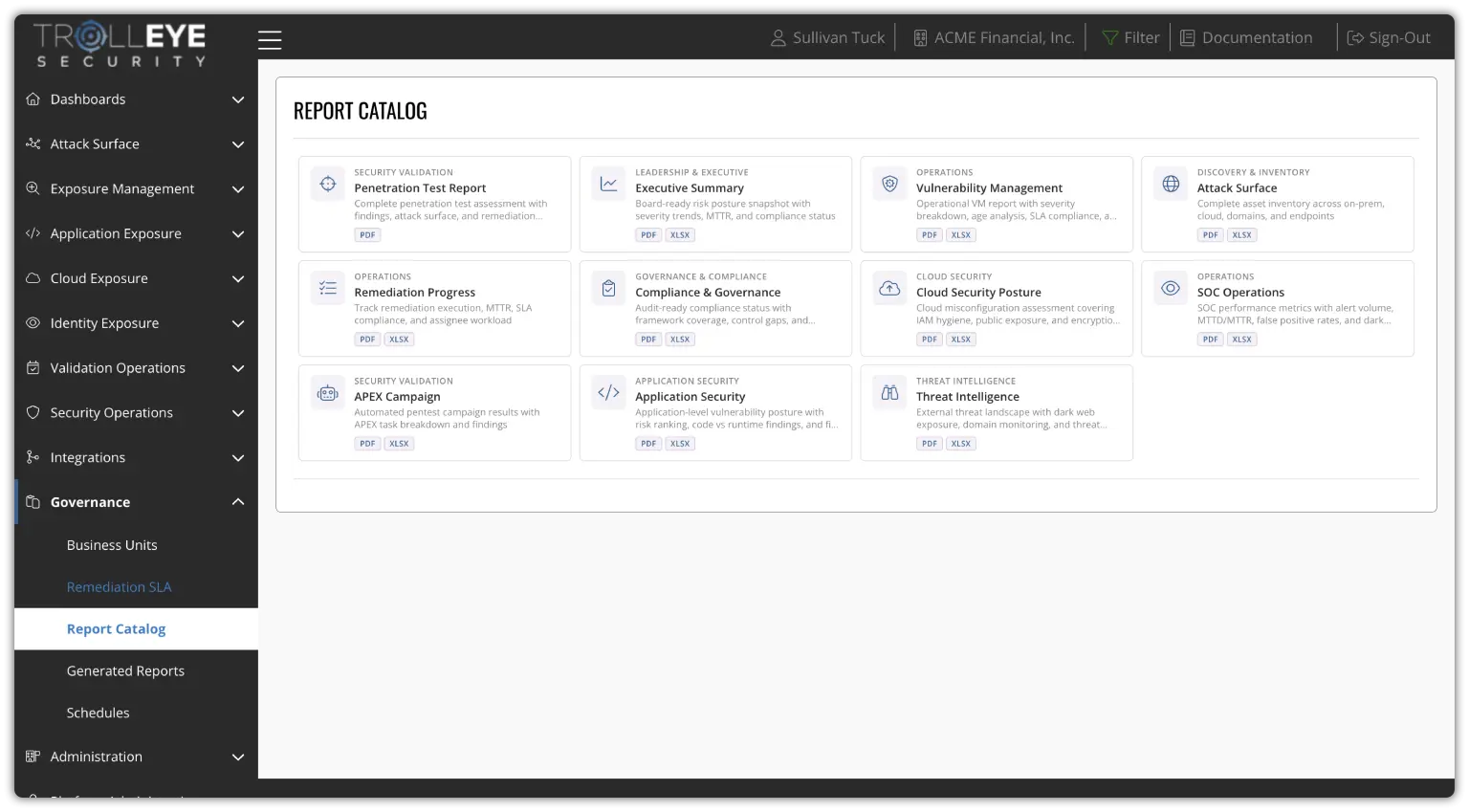
Executive and technical reporting shows how your internal exposure trends over time, alongside every other test in your PTaaS program.
- Executive-ready summaries
- Technical detail for engineering teams
- Internal results in the context of all PTaaS testing
Validating Internal Attack Paths For Continuous Threat Exposure Management.
Internal penetration testing is delivered continuously through our Continuous Threat Exposure Management (CTEM) solution, ensuring internal risk is identified, validated, remediated, and re-tested as environments change.
Most organizations don't have a visibility problem. They have an execution problem. Rather than treating internal testing as a one-time exercise, CTEM connects testing, prioritization, remediation, and re-testing into a single operational workflow that drives measurable risk reduction over time.
Scoping
Define the internal environments, identities, and critical systems testing needs to cover.
Sets internal test scope 02Discovery
Automated enumeration and hands-on testing map assets, identities, and trust relationships.
Maps internal trust paths INTERNAL 03Prioritization
Findings are ranked by their role in real attack paths, not isolated severity scores.
Ranks by blast radius INTERNAL CORE 04Validation
Agentic and human testing proves which internal weaknesses are actually exploitable and reachable after initial access.
Proves lateral movement INTERNAL 05Mobilization
Validated findings route to the right owners, get tracked to closure, and are re-tested.
Breaks the attack path- Attack Surface Visibility
- Cloud Security
- Identity Exposure
- Remediation Workflows
- Continuous Reporting
Questions About Internal Penetration Testing
What internal penetration testing covers, how attack paths are validated and prioritized, and how internal testing supports every stage of a Continuous Threat Exposure Management (CTEM) program.
01 What is internal penetration testing?
Internal penetration testing simulates an attacker who already has a foothold inside your network. It tests identity controls, segmentation, and privilege boundaries to show whether a compromise can spread to sensitive systems or data.
02 How is internal testing different from external testing?
External testing shows whether an attacker on the internet can get in. Internal testing measures what happens next: how far they could move, escalate, and spread once inside. Together, they cover exposure from initial access through full impact.
03 How does internal penetration testing fit into CTEM?
Internal testing is a core validation component of our CTEM solution, proving which internal weaknesses are exploitable and reachable after initial access. Those findings feed prioritization and mobilization, alongside the attack surface, cloud, and identity exposure data in our CTEM packages.
04 How often is internal testing performed?
Automated testing runs continuously. Deeper internal assessments and retests run on the service credits included in every CTEM package, so you decide how often internal testing happens and where it is focused.
05 What does internal penetration testing cover?
Identities, endpoints, servers, internal applications, and the trust relationships between them, tested for lateral movement, privilege escalation, credential abuse, and segmentation gaps. Scope can expand with network, IoT, and other specialized testing as requirements grow.
06 How are internal findings validated and prioritized?
Every finding is validated to confirm it is exploitable and how it chains with other weaknesses, then ranked by its role in real attack paths, so teams focus first on the fixes that break exploitation chains.
07 What happens after a finding is fixed?
We retest the affected systems and paths to confirm exploitation is no longer possible. Patterns across testing cycles then inform hardening priorities and detection gaps, so the same exposures don't keep coming back.
Walk through testing, validated findings, role-based remediation, and retesting in the platform before starting your evaluation.
Don't Rely On Hope. Trust TrollEye's Internal Testing.
Cyber attacks come from internal and external sources, and only those who are prepared will withstand them. See how continuous internal penetration testing fits into a complete CTEM program, and shore up internal weaknesses before a breach exposes them.
- 01Realistic internal attack simulation
- 02Verified, chained attack paths
- 03Risk-based, role-routed remediation
- 04Retesting that confirms every fix