Find What’s Exploitable In Your Running Applications.
Most DAST tools generate high volumes of alerts without validating real-world impact, leaving teams unsure what truly matters.
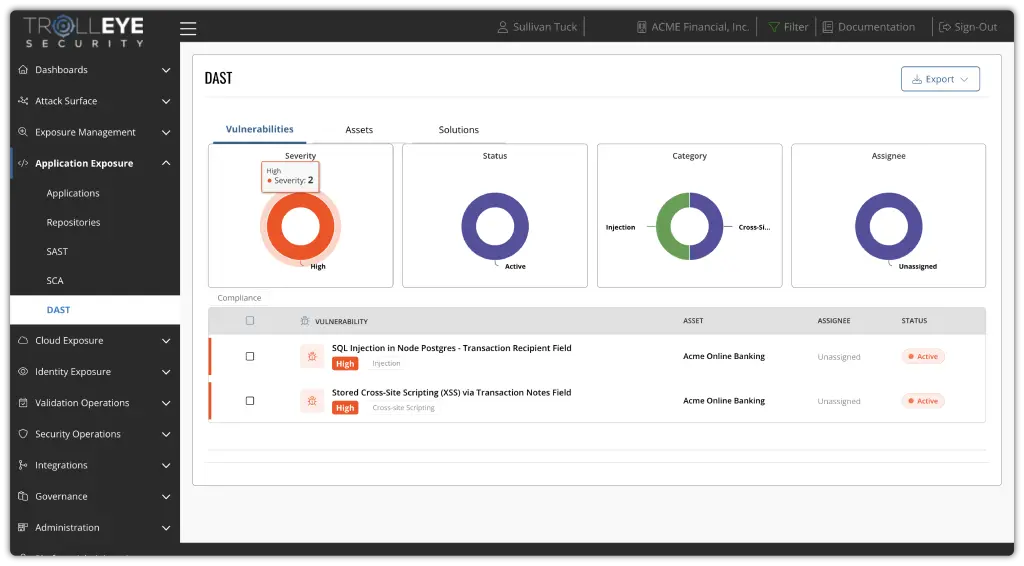
TrollEye’s Dynamic Application Security Testing (DAST) continuously tests live applications, validates which runtime vulnerabilities are actually exploitable, and carries every confirmed exposure into your Continuous Threat Exposure Management (CTEM) program, so developers fix root causes instead of chasing scanner noise.
DAST Should Prove Runtime Risk, Not Just Generate Alerts.
Our Dynamic Application Security Testing (DAST) approach focuses on continuous, runtime-driven discovery and validation of web application vulnerabilities in live environments.
Rather than relying solely on static scans or pre-production assumptions, we continuously test applications in runtime conditions to confirm how they actually behave under attack, so vulnerabilities are not just detected, but confirmed in context, prioritized by real impact, and fixed at the root.
Proactive Runtime Coverage
Continuously test live applications to uncover exploitable flaws in authentication, session handling, input validation, and business logic before attackers find them.
Risk-Validated Findings
Every issue is confirmed in a runtime context to demonstrate true impact, reducing noise and prioritizing the vulnerabilities that materially increase application risk.
Faster Remediation
Findings are delivered with precise reproduction details and risk context, enabling developers to fix issues efficiently and prevent recurrence across future releases.
Identify Vulnerabilities In Live Application Behavior.
Traditional testing often misses how applications behave once deployed. Our DAST continuously tests running applications in staging and production-like environments to uncover exploitable weaknesses in authentication flows, session management, APIs, input handling, and business logic.
Test what’s actually deployedSurface the vulnerabilities that exist in running code, not just what static analysis predicts.
Cover authenticated workflowsExercise login flows, user roles, sessions, and APIs the way real users and attackers do.
Test where applications liveRuntime testing runs in staging and production-like environments, before and after release.
Confirm Which Findings Materially Increase Risk.
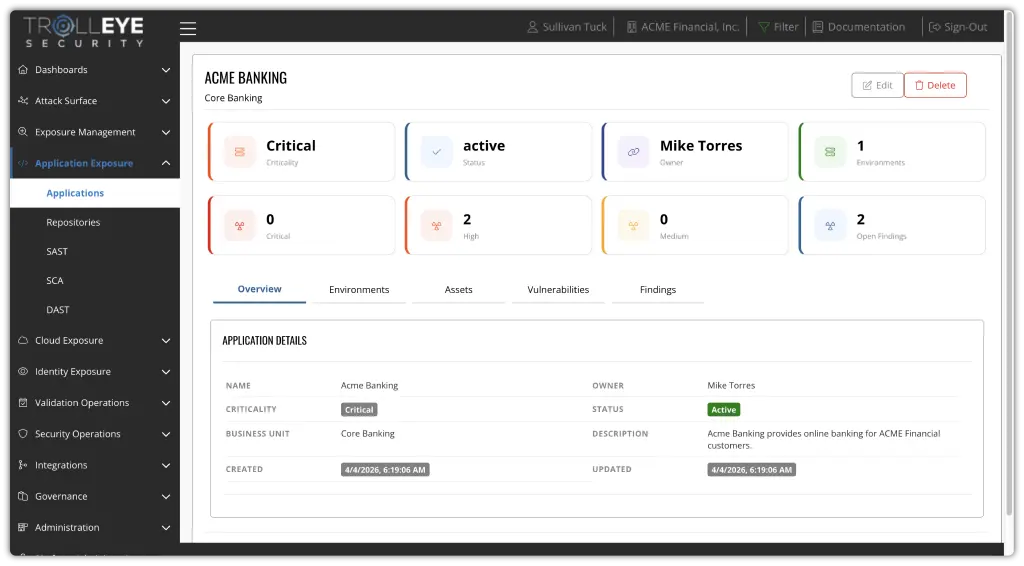
Not every alert increases risk. Every DAST finding is validated in context to demonstrate real exploitability, showing how vulnerabilities can be abused within application logic, user roles, and connected systems. This reduces noise, eliminates false positives, and keeps remediation focused on the issues that meaningfully reduce exposure.
Prioritize by exploitabilityRank findings by exploitability, exposure, and business impact instead of scanner severity alone.
Prove reachabilityShow which runtime vulnerabilities are actually exploitable and reachable from an attacker’s position.
Eliminate false positivesSecurity engineers review results before they ever reach a developer’s queue.
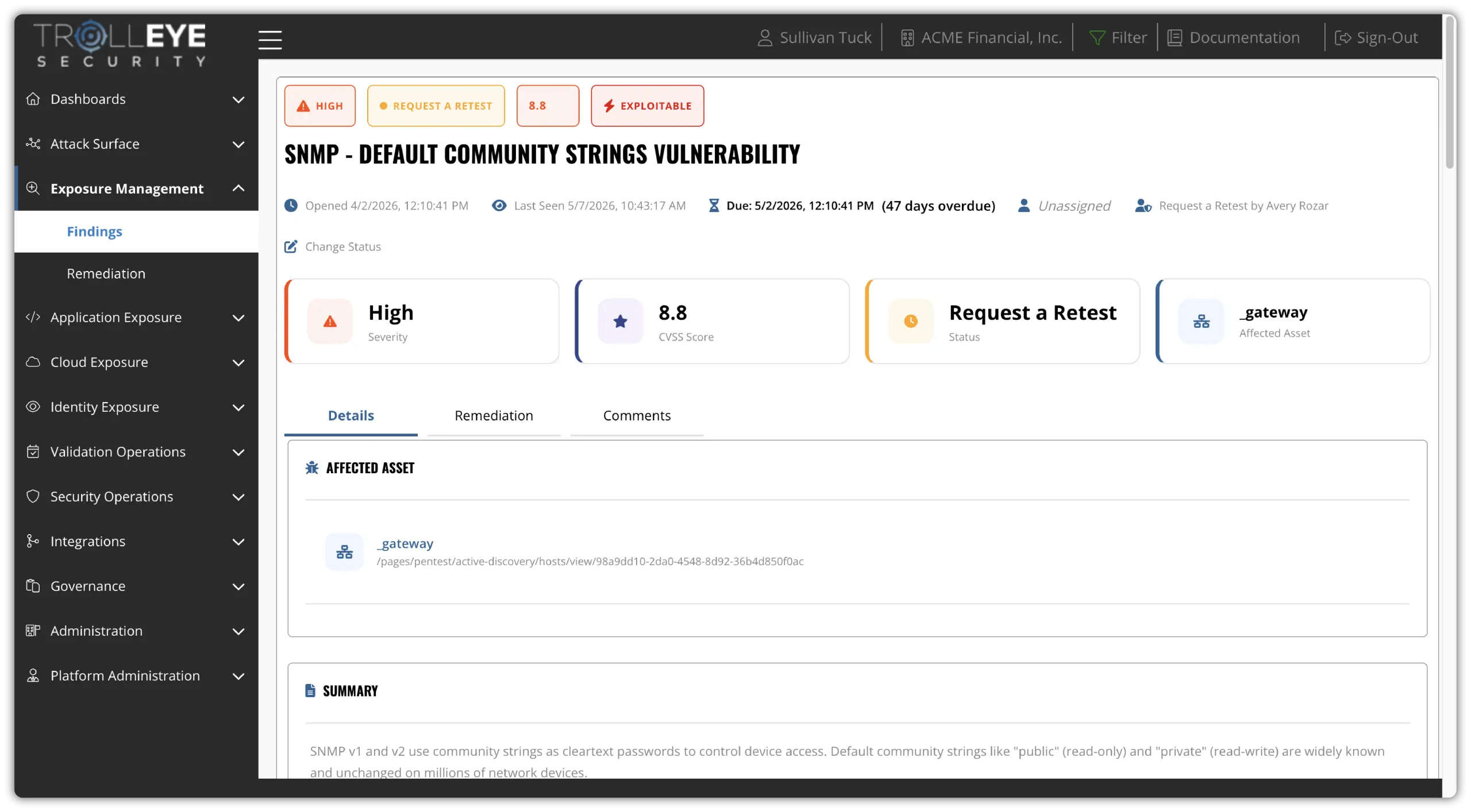
Deliver Findings Developers Can Act On Immediately.
Findings are clearly documented with reproduction steps, payload examples, risk explanation, and remediation guidance aligned to your development workflow. This shortens fix cycles, improves collaboration between security and engineering, and turns testing into a structured, repeatable improvement process rather than a periodic audit exercise.
Reproduction steps and payloadsDevelopers see exactly how an issue was triggered and can confirm it themselves.
Add exploitability contextShow how an issue can actually be used, not just that it exists.
Clear remediation guidanceFix guidance aligned to your frameworks, languages, and development workflows.
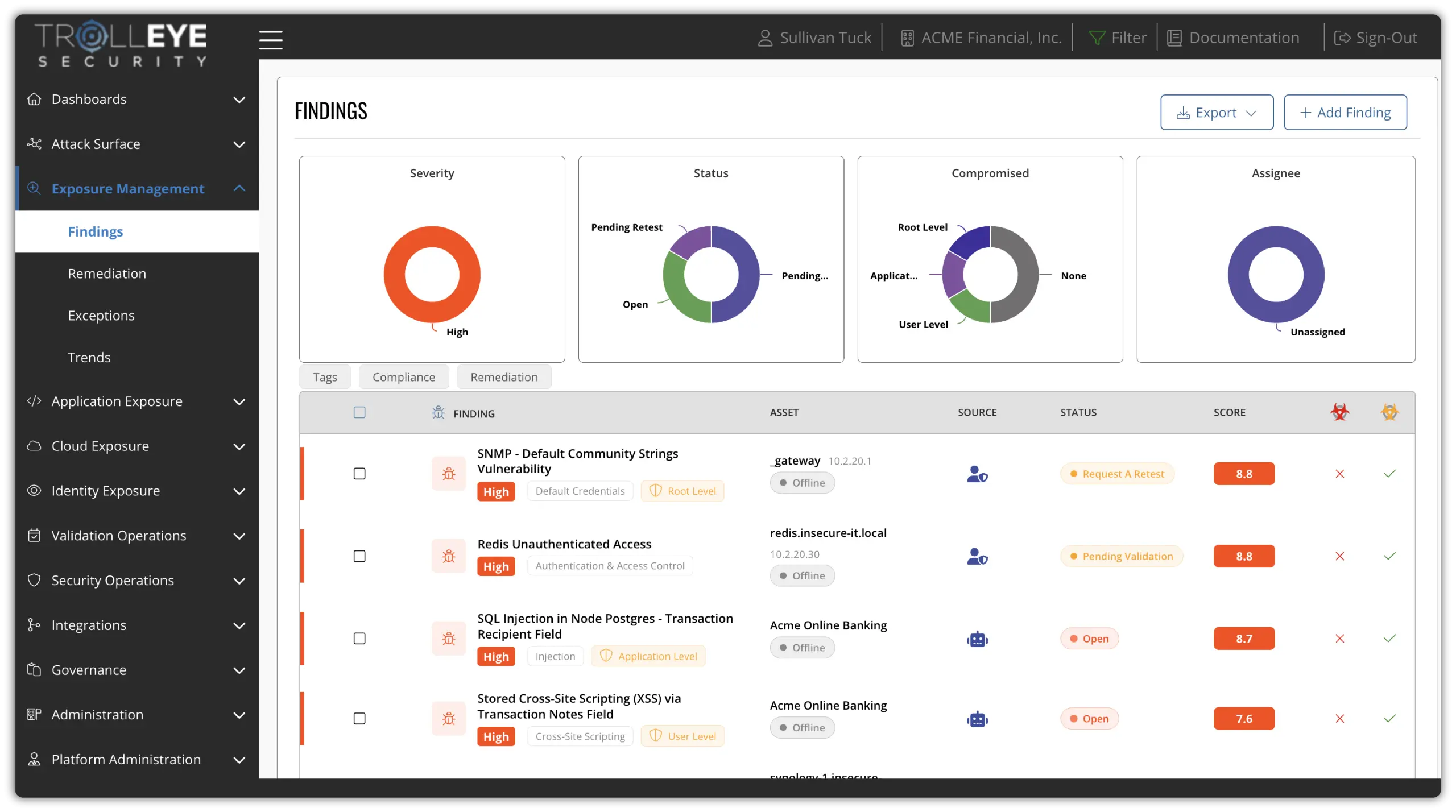
Strengthen Security With Every Deployment.
DAST is not a one-time scan. Our continuous testing model validates new releases, configuration changes, and infrastructure updates as they occur, and routes confirmed findings into GitHub, Azure DevOps, and Jira, so security posture improves alongside development velocity.
Test every releaseNew releases and configuration changes are tested as they ship, not months later.
Fit your toolchainIntegrate with GitHub and Azure DevOps pipelines your teams already rely on.
Retest after fixesConfirm vulnerabilities have been properly remediated once fixes are applied.
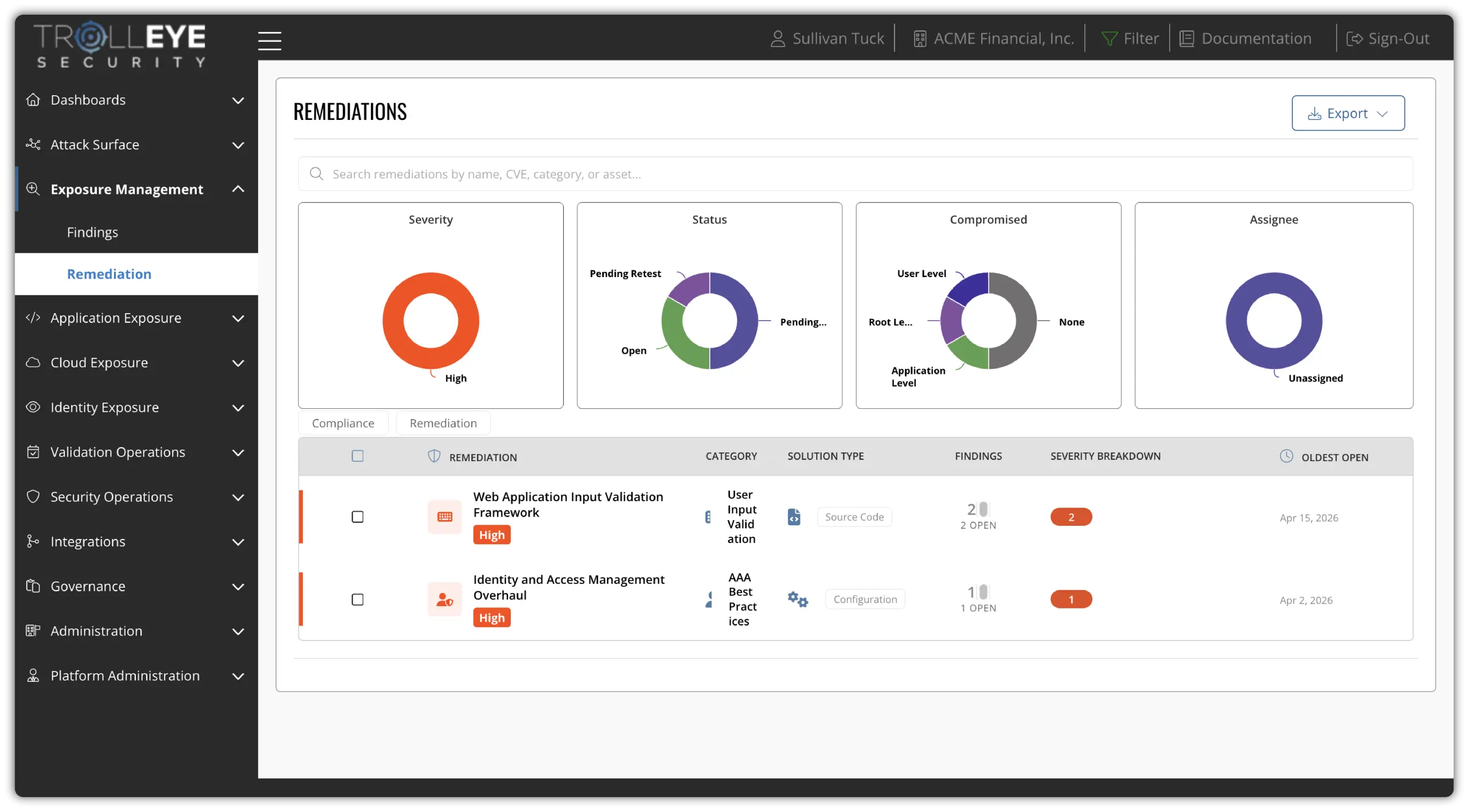
Stop Scrambling At Audit Time.
Manual audit prep is expensive and reactive. The TrollEye platform centralizes scan results, remediation history, and retest outcomes in one place, giving compliance, security, and engineering teams a single source of truth for PCI DSS, HIPAA, SOC 2, and ISO 27001 requirements.
Evidence that’s always currentBecause testing runs continuously, the documentation is already there when auditors ask.
Complete remediation historyEvery finding, fix, and retest is tracked in one place.
Clear executive reportingBusiness-aligned metrics show leadership how application risk is trending.
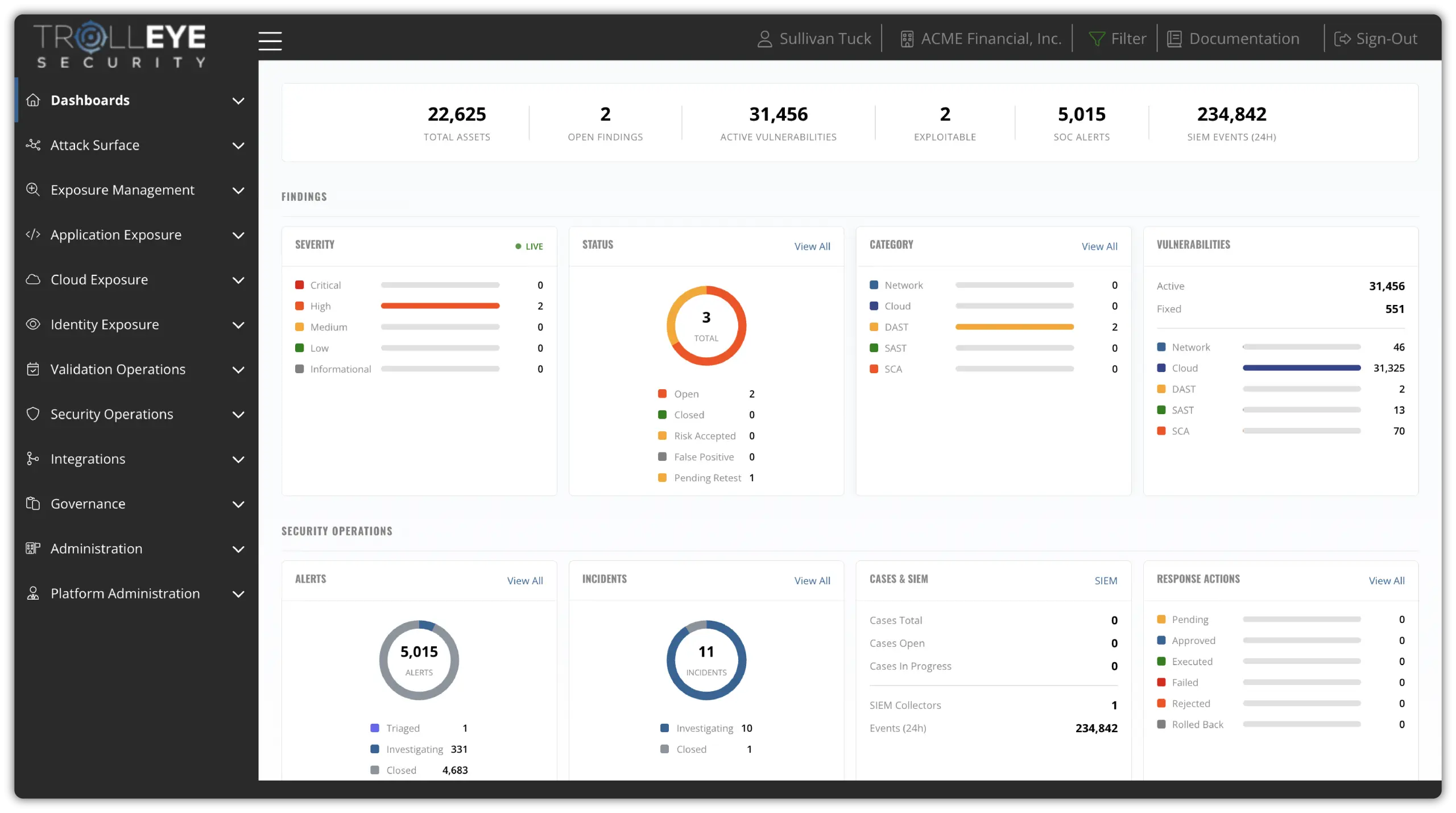
Recognized by the Industry. Trusted by Engineering Teams.
Validated runtime findings and measurable improvement, not just another backlog, in a model recognized by Gartner and trusted by security and engineering teams.
How a Software Company Reduced Vulnerabilities by Over 97% with DevSecOps.
“We chose DevSecOps because the traditional annual testing model just wasn’t enough. With multiple fintech applications in production, we needed a way to embed security into our development lifecycle, something continuous, scalable, and built to catch issues before they ever made it to production.”
What differentiates TrollEye Security is their level of engagement. They operate as a true partner, embedding into our DevSecOps workflows and working directly with our engineering teams to improve processes and drive remediation. Their ‘white glove’ support model is something we didn’t have with previous vendors. They’re responsive, accessible, and willing to engage in real time when needed.

Explore How DAST Turns Runtime Testing Into Risk Reduction
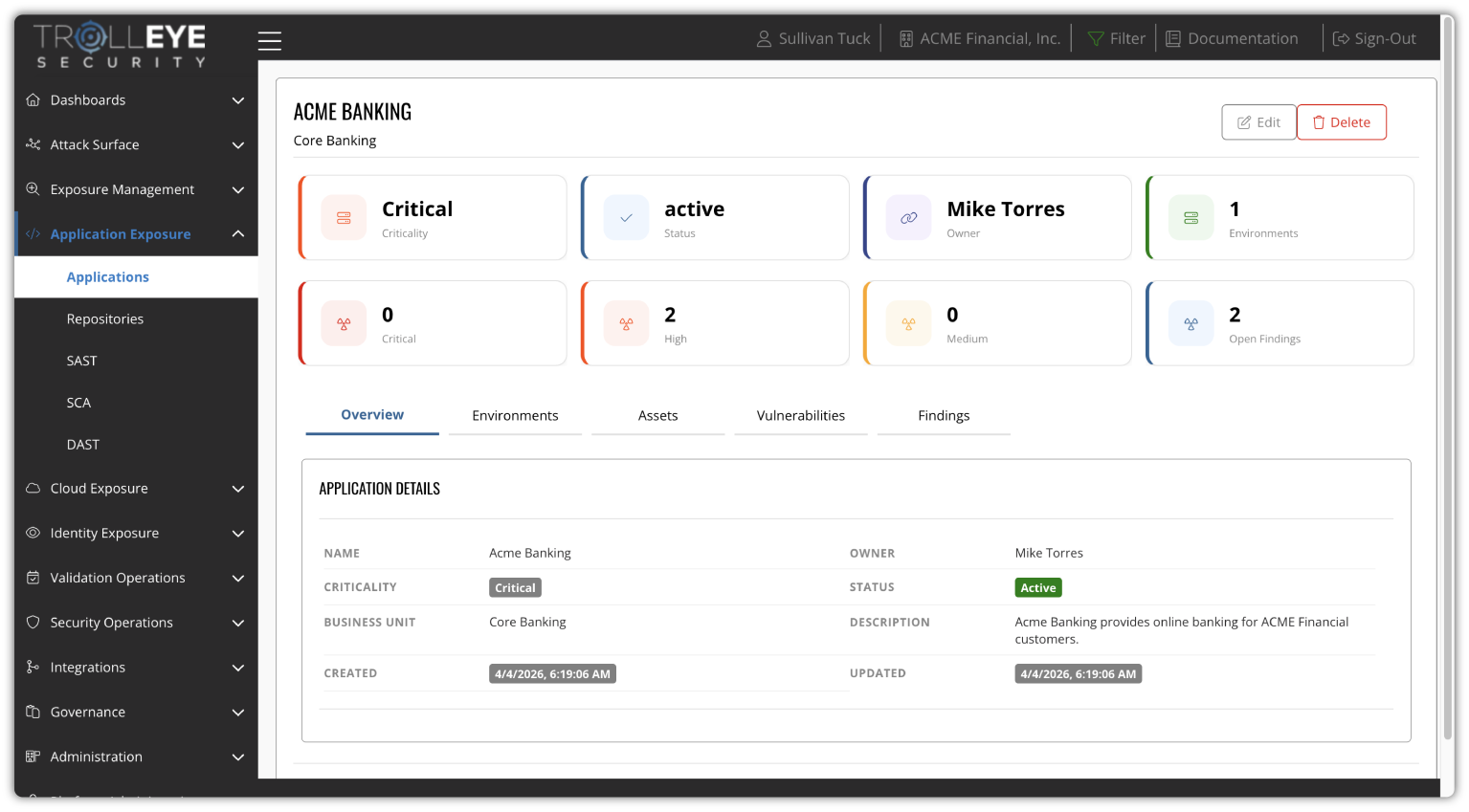
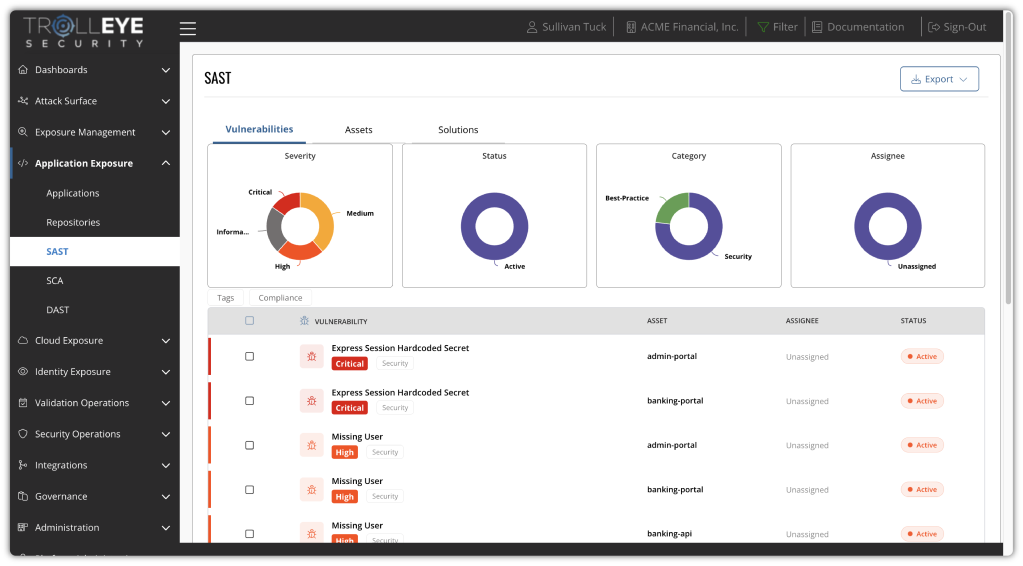
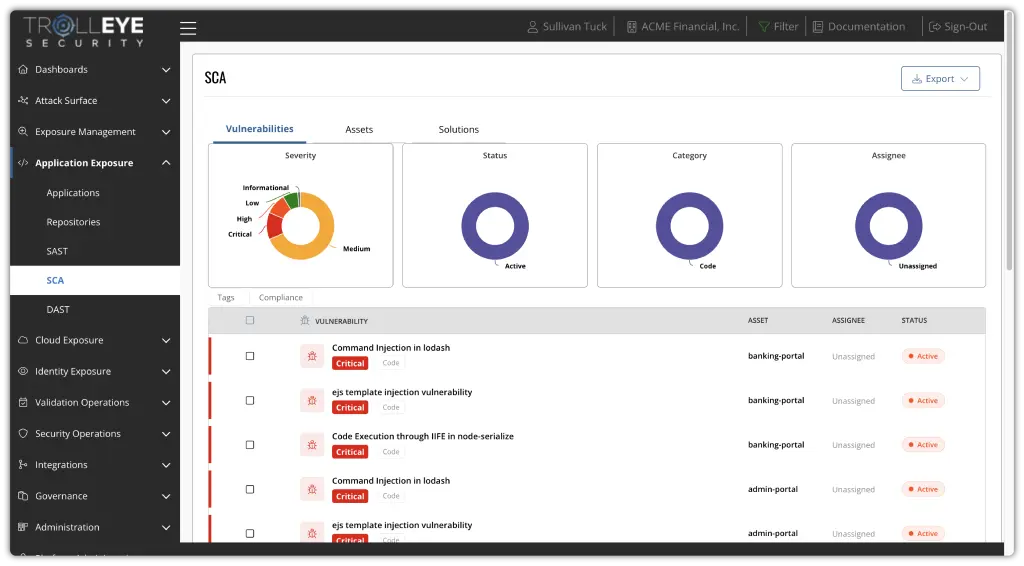
Click through the TrollEye platform to see how DAST surfaces, validates, and drives remediation of runtime application exposure, or switch tabs to see how it works alongside DevSecOps, SAST, and SCA.
Learn More About Runtime Application Security
Use our latest resources, from white papers to articles, to learn how DAST and DevSecOps give your security and engineering teams the information, tools, and guidance they need to secure every release.
Your Guide to DevSecOps
Learn how to integrate security into the entire SDLC through DevSecOps, so your organization produces more secure software, at a faster pace, cost-effectively.
Transform Your Security Posture With DevSecOps
See how integrating security into development changes the way teams build, test, and ship software.
Read the ArticleUnderstanding DAST, SAST, IAST, and RASP
Learn how runtime, static, interactive, and self-protection testing differ, and where each fits in your application security program.
Read the Article