
Identify Internet-Facing Vulnerabilities with External Penetration Testing
Enabling security teams to nearly eliminate critical and high findings within the first six months.
Our external penetration testing focuses on how attackers actually target organizations from the outside, validating exploitable weaknesses across perimeter infrastructure, exposed services, cloud assets, and public-facing systems.
We help teams understand which external exposures can realistically be exploited, how they could be chained together, and what to fix first to reduce real-world risk.
Real-World External Attack Simulation
Hands-on testing that mirrors how attackers enumerate, exploit, and pivot through exposed systems and services.
Exploitability-Focused Validation
Every finding is validated to confirm real impact, showing which exposures can actually be abused, not just detected.
Actionable Remediation That Reduces Exposure
Findings are prioritized and delivered with clear guidance so teams can quickly close gaps and measurably shrink their external attack surface.
Reduce External Risk Before Attackers Gain a Foothold
External penetration testing focuses on how attackers target organizations from the outside, enumerating exposed assets, exploiting misconfigurations, and chaining weaknesses to gain initial access.
Our external testing validates real-world exposure across internet-facing infrastructure, cloud assets, and public services. By confirming what can actually be exploited and how external weaknesses lead to internal access, we help teams prioritize remediation that meaningfully reduces attack surface and prevents intrusion.
Simulate How Attackers Target Your External Attack Surface
We assess your external environment the way real attackers do, enumerating exposed assets, probing services, identifying misconfigurations, and testing exploitable paths into the organization. Testing reflects modern attacker behavior across on-prem, cloud, and hybrid environments.
Confirm Which Exposures Can Actually Be Exploited
Every finding is validated to determine real-world exploitability and impact. We confirm which exposed services, vulnerabilities, and misconfigurations can be abused to gain access, escalate privileges, or pivot deeper into the environment.
Prioritize Remediation That Shrinks the Attack Surface
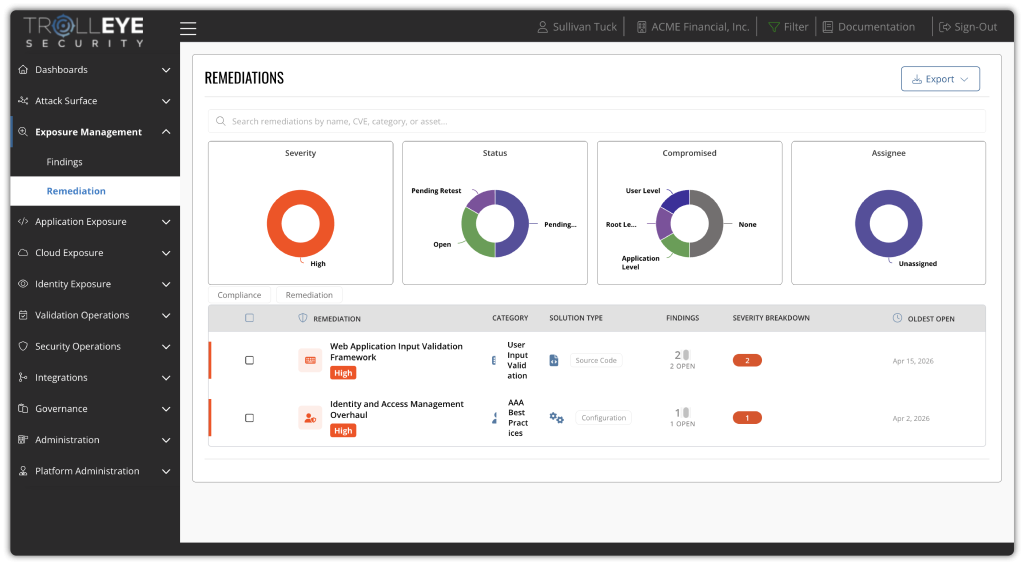
Findings are prioritized based on exploitability, exposure, and potential impact, not just severity scores. This helps teams focus remediation on closing the gaps attackers would actually use, reducing external risk instead of chasing noise.
Run a Continuous External Testing Program Without Overhead
Our team manages execution, validation, and guidance throughout the testing lifecycle. You get consistent external testing, expert analysis, and remediation support, without needing to build or staff specialized internal capabilities.
TrollEye Security Recognized as a Sample Vendor in Gartner’s 2025 Hype Cycle for Security Operations
External Penetration Testing Focused on Mobilization
Your external attack surface changes constantly; new assets, cloud services, DNS records, third-party integrations, and exposed services expand risk beyond traditional perimeters. A single exposed system can become the initial foothold for ransomware, data theft, or lateral movement.
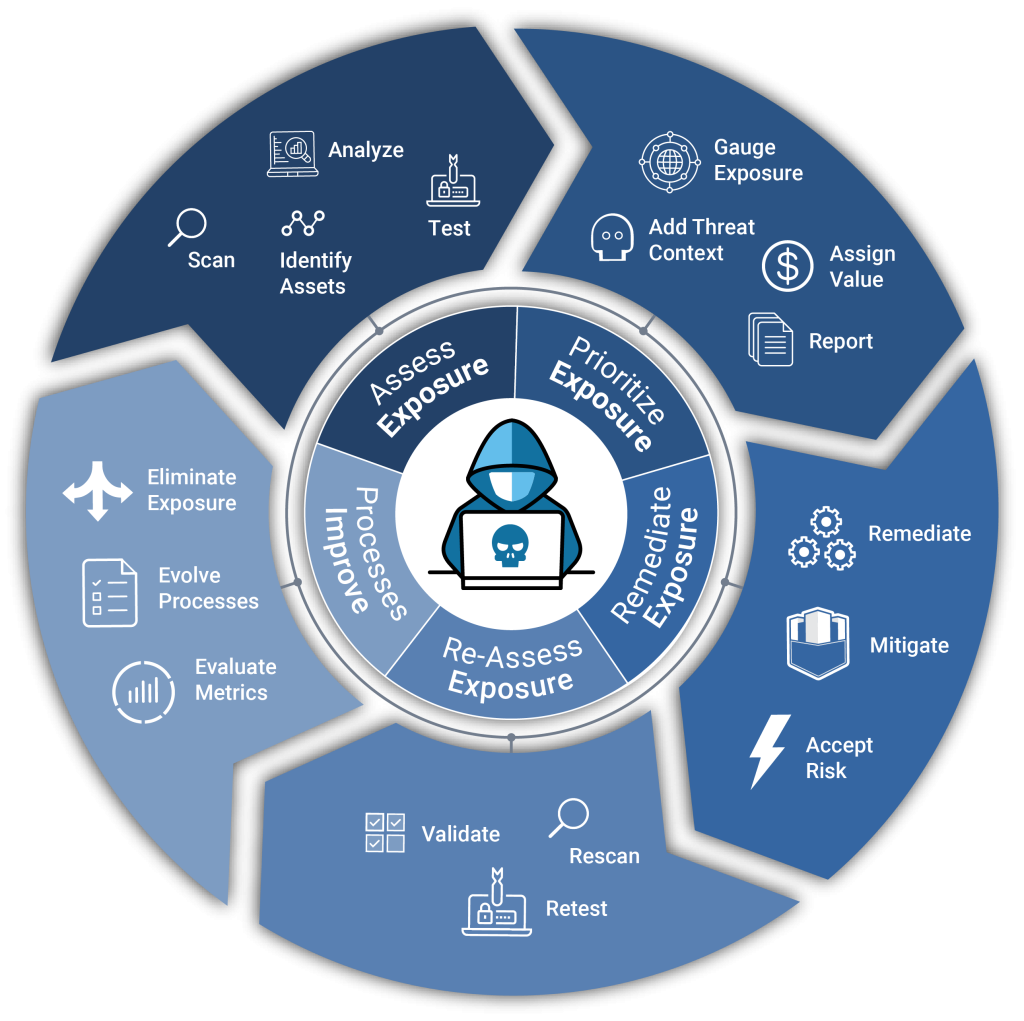
Our external testing operates within a continuous PTaaS model, validating real-world exploitability across your internet-facing infrastructure and ensuring remediation is mobilized, tracked, and re-validated over time.
Identify and Analyze Internet-Facing Exposure
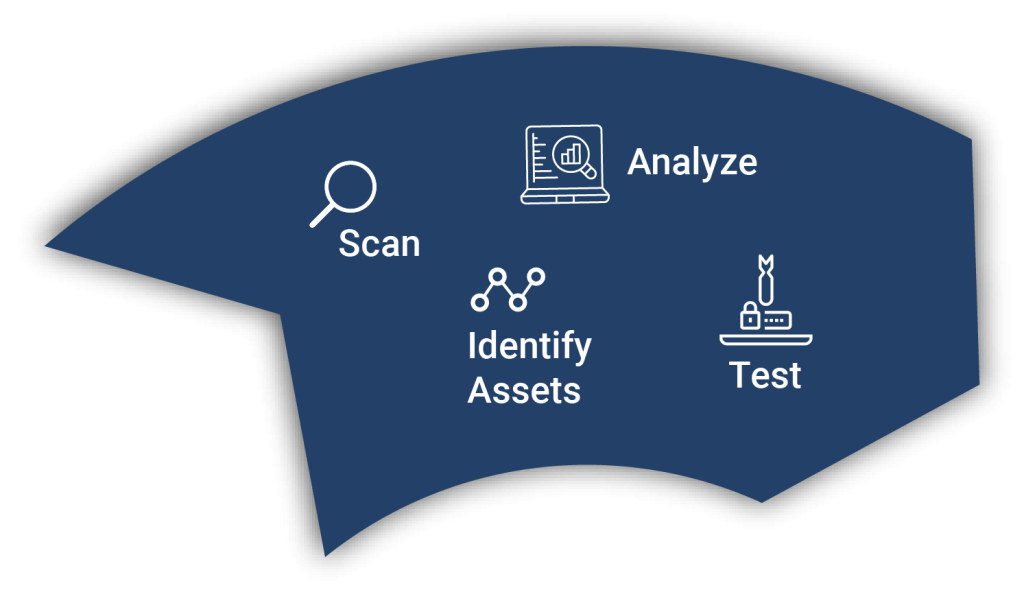
We begin by mapping your external footprint, including domains, subdomains, IP space, cloud assets, exposed services, VPN gateways, authentication portals, and third-party integrations.
Automated discovery is combined with manual reconnaissance and testing to simulate how attackers enumerate targets before exploitation begins.
Validate Exploitability and Confirm Real-World Impact
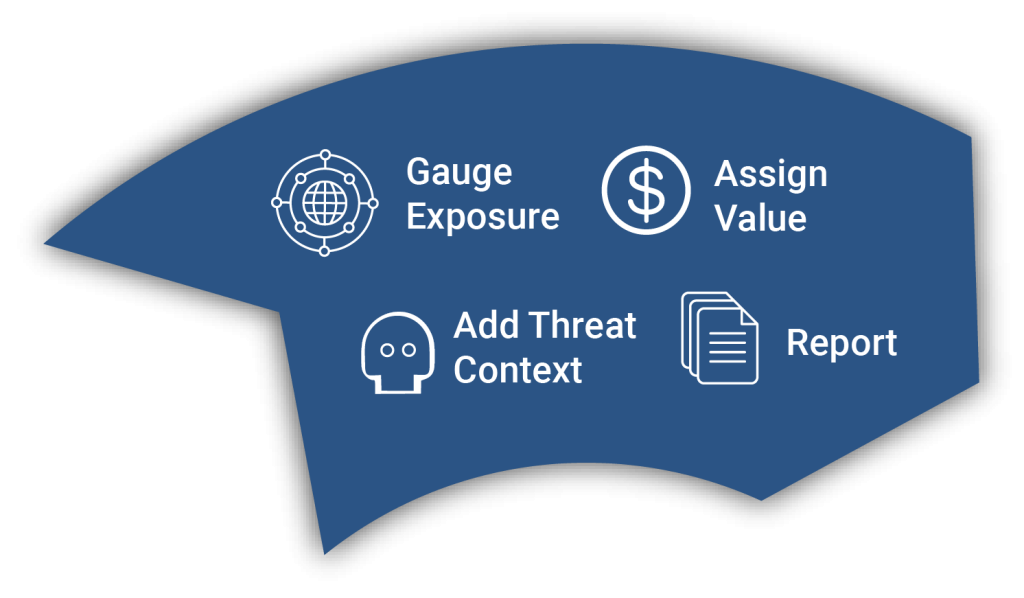
Findings are enriched with threat context, business relevance, and exposure analysis to determine how weaknesses contribute to real attack paths. We gauge external exposure, assess potential impact to internet-facing systems, and assign value based on operational importance.
Rather than relying on scanner severity alone, vulnerabilities are ranked according to their role in enabling compromise or lateral movement.
Mobilize Remediation Across Infrastructure and Security Teams
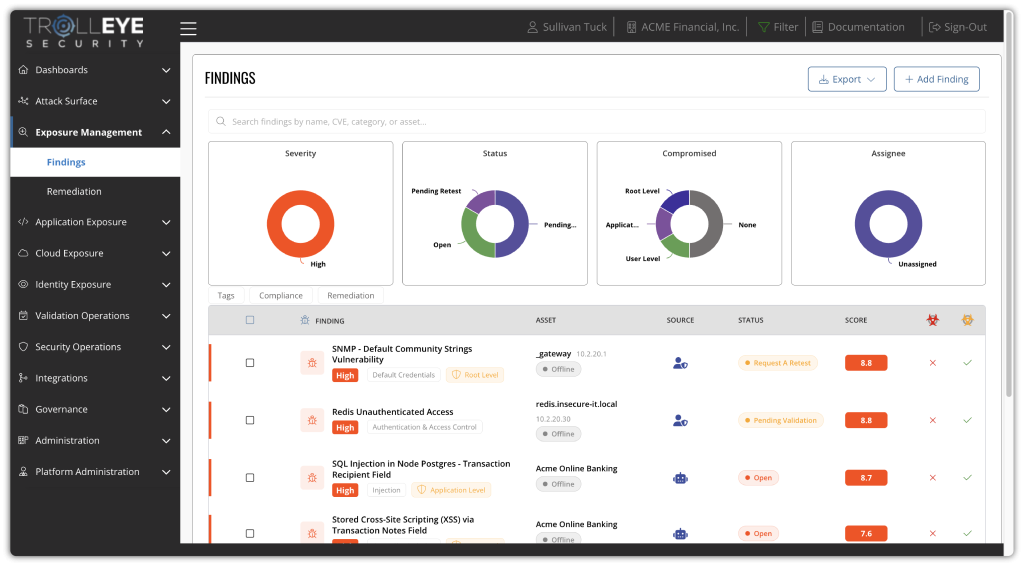
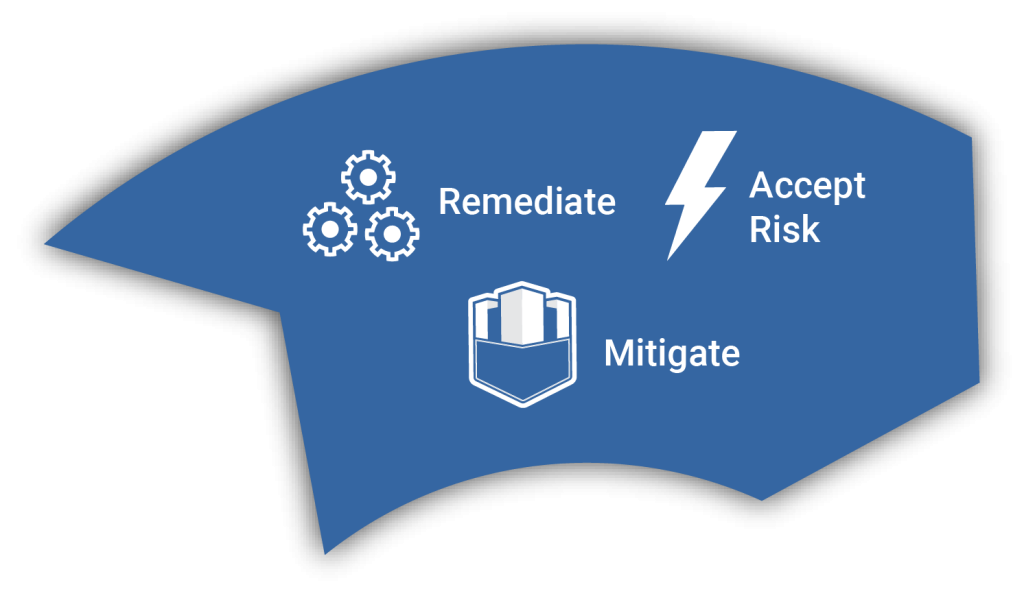
Validated findings are delivered with exploit evidence, reproduction detail, and clear remediation guidance for infrastructure, cloud, and security teams.
Through role-based task distribution and structured workflow alignment, issues are routed to the right owners with the right context. This reduces back-and-forth, accelerates fixes, and prevents validated external exposure from lingering in backlogs.
Re-Test to Confirm External Entry Points Are Closed
Once remediation is completed, we re-test affected assets and configurations to verify vulnerabilities have been fully resolved.
This prevents recurring exposure, confirms patch effectiveness, and ensures misconfigurations are not reintroduced during updates or infrastructure changes.
Reduce External Risk Through Continuous Validation
Over recurring PTaaS cycles, organizations strengthen external asset management, hardening standards, cloud configuration practices, and exposure monitoring.
This structured approach consistently drives measurable reduction in externally exploitable weaknesses and helps organizations move toward the near elimination of critical and high-severity findings over time.
Specialized Testing Across Every Domain with Penetration Testing as a Service (PTaaS)
External penetration testing is only one component of an effective security program. While many providers treat it as a point-in-time exercise, our internal testing is delivered as part of Penetration Testing as a Service (PTaaS), providing continuous, attacker-driven validation across your internal environment.
On average, our clients see critical and high findings drop to almost zero within six months of starting PTaaS.
From risk management to improving goodwill, external penetration testing is a powerful tool for your business. Call TrollEye Security today to get started.
Why Internal Testing Is Critical
External testing identifies whether attackers can get in. Internal testing determines what happens after they do.
Without validating internal controls, perimeter testing alone cannot measure real business risk.
Internal Testing: Measuring Impact & Propagation
Internal testing simulates an attacker operating inside the network. We assess identity controls, segmentation, and privilege boundaries to determine whether compromise can spread to sensitive systems or data.
Testing both perspectives ensures exposure is measured from initial access through full operational impact.
External Testing: Validating Initial Access
External testing simulates an attacker operating from the internet with no trusted access. We assess exposed services, cloud infrastructure, VPN portals, and public-facing applications to determine whether initial compromise is possible.
Security Leaders on Why They Choose TrollEye Security
“Nothing short of exceptional.” “It’s simple, yet powerful.” “A wonderful addition to our development lifecycle.”
If you’re curious about the experiences of other security leaders with our penetration testing, we invite you to browse through some of our reviews. We build a relationship of trust with our clients, and we’re proud of the work we’ve done to help them secure their organizations.
Stay Ahead of Hackers with External Penetration Testing
As the threat landscape evolves, businesses must constantly adapt their security strategies to stay ahead of the curve. External penetration testing is an essential part of any comprehensive security plan to keep cyber risks well-managed. By simulating real-world attacks, we can help you identify vulnerabilities and develop solutions to harden your network against attack.
You don't know how secure your system is until it gets put to the test. You can wait for a cyber attack to find out, or you can call TrollEye Security instead.