TrollEye Security

DEVSECOPS AS A SERVICE

Operationalize DevSecOps Without Building an AppSec Team.

Security isn't optional, but for many organizations, integrating it into the development lifecycle feels impossible.

TrollEye embeds continuous testing, validated findings, and streamlined remediation into your pipeline, then carries every application exposure into your Continuous Threat Exposure Management (CTEM) program. You get faster, safer releases without having to build it all yourself.
Secure by Design
Built for Release Speed
Less Rework
CTEM-Aligned
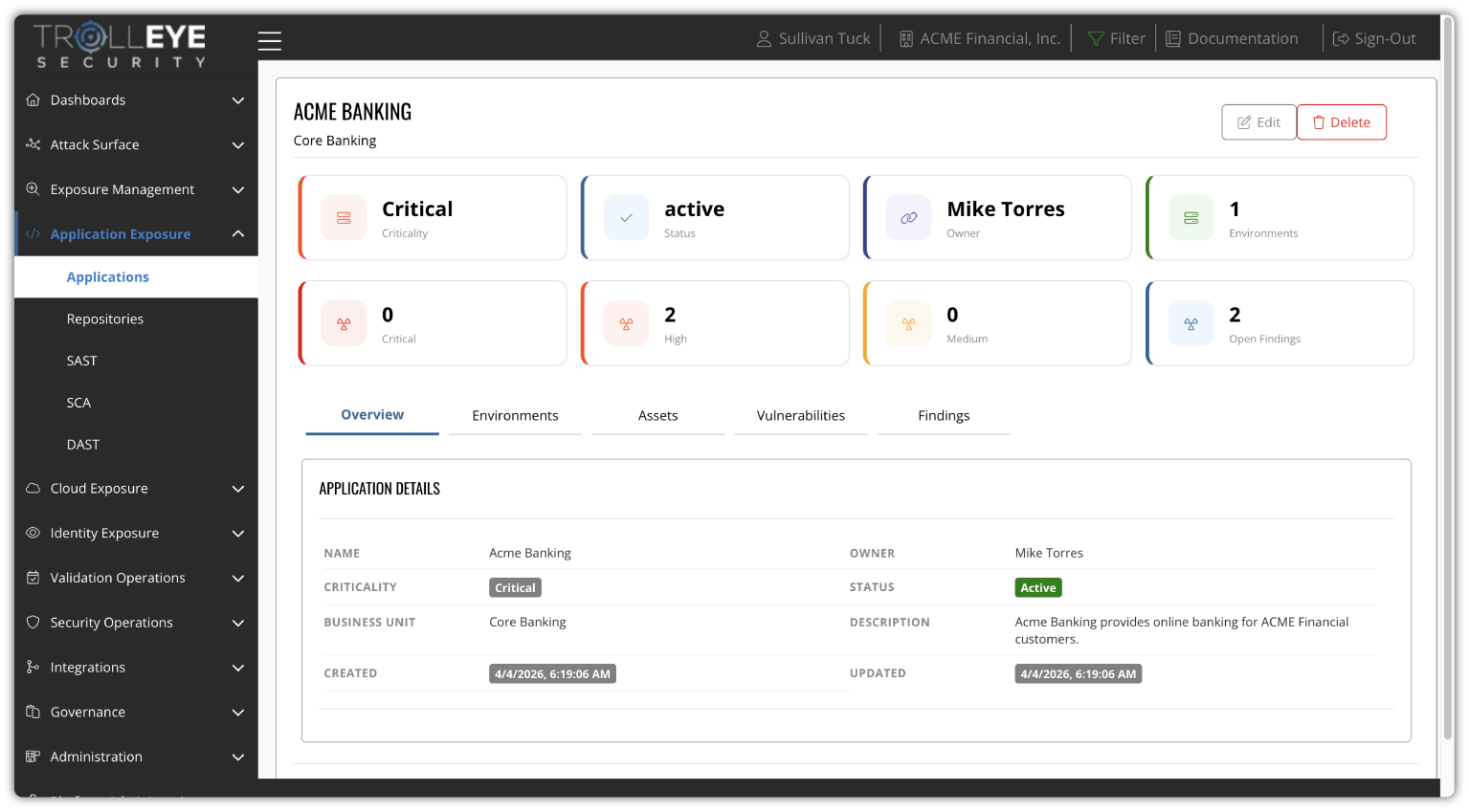
TrollEye platform application exposure view
CONTINUOUS DEVSECOPSEvery release feeds your CTEM program
THE OUTCOME 97.5% Reduction in vulnerabilities across secure releases
SECURE RELEASES, NOT JUST FINDINGS

DevSecOps Should Deliver Secure Releases, Not Just Findings.

Our DevSecOps as a Service solution is designed to remove friction between security, development, and delivery.

Instead of one-time assessments or disconnected tools, we operate a continuous security program that integrates directly into your development lifecycle and helps teams fix what matters, without slowing releases.

01

Secure Software by Design

Security testing is embedded into development workflows, validating real risk before code reaches production.

02

Deliver at the Speed of Business

Continuous testing integrated into CI/CD pipelines supports rapid, frequent releases without friction.

03

Reduce Rework and Lower Costs

Early detection and prioritized remediation reduce the cost of fixing vulnerabilities and prevent expensive production issues.

OUTCOME 01

Ship Secure Code Without Slowing Releases.

We embed security testing throughout your development pipeline, from early design and code changes to build, release, and production monitoring. New code, dependencies, and configuration changes are assessed as they're introduced, not months later.

01

Test every changeTesting runs continuously or on every release, so new risk is caught where it enters the pipeline.

02

Work inside CI/CDAutomated security validation runs within your existing pipelines, supporting rapid, frequent releases without friction.

03

Cover design to productionSecurity activities are aligned to every stage of the software development lifecycle.
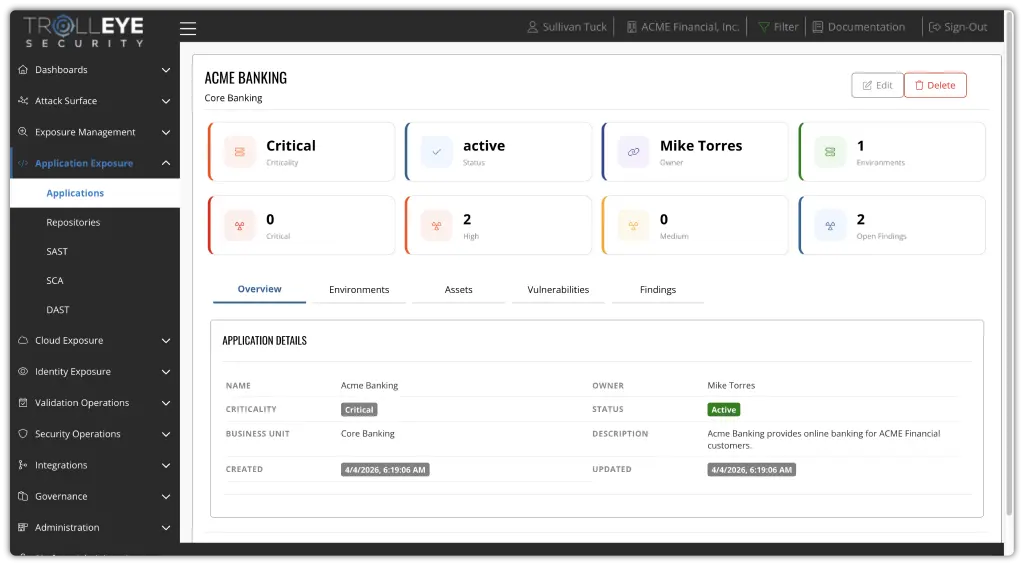
TrollEye application exposure view
OUTCOME 02

Eliminate Noise And Focus On Real Risk.

Validated findings are prioritized based on real exploitability and mapped directly to the applications, releases, and development teams responsible for remediation. Instead of flooding developers with noise, we focus on the exposures that pose actual risk.

01

Prioritize by exploitabilityRank findings by exploitability, exposure, and business impact instead of scanner severity alone.

02

Map findings to ownersConnect every issue to the application, release, and team that can fix it.

03

Protect developer timeHelp teams remediate faster without slowing delivery.
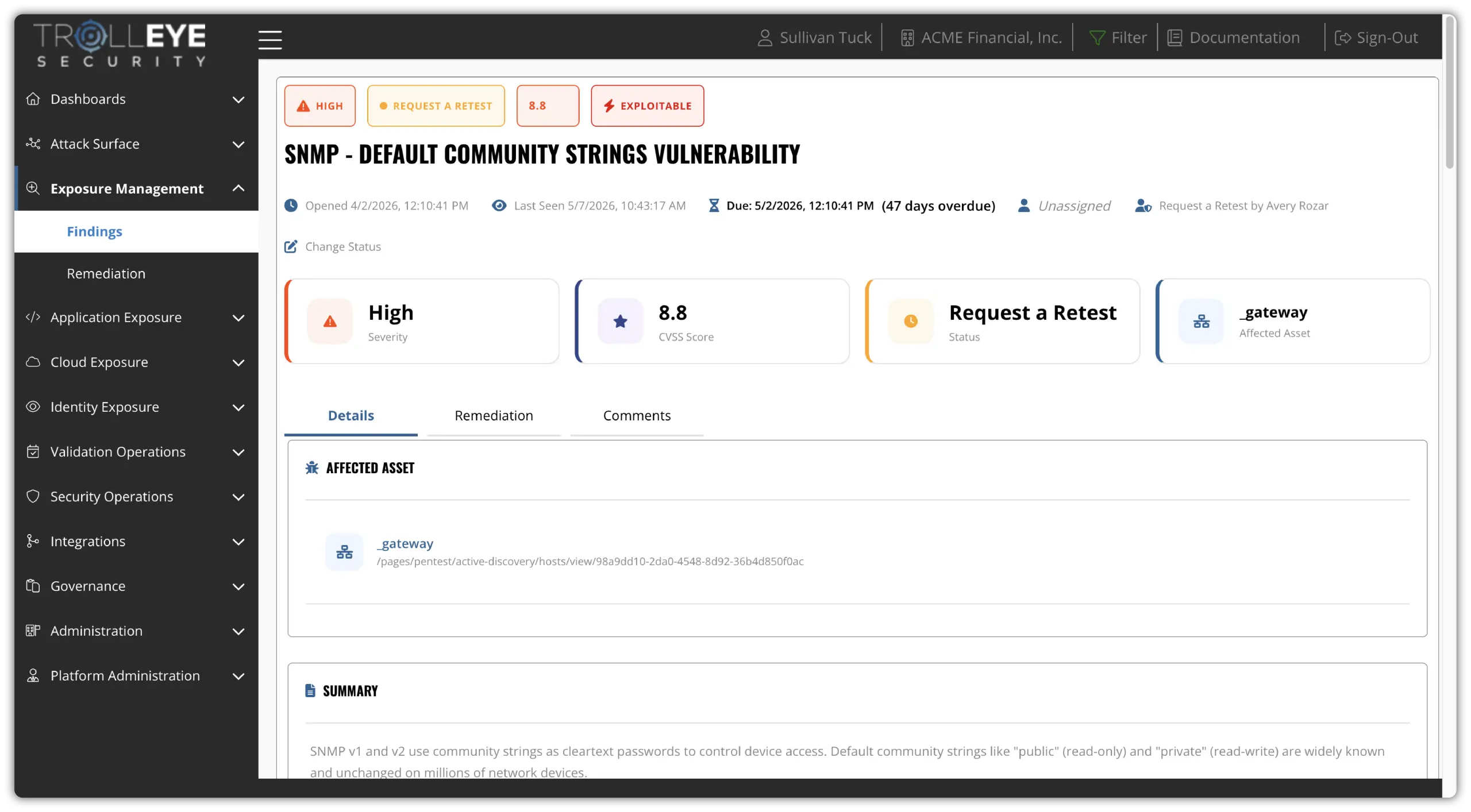
TrollEye detailed finding view
OUTCOME 03

Fix What Matters, Faster.

Every issue we surface is reviewed and validated by our security engineers to eliminate noise and false positives. Findings are enriched with exploitability context and business impact, so development teams know exactly what needs attention and why it matters.

01

Remove false positivesSecurity engineers review results before they ever reach a developer’s queue.

02

Add exploitability contextShow how an issue can actually be used, not just that it exists.

03

Explain business impactGive engineering leaders the context to sequence fixes against delivery priorities.
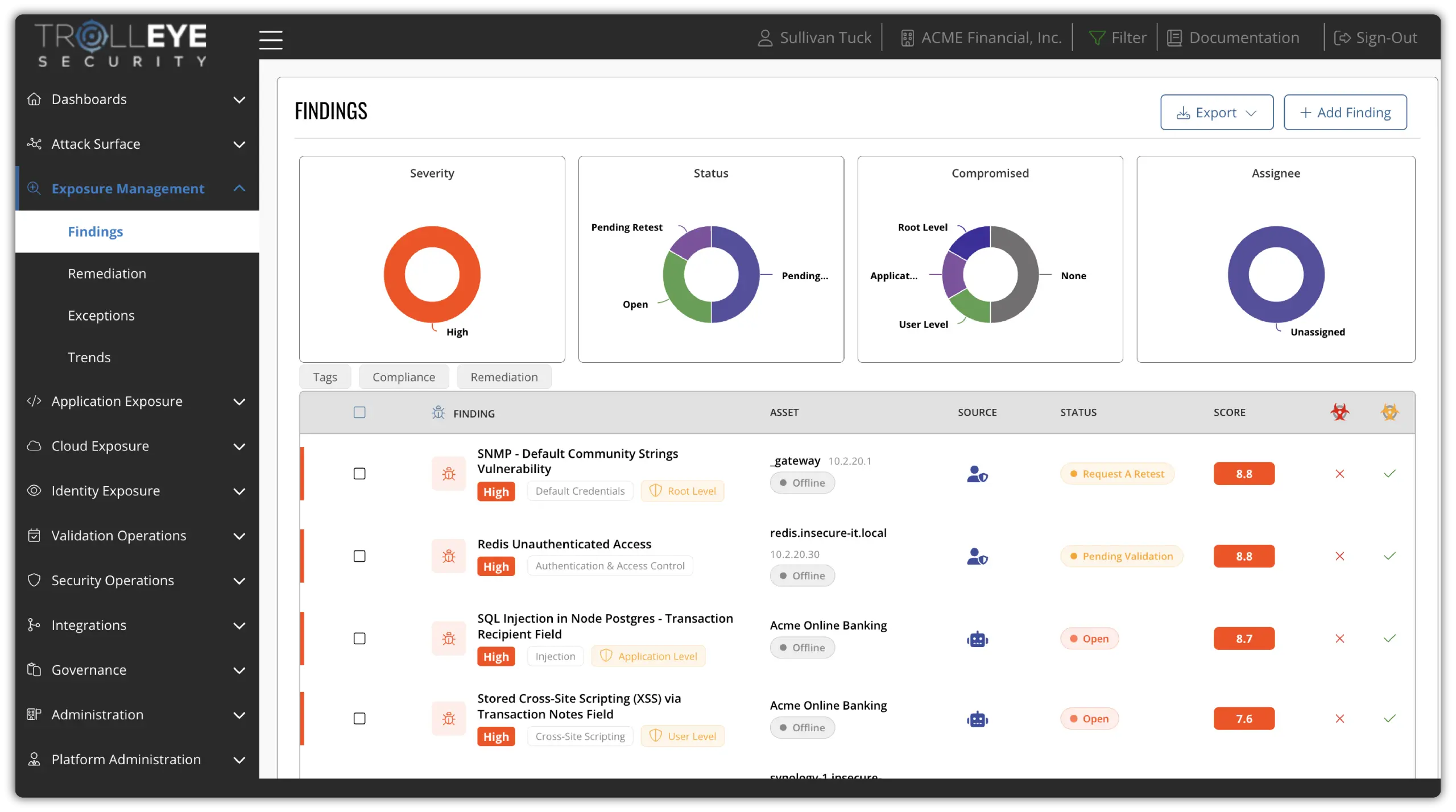
TrollEye findings management
OUTCOME 04

Integrated Remediation And Workflow Alignment.

Validated findings are routed into the workflows your developers already use. Integrations with GitHub, Azure DevOps, and Jira make sure issues are logged, prioritized, assigned, and tracked through completion without interrupting your teams.

01

Route into existing toolsPush findings into Jira and other ticketing platforms instead of another isolated portal.

02

Fit your toolchainIntegrate with GitHub and Azure DevOps pipelines your teams already rely on.

03

Retest after fixesConfirm vulnerabilities have been properly remediated once fixes are applied.
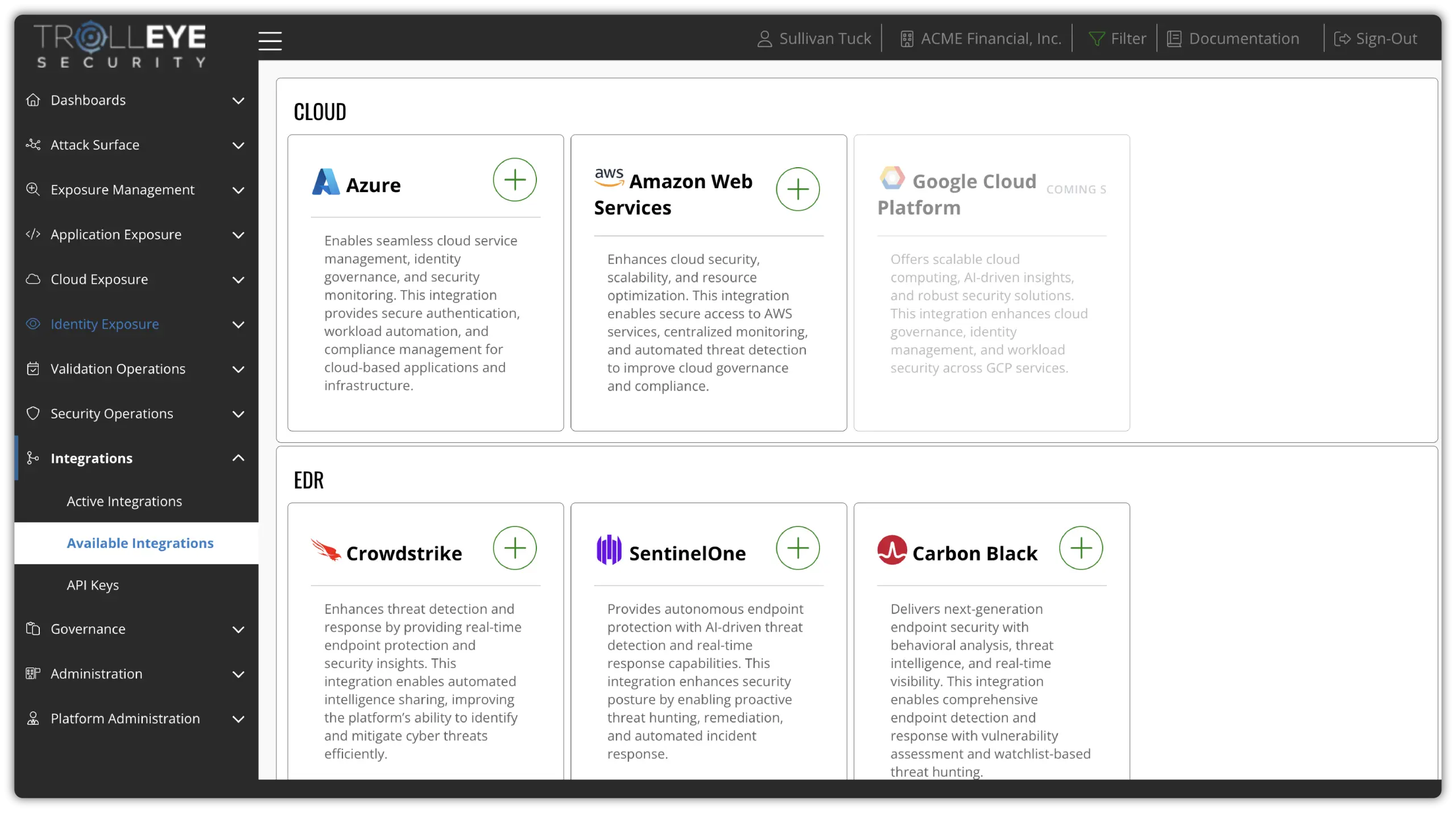
TrollEye platform integrations
OUTCOME 05

Run DevSecOps Without Adding Headcount.

Our team actively manages the DevSecOps program alongside you, tuning tests, reviewing results, and helping prioritize remediation as your environment evolves. You get continuous security coverage without needing to hire, train, or manage a dedicated AppSec team.

01

Expert-led program managementA platform backed by security engineers who operate the program with you.

02

Tuned as you growTesting evolves with new applications, repositories, and release patterns.

03

Clear executive reportingBusiness-aligned metrics show leadership how application risk is trending.
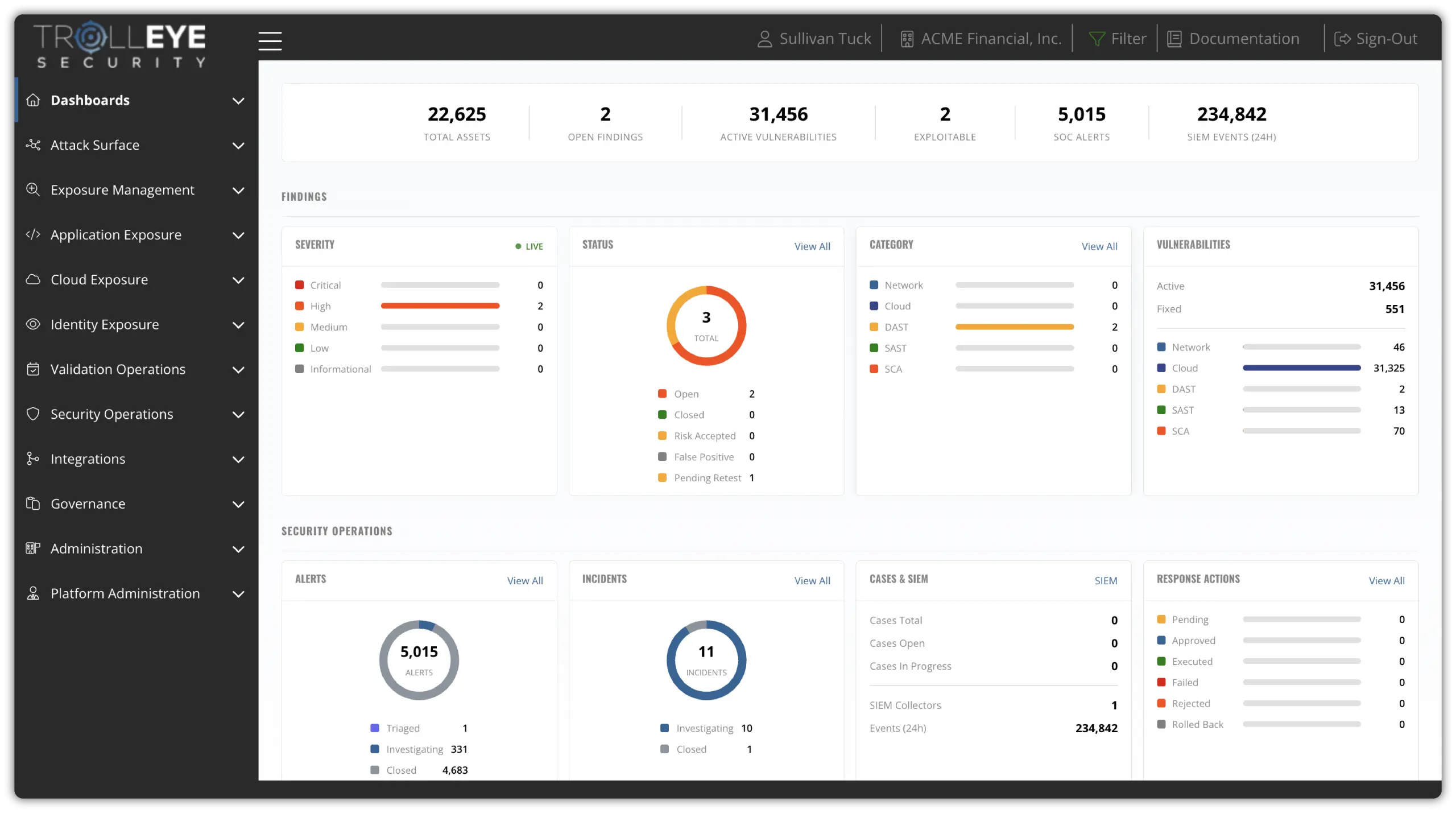
TrollEye exposure management dashboard
See DevSecOps in Action

Explore How TrollEye Secures Every Stage of Development

Choose a demo below to see how DevSecOps, SAST, SCA, and DAST surface, validate, and drive remediation of application exposure inside the TrollEye platform.
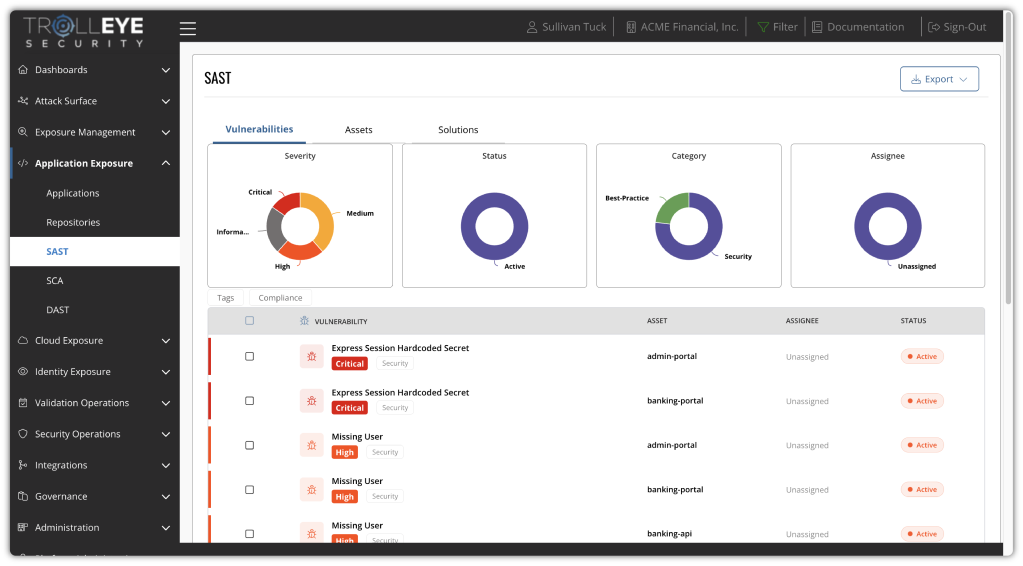
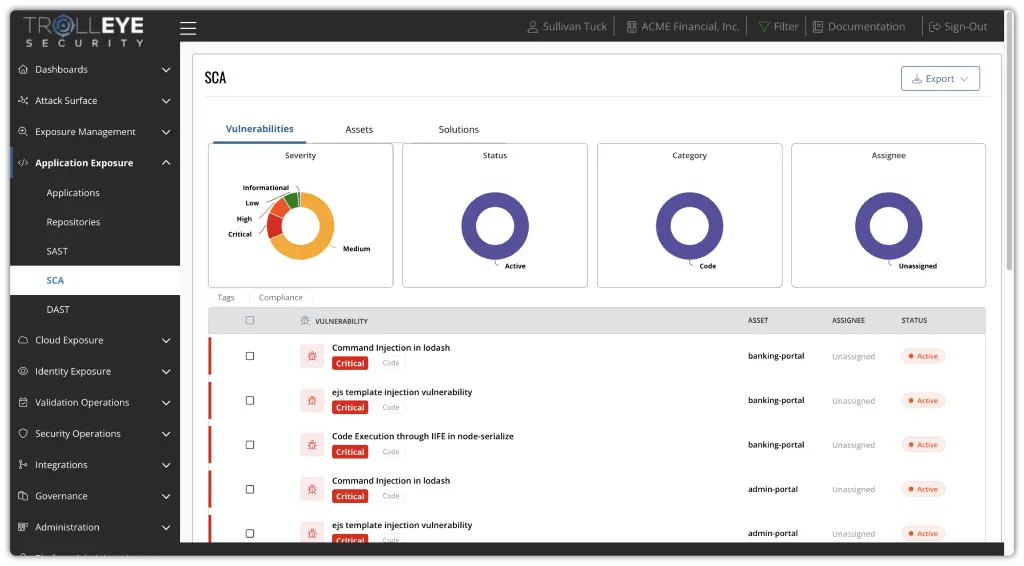
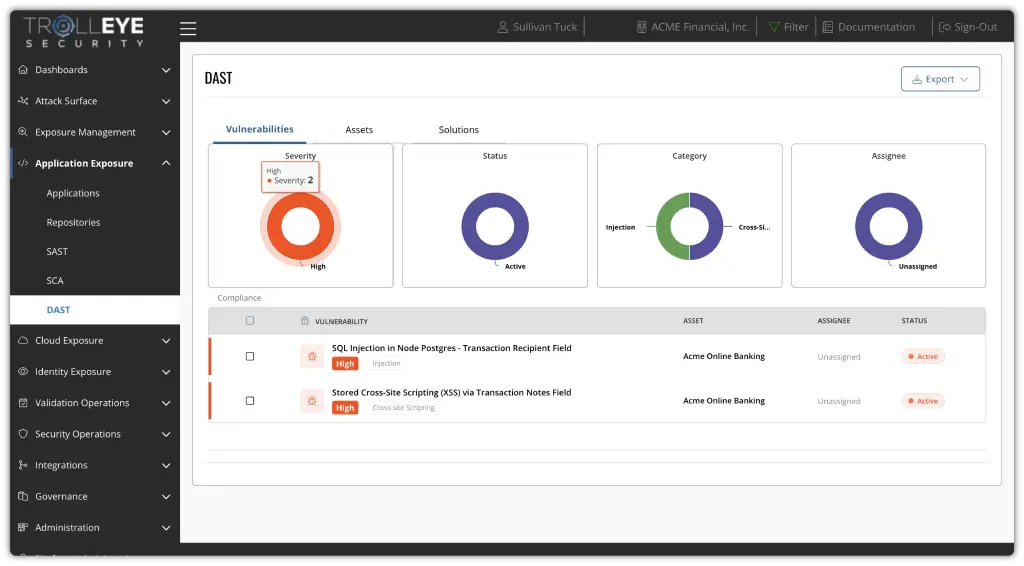
DevSecOps application exposure view in the TrollEye platform SAST findings in the TrollEye platform SCA findings in the TrollEye platform DAST findings in the TrollEye platform
PROVEN IN PRACTICE

Recognized by the Industry. Trusted by Engineering Teams.

Measurable improvement, not just another backlog, in a model recognized by Gartner and trusted by security and engineering teams.

CASE STUDY · SOFTWARE COMPANY

How a Software Company Reduced Vulnerabilities by Over 97% with DevSecOps.

97.5%Fewer vulnerabilities
0Critical & high findings
0Known vulnerabilities at release
“We chose DevSecOps because the traditional annual testing model just wasn’t enough. With multiple fintech applications in production, we needed a way to embed security into our development lifecycle, something continuous, scalable, and built to catch issues before they ever made it to production.”
Vice President of Information Security, Software Company Read the Case Study →
What differentiates TrollEye Security is their level of engagement. They operate as a true partner, embedding into our DevSecOps workflows and working directly with our engineering teams to improve processes and drive remediation. Their ‘white glove’ support model is something we didn’t have with previous vendors. They’re responsive, accessible, and willing to engage in real time when needed.

Ricoh Danielson
Ricoh DanielsonEnterprise CISO, CorroHealth
WHAT'S INCLUDED

Security Built Into Every Stage of the SDLC.

Our DevSecOps solution combines security expertise, continuous validation, a centralized platform, and remediation support to help organizations build and release secure software without building an internal AppSec team.

01Security Planning & Architecture
02Secure Development Controls
03Continuous Security Testing
04Deployment & Release Validation
05Production Monitoring & Risk Management
06Remediation, Reporting & Compliance Support
SELECT A STAGE TO EXPLORE HOW WE SECURE THE LIFECYCLE Talk with a DevSecOps Expert →
Dev Ops SEC PLAN Threat Modeling CODE Static Analysis BUILD Build Integrity TEST Penetration Testing RELEASE Release Readiness DEPLOY Code Signing OPERATE Monitor & Detect MONITOR Measure & Report
STAGE 01 OF 08 · PLAN · DEV

Build Security Into Design Decisions.

Security issues are significantly less expensive to address before development begins. During planning, we help teams identify risks, define security requirements, and establish secure architectural patterns before code is written.

01

Threat Modeling

Identifies potential attack paths, trust boundaries, and security weaknesses during application design.

02

Security Requirements Definition

Establishes security controls and requirements before development begins.

03

Risk Assessments

Evaluates business and technical risks associated with applications and infrastructure.

04

Secure Architecture Reviews

Analyzes application and infrastructure designs to identify insecure patterns early.

CTEM ALIGNMENT
STAGE 02 OF 08 · CODE · DEV

Prevent Vulnerabilities During Development.

Security validation is integrated directly into developer workflows to identify insecure code, exposed secrets, vulnerable dependencies, and infrastructure risks before they move further into the pipeline.

01

SAST

Scans source code for vulnerabilities and insecure coding practices during development.

02

SCA

Identifies vulnerable or outdated open-source dependencies within applications.

03

Secrets Detection

Detects exposed credentials, API keys, and sensitive information in repositories.

04

Secure Coding Standards

Verifies adherence to secure development standards and best practices.

05

SBOM Generation & Validation

Creates and validates software bills of materials for dependency transparency.

06

IaC Scanning

Scans infrastructure templates for security misconfigurations before deployment.

CTEM ALIGNMENT
STAGE 03 OF 08 · BUILD · DEV

Validate Build Integrity Before Release.

As applications move through CI/CD pipelines, we continuously validate build artifacts, containers, and deployment processes to prevent insecure software from progressing toward production.

01

CI/CD Security Integration

Integrates automated security validation directly into development pipelines.

02

Container Image Scanning

Analyzes container images for vulnerabilities and insecure configurations.

03

Pipeline Security Validation

Secures CI/CD workflows against unauthorized modifications and injection attacks.

04

Artifact Signing & Verification

Confirms software artifacts and packages keep their integrity throughout the delivery pipeline.

CTEM ALIGNMENT
STAGE 04 OF 08 · TEST · DEV

Validate Real-World Attack Paths.

Automated testing alone cannot identify every security risk. During testing, we continuously validate applications through penetration testing, API security assessments, and business logic testing to uncover exploitable weaknesses before attackers do.

01

DAST

Tests running applications for exploitable vulnerabilities and insecure behavior.

02

API Security Testing

Validates APIs for authentication flaws, excessive exposure, and insecure endpoints.

03

Penetration Testing as a Service (PTaaS)

Agentic and human testing that continuously simulates real-world attacks against your applications.

04

Business Logic Testing

Identifies flaws in application workflows that traditional scanners often miss.

05

Security Regression Testing

Ensures security fixes do not introduce new vulnerabilities or regressions.

CTEM ALIGNMENT
STAGE 05 OF 08 · RELEASE · OPS

Ensure Applications Are Ready for Production.

Before release, security findings, compliance requirements, and accepted risks are reviewed so stakeholders understand remaining exposure and release decisions are properly documented.

01

Release Readiness Review

Verifies that applications meet security requirements before production release.

02

Compliance Validation

Aligns security processes with frameworks such as SOC 2, HIPAA, PCI DSS, and ISO 27001.

03

Risk Acceptance Review

Documents accepted risks and approved exceptions before release.

04

Security Gate Approval

Confirms security requirements have been met before production deployment.

CTEM ALIGNMENT
STAGE 06 OF 08 · DEPLOY · OPS

Secure the Transition to Production.

As applications move into production environments, security controls, configurations, and runtime protections are verified so deployments remain secure outside of development and testing environments.

01

Code Signing Validation

Verifies deployed software originates from trusted and approved build processes.

02

Configuration Hardening Verification

Checks systems against security hardening benchmarks and best practices.

03

Attack Surface Verification

Reviews externally exposed assets, services, and applications before deployment to production.

CTEM ALIGNMENT
STAGE 07 OF 08 · OPERATE · OPS

Maintain Visibility Across Production Environments.

Security doesn’t end after deployment. We continuously monitor applications, infrastructure, and cloud environments to identify emerging vulnerabilities, attack surface changes, and operational security risks.

01

Attack Surface Management (ASM)

Continuously monitors and tracks externally exposed assets and attack surface changes.

02

Continuous Vulnerability Management

Maintains ongoing insight into vulnerabilities across applications and infrastructure.

03

Threat Intelligence Integration

Incorporates threat intelligence feeds to prioritize response based on active threats.

04

Patch Validation & Coordination

Coordinates and confirms security patches across the application and infrastructure stack.

05

Configuration Drift Detection

Monitors for unauthorized changes to security configurations in production.

06

Incident Response Support

Provides expert support for security incident investigation, containment, and recovery.

07

Cloud Security Posture Management (CSPM)

Continuously identifies cloud configuration weaknesses and security gaps in production.

STAGE 08 OF 08 · MONITOR · OPS

Measure, Prioritize, and Reduce Risk Over Time.

Findings are tracked through remediation, retested after fixes, prioritized based on business impact, and reported to both technical teams and leadership to drive continuous security improvement.

01

Security Monitoring & Alerting

Provides continuous monitoring and alerting for security events and operational risks.

02

Risk-Based Prioritization

Ranks findings based on exploitability, exposure, and business impact.

03

Remediation Tracking

Tracks remediation progress and confirms issue resolution over time.

04

Retesting & Verification

Confirms vulnerabilities have been properly remediated after fixes are applied.

05

Workflow Automation

Automates security workflows to improve efficiency and reduce manual overhead.

06

Jira / Ticketing Integration

Routes validated findings directly into remediation workflows and ticketing systems.

07

Compliance Evidence Collection

Automatically collects and organizes evidence for compliance audits and reporting.

08

Executive Reporting

Delivers clear, business-aligned security metrics and reporting for leadership.

CTEM ALIGNMENT
APPLICATION EXPOSURE MANAGEMENT

DevSecOps Is How Applications Enter Your CTEM Program.

Application security is a critical component of Continuous Threat Exposure Management. Through DevSecOps, organizations continuously identify, validate, and remediate security exposures throughout the software development lifecycle, before they reach production environments.

Applications are one domain of your attack surface, alongside network, cloud, and identity. DevSecOps powers the Discovery, Validation, and Mobilization stages for that domain, while Scoping and Prioritization run across your entire attack surface in the same TrollEye platform.

WHERE DEVSECOPS FITS IN THE FIVE CTEM STAGES
STAGE 01PLATFORM

Scoping

Define the applications, repositories, pipelines, and releases that matter most to the business, and the security requirements each must meet.

Explore Scoping →
STAGE 02DEVSECOPS

Discovery

Continuously surface vulnerable code, open-source dependencies, exposed secrets, IaC misconfigurations, container weaknesses, and internet-facing application assets.

Explore Discovery →
STAGE 03PLATFORM

Prioritization

Rank application findings by exploitability, exposure, and business impact, in context with cloud, identity, and operational risk.

Explore Prioritization →
STAGE 04DEVSECOPS

Validation

Prove which application exposures are actually exploitable and reachable through DAST, API security testing, business logic testing, and PTaaS.

Explore Validation →
STAGE 05DEVSECOPS

Mobilization

Route validated findings to the developers who own them through Jira and existing pipelines, and fix root causes so issues don’t recur.

Explore Mobilization →
INSIDE OUR CTEM PACKAGES

Application Exposures Don’t Exist In Isolation.

Within our CTEM packages, application exposures are correlated with cloud, identity, and operational risks, helping security and engineering teams focus on the remediation activities that will have the greatest impact on overall risk reduction.

DEVSECOPS FAQ

Questions About DevSecOps and Your CTEM Program

A closer look at how our DevSecOps solution works: testing across the SDLC, validated findings, developer workflows, toolchain integration, and how application exposure feeds your CTEM program.

SERVICETESTINGINTEGRATIONSCTEM
01 How is this different from hiring an internal AppSec team?

Building an internal AppSec program requires specialized talent, security tooling, operational processes, and ongoing management.

Our DevSecOps solution delivers those capabilities through a fully managed program backed by the TrollEye platform, so you can embed security throughout the development lifecycle without the cost and complexity of building an internal team.

02 How does DevSecOps fit into a CTEM program?

Applications are one domain of your attack surface. DevSecOps applies each CTEM stage to that domain: scoping the applications and pipelines that matter, discovering exposures as code changes, prioritizing by exploitability and business impact, validating what is actually exploitable and reachable, and mobilizing developers to fix root causes.

Within our CTEM packages, those application exposures are correlated with cloud, identity, and operational risk.

03 What types of security testing are included?

Depending on your environment and requirements, the program can include threat modeling, SAST, SCA, secrets detection, IaC scanning, DAST, API security testing, penetration testing, cloud security validation, and continuous exposure monitoring.

Security activities are aligned to each stage of the software development lifecycle.

04 Will this slow down our development teams?

No. Security validation is integrated into existing development workflows, helping teams identify and address issues earlier, when they are faster and less expensive to fix.

By reducing rework, security debt, and last-minute release delays, DevSecOps often improves delivery efficiency over time.

05 Can this be integrated into our existing toolchain?

Yes. The service is designed to integrate with your existing CI/CD pipelines and development tools, including GitHub and Azure DevOps.

It also integrates with issue-tracking systems like Jira so findings are automatically logged, prioritized, and assigned without interrupting your developers’ workflows.

06 How are findings delivered to developers?

Validated findings are prioritized based on exploitability, exposure, and business impact before being routed into existing development workflows.

Integrations with Jira and other ticketing platforms help ensure issues are assigned, tracked, remediated, and verified through completion.

SEE IT IN PRACTICE See how DevSecOps works inside TrollEye.

Explore application exposure, code and dependency scanning, validated findings, and remediation workflows before starting your evaluation.

EXPERIENCE DEVSECOPS

Secure Every Release. Reduce Exposure Continuously.

Our team combines deep expertise in cybersecurity, software development, and DevOps methodologies to deliver DevSecOps tailored to your organization, whether you are a startup, a growing business, or a large enterprise. Reach out to schedule a consultation and see how DevSecOps strengthens your CTEM program.

  1. 01Security testing in every pipeline stage
  2. 02Validated findings, not scanner noise
  3. 03Fixes routed straight to developers
  4. 04Application exposure fed into CTEM
Live Product Update

Meet the Future of
Risk & Remediation

Introducing two major additions to the TrollEye CTEM platform, designed to help teams move from exposure to action.

AI Remediation Agent

AI assistance to help security teams move from findings to fixes faster.

Business Risk Dashboard

New visibility into breach probability, financial risk, and compliance.

Hosted By

Avery Rozar Avery Rozar CEO, TrollEye Security
Sullivan Tuck Sullivan Tuck Head of Growth & Marketing
December 17, 2026 • 2:00 PM ET • Live Online
Reserve Your Spot →

This Content Is Gated