
Identify Vendor Exposure with Third-Party Risk Management
Monitor vendor exposure across the dark web to reduce supply chain risk.
Third-party vendors often have access to sensitive systems, credentials, and data. When those vendors experience breaches or credential leaks, the resulting exposure can quickly extend beyond their organization and impact yours.
Our Third-Party Risk Management capability analyzes dark web data to identify breached records, exposed credentials, and other risk indicators associated with your vendors.

Early Vendor Exposure Detection
Identify breached records, credential leaks, and other exposure indicators connected to third-party vendors before they can be used in attacks.

Stronger Supply Chain Visibility
Gain insight into the external security posture of vendors that interact with your systems, data, or infrastructure.

Proactive Third-Party Risk Response
Detect vendor-related exposure quickly so security teams can assess potential impact and take proactive mitigation steps.

Managing Risk Across Your Vendor Ecosystem
Organizations rely on third-party vendors for critical services, integrations, and infrastructure, often granting them access to sensitive systems or data. When those vendors experience breaches or credential leaks, the resulting exposure can extend beyond their organization and introduce risk to yours.
Third-Party Risk Management within our Dark Web Analysis service provides visibility into vendor-related exposure by monitoring dark web sources for breached records, leaked credentials, and other indicators tied to third-party organizations.
Track Risk Indicators Associated with Third-Party Organizations
Third-party risk often remains invisible until a breach is publicly disclosed. Continuous monitoring of dark web sources helps identify credential leaks, breached records, and other exposure indicators tied to vendors before they escalate into active threats.
Understand and React to Vendor Exposure Sooner
When vendors experience breaches, organizations often learn about the incident long after sensitive data or credentials have already circulated. Early exposure detection allows security teams to evaluate potential impact quickly and take mitigation steps sooner.
Focus Security Efforts Where Exposure is Highest
Not all vendors introduce the same level of risk. Monitoring vendor exposure helps organizations prioritize oversight and response efforts toward partners whose exposure could materially affect their environment.
Support Vendor Risk and Compliance Requirements
Continuous monitoring helps organizations demonstrate oversight of third-party risk as part of broader security and compliance programs.
By identifying exposure tied to vendors and maintaining visibility into supply chain risk, security teams can strengthen compliance efforts related to vendor management, due diligence, and ongoing risk monitoring.
Monitoring Exposure Across Different Vendor Types
Third-party risk can originate from many types of vendors, each introducing different levels of access, integration, and potential exposure.
By monitoring the dark web for breaches and leaked credentials associated with these organizations, security teams gain visibility into risks that could impact their environment.

Technology & Software Vendors
Software and SaaS vendors often integrate directly with internal systems or store sensitive data, meaning breaches involving these providers can expose credentials, APIs, or application access.

Managed Service Providers (MSPs)
MSPs frequently maintain administrative or remote access to client environments, making them high-value targets whose compromise can provide attackers with trusted access paths.
Cloud & Infrastructure Providers
Cloud and infrastructure vendors host applications and data, so breaches or credential exposure tied to these providers can increase the risk of infrastructure compromise or data exposure.

Financial & Payment Processors
Payment and financial service providers handle sensitive transaction and account data, making exposure tied to these vendors a potential source of fraud or financial data compromise.

Strategic Business Partners
Organizations that share data, systems, or integrations with your environment can introduce indirect risk if their credentials, systems, or employees are compromised.

Professional Service Providers
Consultants, legal firms, auditors, and other professional service providers often handle sensitive business information, making breaches a potential source of data exposure.
How Third-Party Risk Management Works
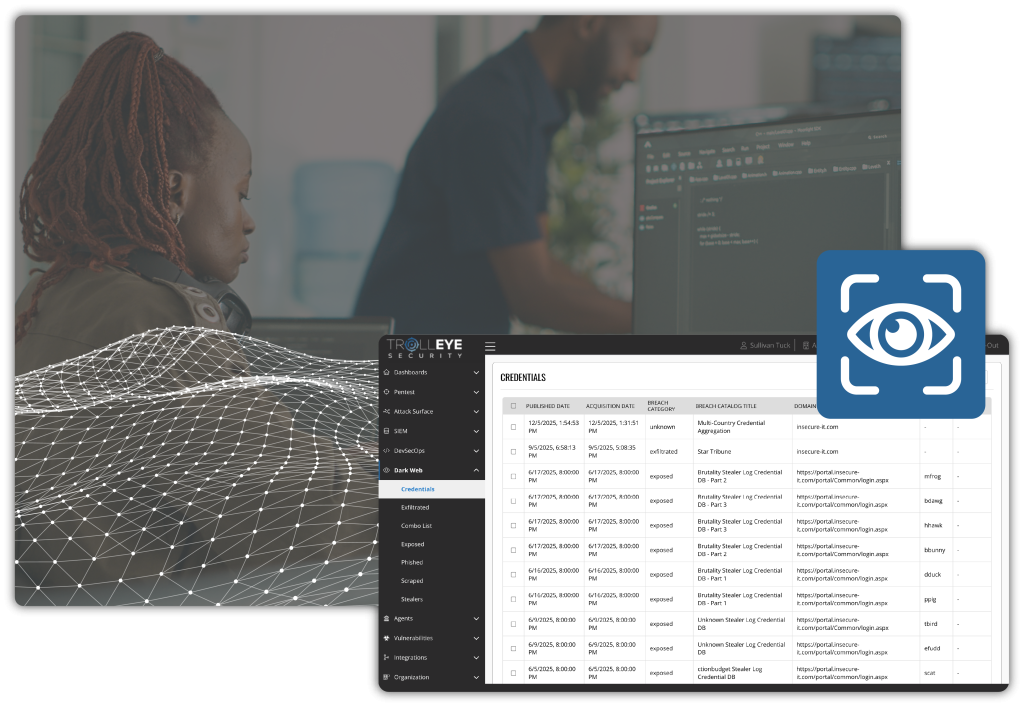
Our Third-Party Risk Management capability runs continuously in the background, scanning, validating, and alerting your team to vendor exposure before it becomes a threat to your organization.
#1 - Vendor Selection & Setup
You provide a list of third-party vendors, technology providers, MSPs, payment processors, cloud vendors, or any other organization that has access to your systems or data. We configure monitoring for each vendor to track their exposure across dark web sources.
#2 - Continuous Dark Web Scanning
Our platform runs monthly scans across dark web forums, breach repositories, and leaked credential databases. We search for records tied to your vendor organizations, including employee credentials, exposed accounts, and breach records associated with their domains.
#3 - Exposure Analysis & Validation
When exposure is detected, our analysts review and validate the findings. We assess whether exposed credentials are still active, evaluate the potential risk to your environment, and prioritize findings based on the access level and criticality of each vendor relationship.
#4 - Reporting & Guided Remediation
Validated findings are delivered through our Exposure Management Platform and reviewed during monthly cadence calls. Your team receives guidance, whether that means enforcing credential resets with a vendor, restricting access, or escalating risk to leadership.
Where Third-Party Exposure Monitoring Fits in a Dark Web Analysis Strategy
Dark web analysis provides visibility into sensitive data that has already been exposed through breaches. When corporate credentials or executive information appear in breach datasets, it often signals elevated risk of account compromise or targeted attacks.
Monitoring these exposures helps organizations identify risk early and respond before attackers attempt to exploit the data. Within a dark web exposure management strategy, monitoring typically focuses on three key areas: exposed credentials, executive exposure, and third-party vendor exposure.
Identify Compromised Credentials Associated with Your Organization
Credentials exposed in breach datasets are one of the most common paths attackers use to gain unauthorized access. Dark web analysis identifies usernames and passwords tied to corporate domains that appear in breach data, helping organizations reset compromised accounts, enforce stronger authentication controls, and reduce the risk of credential-based attacks.
Detect Exposure Affecting Leadership and High-Value Individuals
Executives are frequent targets for phishing, impersonation, and account compromise. Monitoring breach datasets for records tied to executives helps organizations identify leaked personal or professional credentials that could be used to target leadership or gain access to sensitive systems.
Understand Supply Chain Risk Introduced by External Partners
Vendors that integrate with your systems or handle sensitive data can introduce indirect exposure if they experience breaches. Monitoring breach data associated with third-party organizations helps security teams identify supply chain risk and evaluate potential downstream impact.
TrollEye Security: Helping You Manage Third Party Risk
Managing third-party risks is essential to your organization’s cybersecurity posture. Our Third Party Vendor Risk Management offering gives you the visibility needed to strengthen vendor relationships and reduce breach risk.
Contact us today to learn how we can help you build a more secure vendor network, so you can focus on your core operations with confidence.