Another audit report won’t stop an attacker. Closed attack paths will.
Proof your controls hold, fewer paths to customer data, and a record examiners trust, whether you run on Jack Henry and Fiserv or ship fintech code every week.
Experience inside the systems banking and fintech run on.
We’ve worked inside banks running decades-old core platforms and fintech teams shipping code every week. Financial risk doesn’t live in one system. It lives in the core platforms, digital banking channels, payment rails, vendor connections, and APIs that touch customer money every day. That’s where we work.
Combined totals across the financial services organizations TrollEye helps secure.
Four places financial institutions get exposed. Four outcomes we deliver.
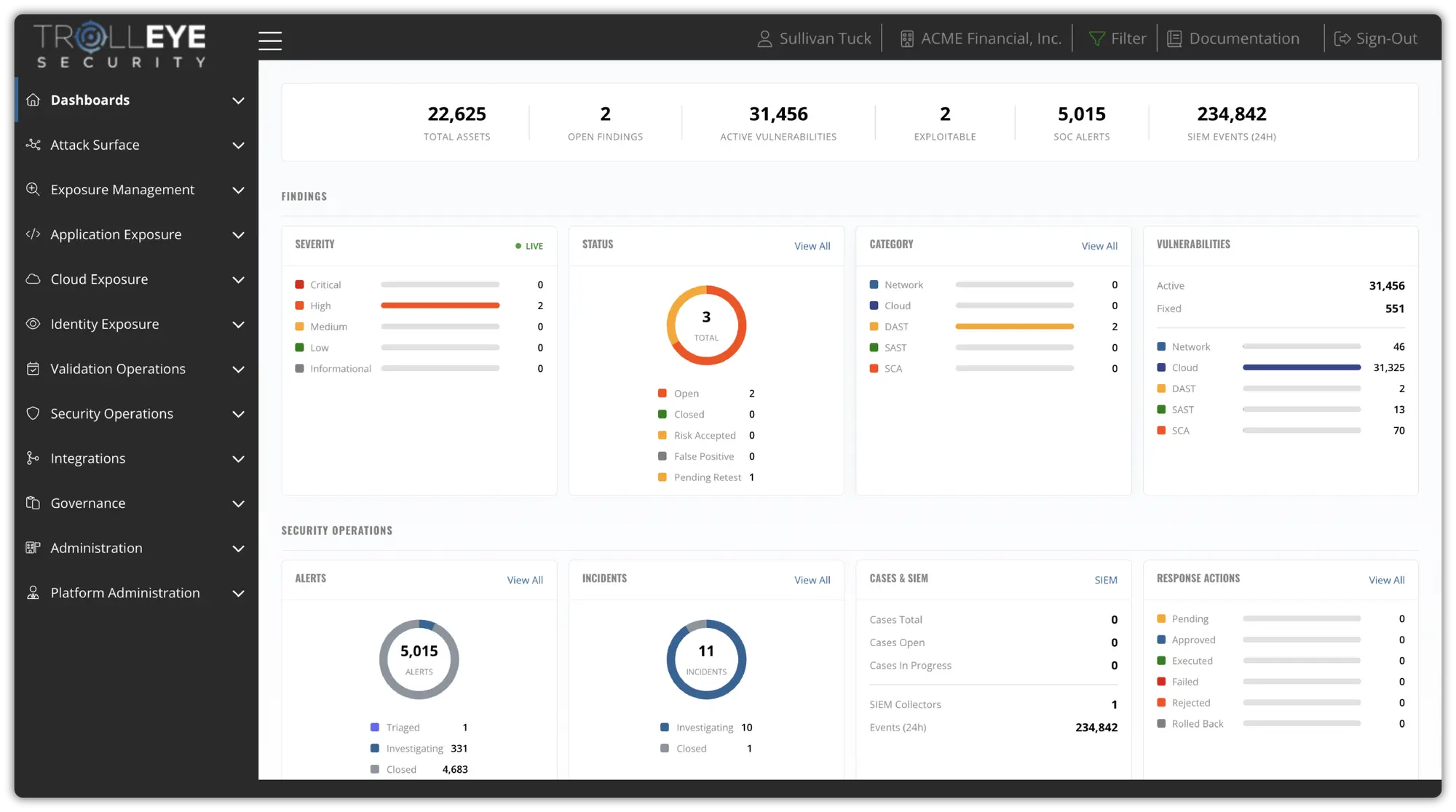
Each area runs through the TrollEye platform, from discovery and agentic and human testing to owners, deadlines, and retesting. Select an area to see where risk is going down.
Fewer reachable ways in
Of all those access paths, only a handful actually reach customer data, and scanner severity scores bury them under everything else.
Controls proven under attack
A clean exam doesn’t prove your technical, human, physical, and incident response controls hold up together.
Releases that ship clean
Fintech apps, payment APIs, and online banking change all year, so new risk lands long after the last annual pen test.
Examiners get evidence, not effort
Showing what changed since last year means rebuilding a record from PDFs, tickets, and spreadsheets every exam cycle.
The evidence examiners ask for. Kept current all year.
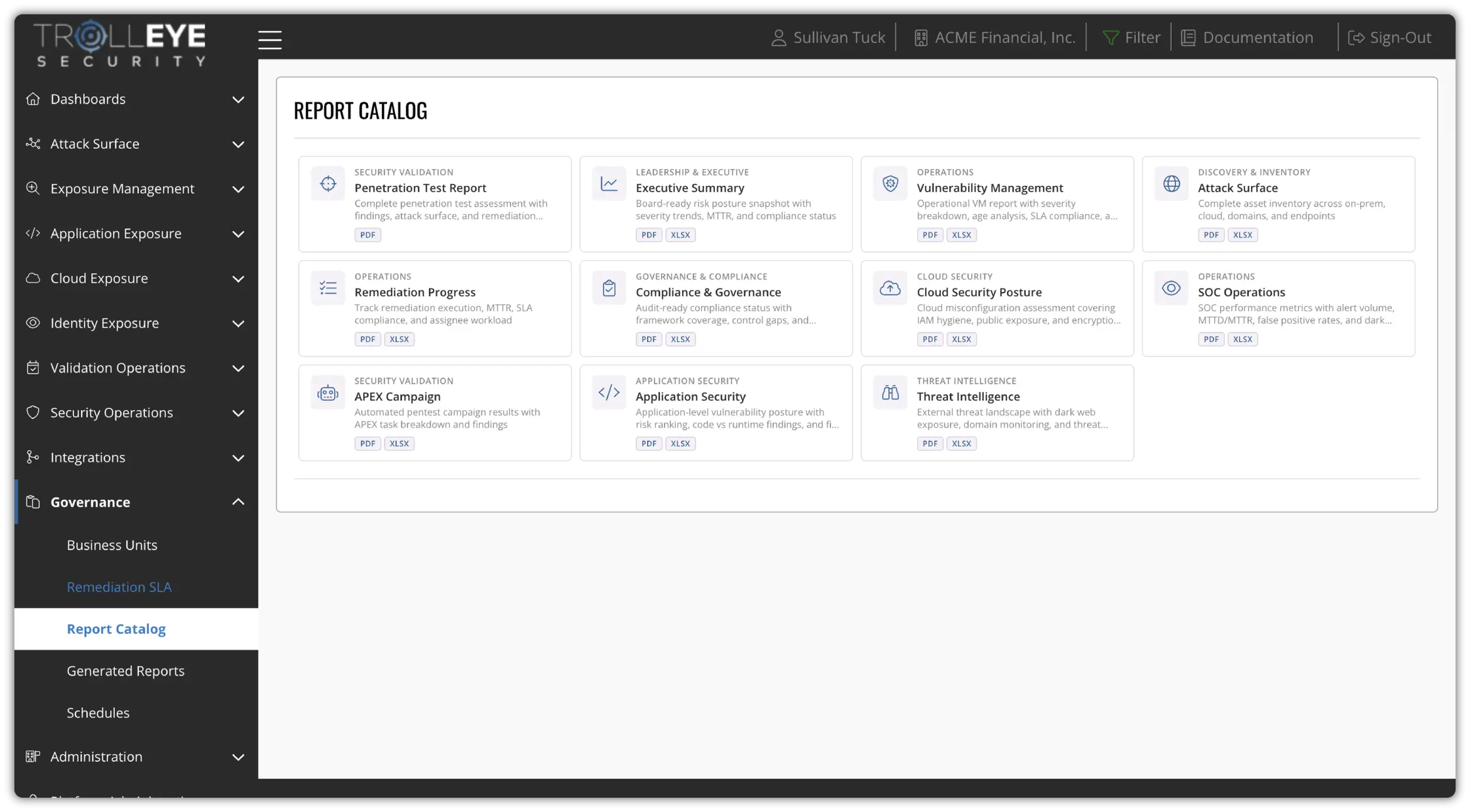
Examiners look for testing, validated findings, clear ownership, and proof that issues were fixed. TrollEye keeps that record in one place, all year.
- FFIECIT Examination Handbook
- NYDFS23 NYCRR Part 500
- GLBASafeguards Rule
- PCI DSSv4.0
- OSFIGuideline B-13
TrollEye provides testing evidence and remediation records that support these requirements. It doesn’t replace your compliance program or an examiner’s judgment.
- Testing history for every assessment
- Validated, prioritized findings
- Owners held to remediation SLAs
- Retest records that confirm closure
- Your side of every vendor and core processor connection, tested
CTEM, built around how financial institutions operate.
Five stages that run continuously, not once a year.
Scoping
Start with customer moneyDiscovery
Find every access pathPrioritization
Rank by real impactValidation
Prove what’s exploitableMobilization
Drive it to closureSee How TrollEye Proves Your Controls Hold
Choose a demo to see how audit readiness, validation, and remediation work inside the TrollEye platform.
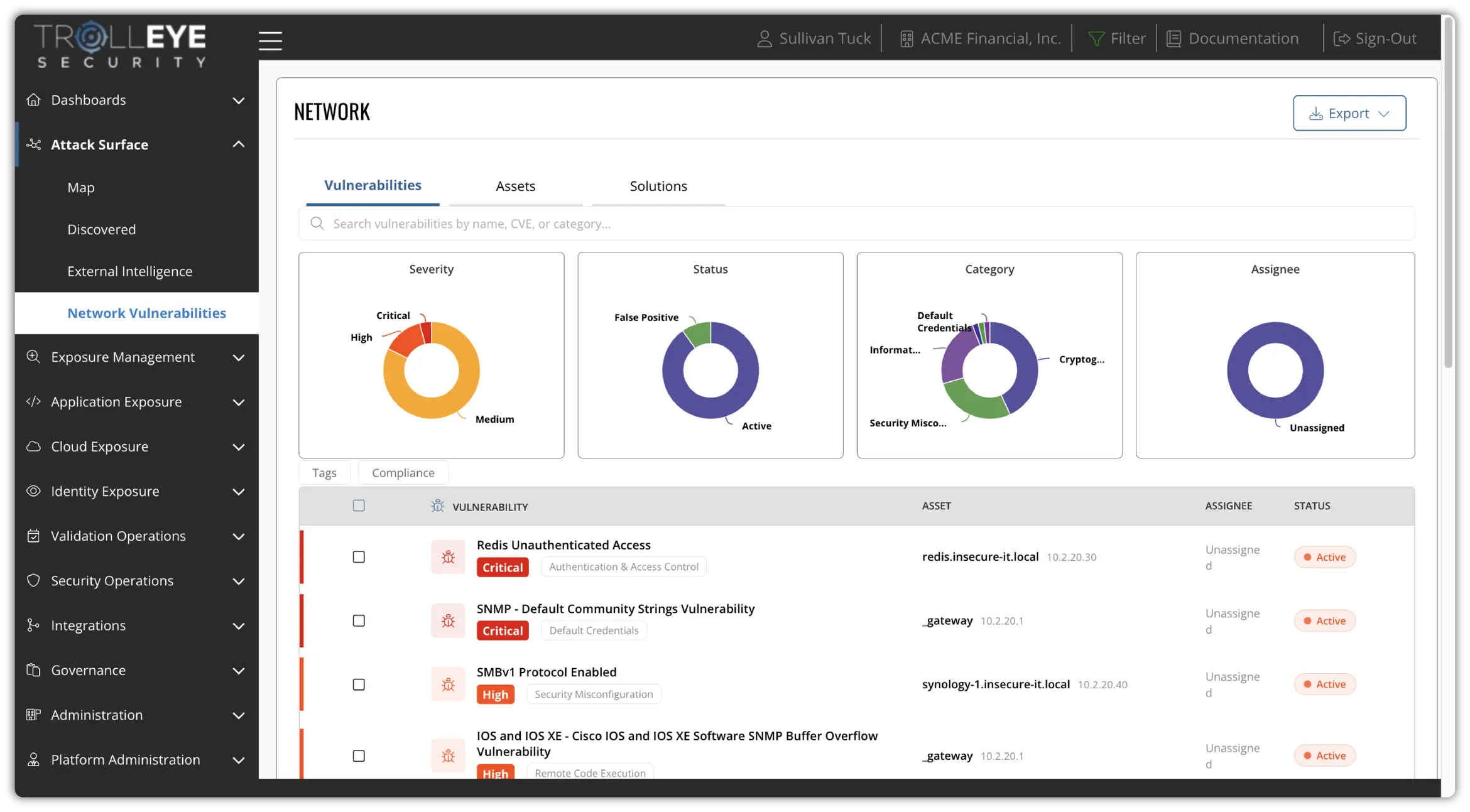
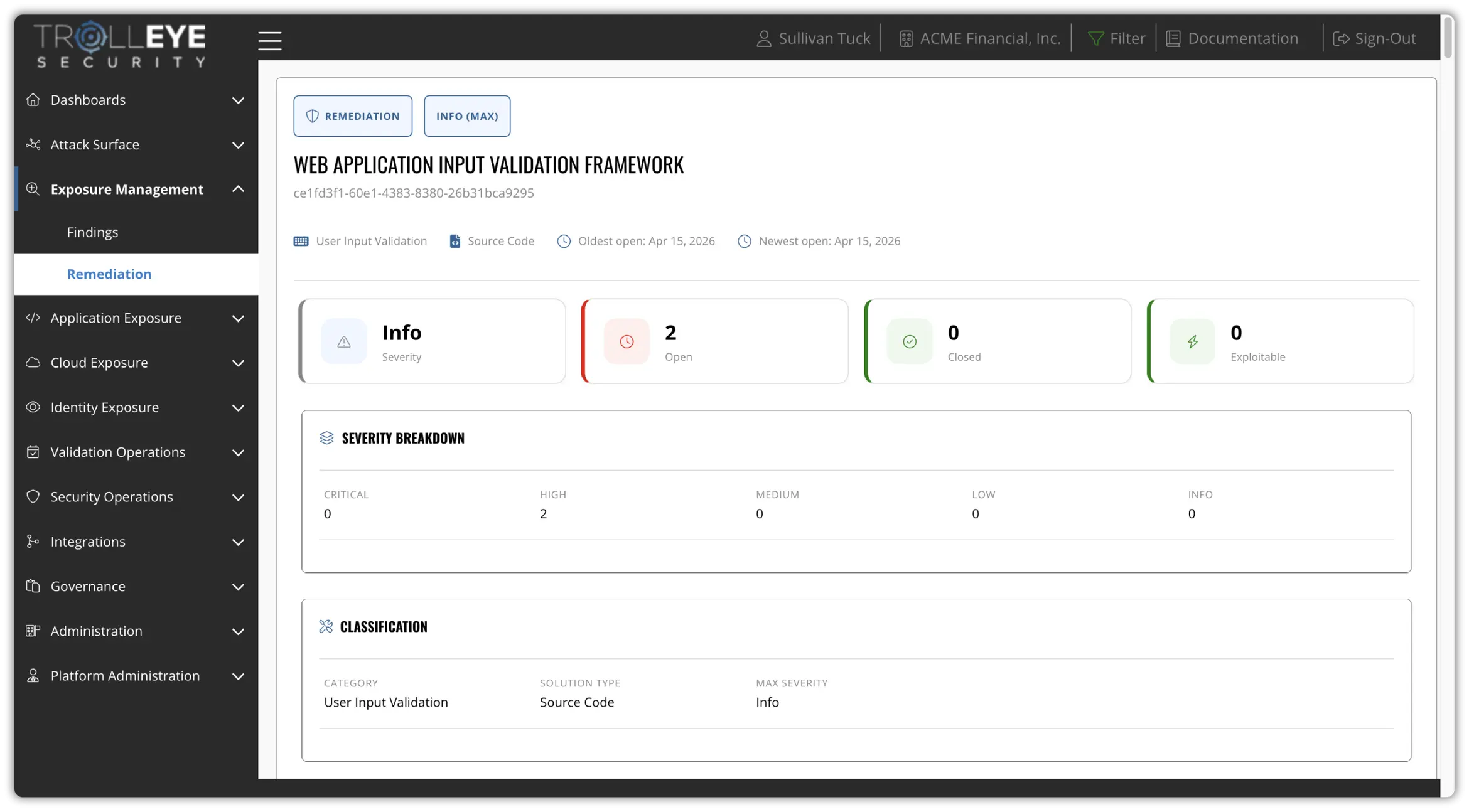
Years of security investment. Tested like a real attack.
General Bank of Canada needed to know whether its controls would hold together against a determined attacker, across the bank and its sister companies. Here’s what a coordinated red team found.
Controls that held when it counted.
- Dark web intelligence gathering on exposed information an attacker could use
- Phishing and external testing against people and internet-facing systems
- Physical intrusion attempts against facilities
- Incident response tested alongside the controls
“Their methodology closely mirrored real-world attack scenarios and provided a more accurate picture of our security posture than standard vulnerability scanning.”

Questions About Securing Financial Institutions
A closer look at how TrollEye works for banks and fintech companies: testing, exam evidence, core platforms, vendor risk, and how it all fits your CTEM program.
01How is this different from our annual penetration test?
An annual test shows your exposure on one day. Your core integrations, vendors, digital channels, and releases keep changing after it.
TrollEye delivers agentic and human testing on demand and continuously through PTaaS, validates what is actually exploitable and reachable, routes fixes to owners, and retests to confirm closure.
02Will this satisfy our examiners?
TrollEye doesn’t replace your compliance program, but it gives you the evidence examiners ask for: testing history, validated findings, ownership, remediation SLAs, and retest records, kept current all year.
That record supports requirements in the FFIEC IT Examination Handbook, NYDFS Part 500, the GLBA Safeguards Rule, PCI DSS, and OSFI B-13.
03Do you work with Jack Henry and Fiserv environments?
Yes. We’ve worked with institutions running Jack Henry and Fiserv cores, along with the digital banking, payment, and integration layers that connect to them.
Testing focuses on what your institution controls: infrastructure, integrations, authentication, and access paths around the core, scoped with your team.
04Can our in-house red team use the platform?
Yes. In-house red teams can use the TrollEye platform themselves, so their findings sit alongside ours with the same validation, ownership, SLAs, and retesting.
05How does this help with third-party and vendor risk?
Vendor assessments tell you how a provider manages its own security. TrollEye tests your side of each connection: the integrations, APIs, access paths, and configurations you control.
Learn more in our CTEM vs. TPRM guide.
06How does this fit into a CTEM program?
TrollEye applies each CTEM stage to your institution: scoping the core platforms, channels, and vendors that matter, discovering every access path, prioritizing by the customer and financial data at risk, validating what is actually exploitable and reachable, and mobilizing owners to close it.
Explore validated findings, continuous testing, remediation, and audit readiness before starting your evaluation.
Your next exam will ask what changed. Have the answer.
See how TrollEye validates what matters, directs the fixes, and builds the record your institution needs.