Critical Infrastructure: A Growing Target for Adversarial Nations
As reported by Dark Reading, nation-state actors are increasingly setting their sights on water and wastewater systems, a troubling trend highlighted by recent incidents in Norway, Poland, and the United States. These attacks point not only to the vulnerabilities of aging water infrastructure but also to the broader geopolitical stakes tied to control over essential resources.
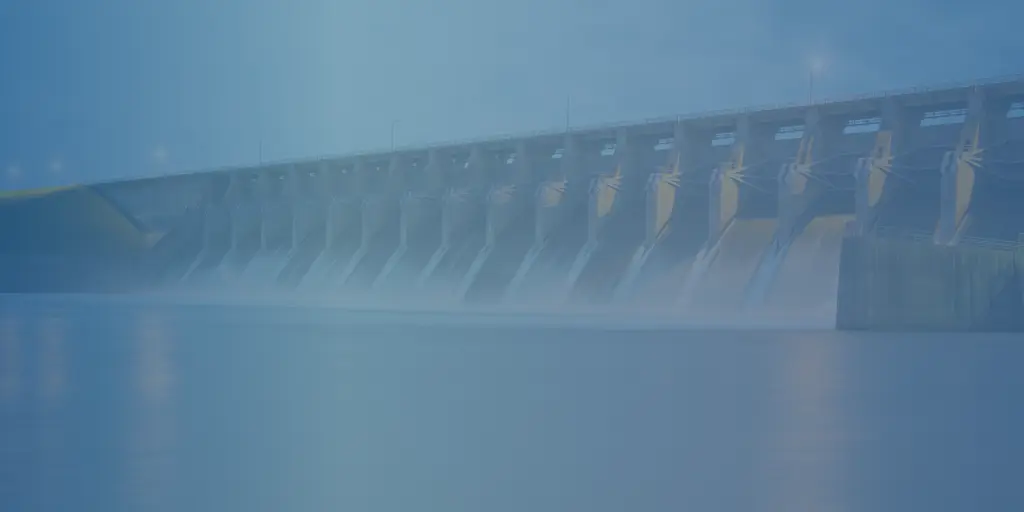
On August 13th, Norway’s counter-intelligence agency attributed an April cyberattack on a dam to Russian hackers. The intruders manipulated floodgates, releasing roughly 500 liters of water per second for four hours. While the incident stopped short of catastrophic damage, officials warned the true aim was to create unrest and showcase capabilities. Russia has denied any involvement.
The Polish government also recently pointed to Russian involvement in an attempted disruption of a large city’s water supply, an attack that could have left thousands without access to clean water. And in the United States, water utilities have seen growing cyber pressure from both state-linked actors and ransomware groups.
According to the Water Information Sharing and Analysis Center, 19% of utilities reported a cyber incident in just the first quarter of 2025.
A Changing Focus From Ransomware to Geopolitics
Attacks on water utilities aren’t just increasing in frequency, but shifting in purpose. Where ransomware campaigns dominated 2023 and 2024, recent operations increasingly serve political rather than financial goals. Russian, Iranian, and Chinese actors have all been linked to campaigns targeting operational technologies such as programmable logic controllers, which can give attackers direct influence over physical processes.
The risks are not hypothetical; a Chinese-linked threat group reportedly maintained persistence within a Massachusetts water and power utility for over 300 days, according to findings by industrial cybersecurity specialists. Long-term access to these systems suggests adversaries are mapping weaknesses now with the option to cause disruption later.
Building Defenses With Limited Resources
Part of what makes water and wastewater systems attractive targets is their limited investment in cybersecurity. Many operate on outdated hardware and software, often with default passwords and exposed remote services like Telnet or SSH. Networks are frequently poorly segmented, meaning a single foothold can give attackers broad access. Compared to heavily fortified financial or defense systems, the barrier to entry is low.
Efforts are underway to help close these gaps. The DEF CON Franklin initiative, launched after a nine-month pilot in four U.S. states, pairs volunteer security experts with small utilities that lack resources for professional cyber defense. Partnering with industry associations, the project has already helped rural providers identify and fix critical vulnerabilities.
States are also taking action, supported by federal grant programs. Hawaii has allocated funds to monitor local government services and utilities, while New York has adopted consistent regulations to raise the baseline for water infrastructure security. Experts emphasize that even modest steps, such as applying the SANS 5 Critical Controls for industrial environments, can significantly reduce risks by tightening configurations, monitoring activity, and ensuring response plans are in place.
The Importance of Protecting Critical Infrastructure
Water is more than a service; it’s an essential lifeline. The increasing pace of cyberattacks on utilities reveals just how fragile this cornerstone of modern society can be. Left unprotected, water and wastewater systems risk becoming pawns in global power struggles, leaving communities to bear the consequences.
At TrollEye Security, we have seen firsthand how these challenges impact utilities. Our continuous security services, including PTaaS, Dark Web Analysis, and Managed SIEM with Purple Teaming, give providers ongoing visibility into exposures and a rapid path to remediation, helping them stay ahead of nation-state threats.
With adversaries increasingly turning their focus to critical infrastructure, utilities need more than periodic checks; they need continuous security. That’s the standard we deliver, keeping essential services resilient against the next wave of cyberattacks.