

What is Zero Trust Architecture?
As many of you already know, in today’s threat landscape traditional security models that rely on perimeter defenses are inadequate. Remote work, cloud computing, and interconnected systems have eroded the boundaries of corporate networks, making it clear that the old adage of “trust but verify” is no longer sufficient. Zero Trust Architecture (ZTA) is a mindset shift that redefines the approach to cybersecurity by eliminating implicit trust and enforcing rigorous, continuous verification.
Zero Trust is more than just a buzzword; it represents a comprehensive security framework designed to protect modern digital environments. At its core, ZTA operates on the principle of “never trust, always verify,” ensuring that every user, device, and application is authenticated and authorized regardless of their location within or outside the network. This approach minimizes the attack surface and significantly reduces the risk of unauthorized access and lateral movement within the network.
What is Zero Trust Architecture?
Zero Trust Architecture (ZTA) is a security model that challenges the traditional notion of perimeter-based defenses. Unlike conventional security strategies that assume anything within the network perimeter is trusted, ZTA operates on the principle that no entity, whether inside or outside the network, should be inherently trusted. Every user, device, and system interaction is subject to verification and authorization, creating a more secure environment.
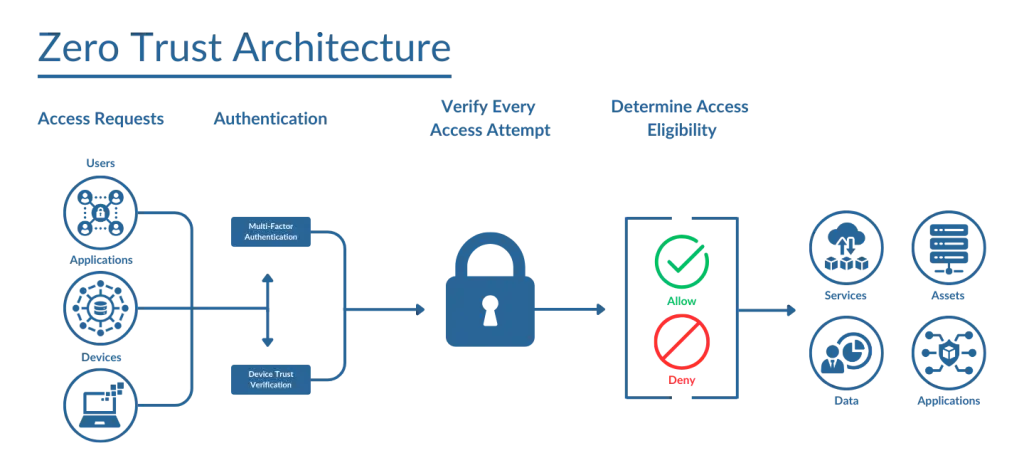
The core concept of Zero Trust is built around the idea that trust is not a one-time event but a continuous process. This approach ensures that access is granted based on strict identity verification, device posture assessment, and contextual factors like the user’s location or the sensitivity of the data being accessed. ZTA also emphasizes the need for micro-segmentation, where network resources are divided into smaller segments, each with its own security controls. This minimizes the risk of lateral movement within the network, even if a breach occurs.
Zero Trust is not a single product or solution but a holistic approach that encompasses various technologies and practices, such as multi-factor authentication (MFA), least privilege access, continuous monitoring, and encrypted communication. Implementing Zero Trust requires a shift in mindset, where security is no longer seen as a perimeter defense but as a continuous, integrated process that touches every part of the organization.
The Benefits of Zero Trust Architecture
Adopting a Zero Trust Architecture (ZTA) brings a multitude of benefits that extend far beyond the traditional perimeter-based security models. As organizations face increasingly sophisticated cyber threats, the advantages of implementing ZTA are becoming more apparent.
One of the most significant benefits of ZTA is its ability to drastically improve an organization’s security posture. By continuously verifying every access request and enforcing strict authentication and authorization protocols, ZTA minimizes the risk of unauthorized access. This approach ensures that even if an attacker gains access to one part of the network, they are prevented from moving laterally and causing further damage.
Zero Trust reduces the attack surface by limiting access to only what is necessary for each user or device, following the principle of least privilege. This minimizes the number of potential entry points that attackers can exploit, thereby reducing the overall risk of a breach. Additionally, micro-segmentation within the network further isolates sensitive resources, making it harder for attackers to navigate the system even if they penetrate the perimeter.
With ZTA, organizations gain enhanced visibility into network activity. Every user and device interaction is logged and monitored, providing valuable insights into potential threats and abnormal behaviors. This continuous monitoring allows for real-time threat detection and response, enabling organizations to act swiftly to contain and mitigate risks before they escalate.
The shift towards remote work and the adoption of cloud services have blurred the traditional network boundaries, making it challenging to secure corporate data. ZTA is designed to operate effectively in these decentralized environments by securing access regardless of the user’s location or the device they are using. This adaptability ensures that security controls remain consistent, whether employees are working from the office, home, or on the go.
Many industries are subject to strict regulatory requirements regarding data protection and cybersecurity. Implementing a Zero Trust model helps organizations meet these compliance obligations by enforcing stringent access controls, encryption, and continuous monitoring. By aligning with ZTA principles, organizations can demonstrate to regulators and customers alike that they are committed to maintaining the highest standards of security.
Insider threats, whether from malicious intent or accidental actions, pose a significant risk to organizations. Zero Trust mitigates these risks by enforcing continuous verification and limiting access based on contextual factors. This ensures that even trusted employees cannot access data or systems beyond their specific roles, reducing the potential impact of insider threats.
In sum, Zero Trust Architecture offers a robust framework that addresses the shortcomings of traditional security models. By emphasizing continuous verification, least privilege access, and micro-segmentation, ZTA not only enhances security but also provides organizations with the flexibility and control needed to protect their digital assets in a rapidly evolving threat landscape.
How to Implement Zero Trust Architecture
Implementing Zero Trust Architecture (ZTA) is a strategic process that requires careful planning, a shift in mindset, and the integration of various technologies. While the journey to Zero Trust can be complex, it is essential for building a resilient cybersecurity framework. Below are the key steps to effectively implement ZTA in your organization.
By following these steps, your organization can successfully transition to a Zero Trust Architecture, creating a robust defense against modern cyber threats. While the implementation process may require time and resources, the resulting security benefits far outweigh the investment, positioning your organization to thrive in an increasingly hostile digital landscape.
As cyber threats continue to evolve, the need for Zero Trust becomes more pressing. By starting the transition now and committing to the ongoing process of refining and strengthening your security architecture, your organization can achieve a higher level of protection and peace of mind. Zero Trust is not just a strategy—it’s the foundation for a secure future.