The Complete Guide to CTEM Platforms
Understand what CTEM platforms should deliver, how solutions differ, and what matters when choosing technology that turns exposures into measurable risk reduction.
Finding Exposures Is Only the Beginning.
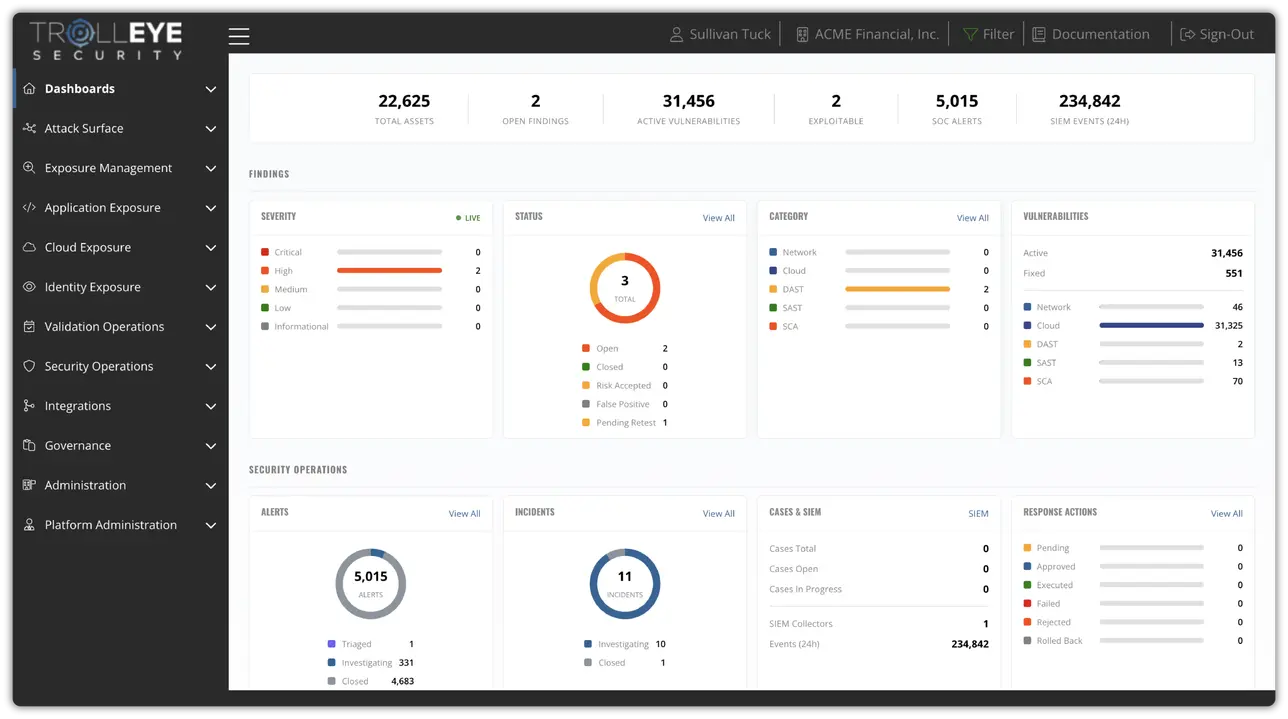
Security teams use scanners, attack surface management, AppSec tools, and penetration testing to identify weaknesses. But disconnected findings and fragmented workflows can make risk reduction difficult.
CTEM connects these activities into one continuous process. Platforms help teams identify what matters, validate threats, coordinate remediation, and measure improvement.
Five Stages. One Continuous Process.
CTEM connects business priorities, security testing, and remediation through five stages.
Scoping
Identify critical assets and business priorities.
Discovery
Find assets, weaknesses, and exposures.
Prioritization
Focus on the risks that matter most.
Validation
Prove what is exploitable and reachable.
Mobilization
Coordinate remediation and verify fixes.
What Is a CTEM Platform?
CTEM platforms support the broader exposure management lifecycle, rather than focusing on one security function.
Depending on the solution, they combine native technology, integrations, automation, and expert services to move findings toward verified remediation.
How CTEM Connects Security Activities
CTEM Framework vs. Program vs. Platform
These concepts work together, but serve different purposes.
Framework
The five-stage approach to managing cyber exposures.
Program
The people, processes, and responsibilities that put CTEM into practice.
Platform
The technology that supports, connects, and measures exposure management activities.
The Goal Is Risk Reduction, Not More Findings.
A CTEM platform should make it easier to identify meaningful exposures, validate risks, coordinate remediation, and demonstrate measurable improvement. The following sections explain which capabilities and evaluation criteria make that possible.
Native CTEM Platforms vs. Aggregation-Based Solutions
The previous section showed how CTEM relates to the tools already in your security stack. The next question is how a platform brings those capabilities together. In practice, every CTEM platform does some of both: it delivers certain functions natively, consolidating tools you would otherwise license and manage separately, and it aggregates data from the specialist tools you keep.
The difference between solutions is how far they lean in each direction. A native CTEM platform delivers most of the lifecycle, including discovery, prioritization, validation, and remediation management, within one operating environment and integrates outside tools where they add value. An aggregation-based platform works primarily as a layer on top of your existing stack, collecting and correlating findings from other products to coordinate the lifecycle.
Neither approach is automatically better. Where a platform sits on that spectrum shapes implementation, operational dependencies, testing depth, integration requirements, and the total cost of managing exposure.

Native CTEM Platform
Core exposure management functions operate within a single platform, with integrations extending capabilities where needed.
Potentially fewer dependencies between separate products, with core capabilities and workflows managed in one platform. The depth of native functionality must still be demonstrated.
Aggregation-Based CTEM
A central platform correlates information from specialized security products and may coordinate prioritization, reporting, or remediation.
Can preserve investments in existing specialist tools and bring their findings together. Effectiveness depends on integration quality, data freshness, and available underlying capabilities.
These diagrams illustrate two common architectural approaches, not mutually exclusive product categories. Most enterprise platforms combine native functionality with external integrations to some degree.
How the Two Approaches Compare
Key considerations for platform evaluation| Evaluation Area | Native CTEM | Aggregation-Based CTEM |
|---|---|---|
| Core Capabilities | Selected discovery, validation, and remediation functions operate directly within the platform. | Many underlying functions are provided by connected security products. |
| Implementation | May reduce cross-product setup, although deployment and configuration are still required. | May reuse the current stack but requires connector configuration and data reconciliation. |
| Validation | May provide built-in testing and a consistent evidence workflow. | Often depends on integrated validation tools or expert testing services. |
| Remediation | May manage initiatives, ownership, and verification natively while syncing external tools. | May orchestrate remediation through connected ticketing and operational systems. |
| Tool Consolidation | Can potentially replace overlapping products where native capabilities meet requirements. | Often retains specialist tools while consolidating visibility and coordination. |
| Cost & Complexity | Evaluate subscription, services, native coverage, and which existing tools can be retired. | Evaluate platform fees plus underlying licenses, connectors, maintenance, and internal labor. |
The answer depends on your existing security investments, internal resources, integration requirements, and the capabilities you need. A native approach may simplify operations and reduce overlap. An aggregation-based approach may be attractive when existing specialist tools already deliver substantial value.
Before selecting a platform, verify:
- Which capabilities are genuinely native?
- Which functions require other licenses or services?
- Can the vendor demonstrate validation through remediation?
- What happens if a connected tool or integration fails?
- Which existing tools could realistically be replaced?
- What is the full cost of operating the solution?
The Five Stages of CTEM and the Capabilities Behind Them
Continuous Threat Exposure Management follows five interconnected stages: scoping, discovery, prioritization, validation, and mobilization. Each stage answers a different question, from determining which business assets matter most to confirming that security exposures have actually been addressed.
The eight essential capabilities of a CTEM platform map directly to these stages. Select a stage to see what the platform should support, the capabilities that power it, what to verify in a demo, and an example from the TrollEye CTEM platform.
Scoping
Scoping identifies which business operations, assets, and environments require the greatest attention. Rather than treating every system as equally important, organizations establish priorities based on operational dependencies and the potential consequences of compromise.
What the Platform Should Support
- Grouping assets by business function, environment, or ownership.
- Identifying critical systems and operational dependencies.
- Associating asset importance with exposure data.
- Defining and updating assessment scope over time.
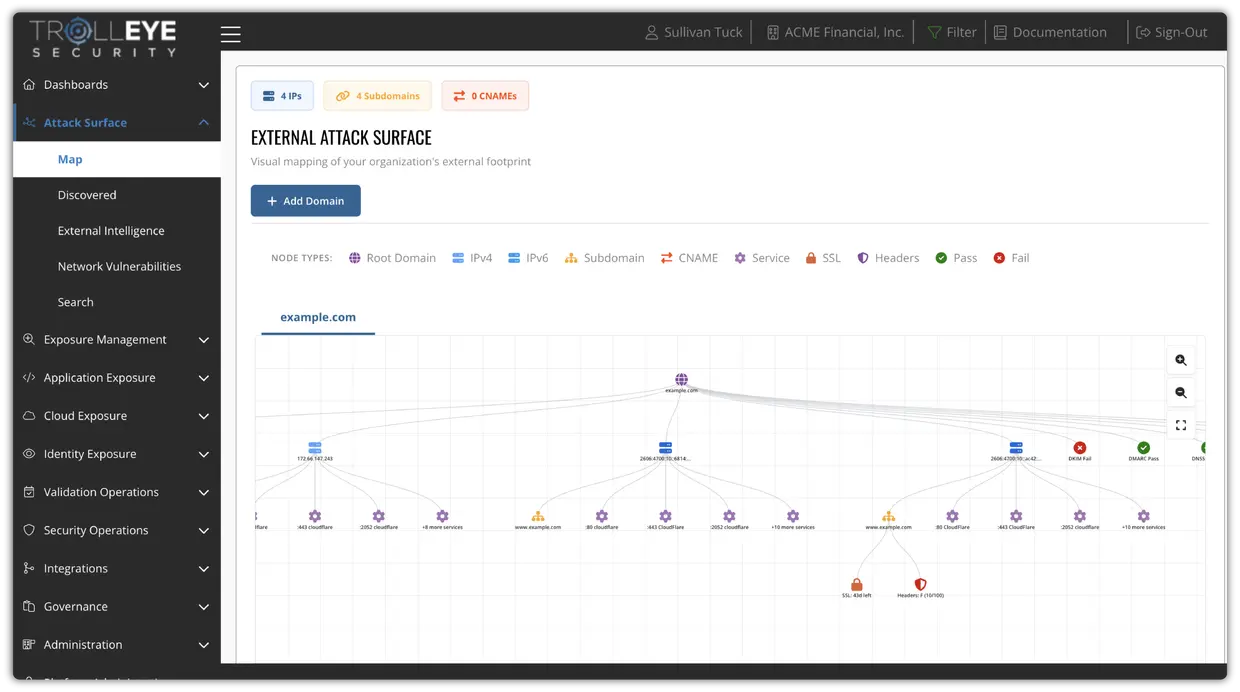
Visualizing the attack surface helps teams understand relationships between assets when defining assessment scope.
Attack Surface & Business Context
Map assets across the attack surface (network, applications, cloud, and identity) and connect them to the business functions, owners, and dependencies they support.
Provide consistent asset, ownership, and relationship views, with business criticality that carries forward into prioritization and remediation.
Without business context, every asset looks equally important, and accountability for exposures is difficult to assign.
Discovery
Discovery identifies the assets, vulnerabilities, misconfigurations, identities, and other conditions that could create opportunities for attackers. Effective discovery must account for environments that continuously change.
What the Platform Should Support
- Coverage across infrastructure, applications, cloud, identities, and external assets.
- Continuous or regularly refreshed exposure identification.
- Correlation of related assets and findings.
- Identification of unmanaged or previously unknown assets.
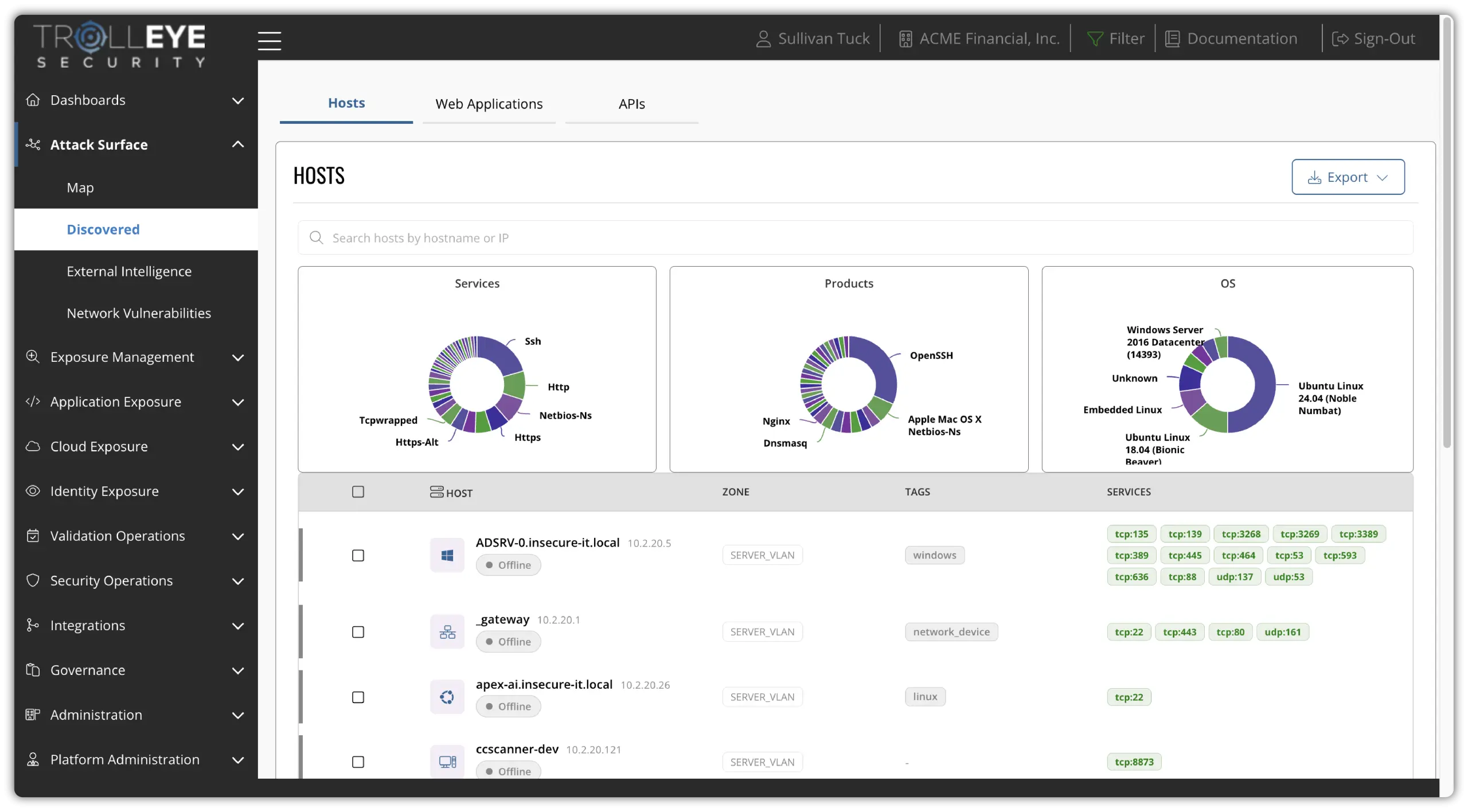
The host inventory provides a view of identified systems and their associated exposure information.
Continuous Discovery
Continuously identify new and changing assets, vulnerabilities, and other exposures as environments evolve.
Support recurring or event-driven discovery across relevant environments, with clear information about coverage and data freshness.
New systems, configuration changes, and emerging vulnerabilities create exposure between periodic assessments.
Prioritization
Prioritization evaluates exposures using more than technical severity. Known exploitation, exploitability, reachability, business importance, and available security controls can significantly change which findings deserve immediate attention.
What the Platform Should Support
- Combining severity with threat and business context.
- Considering exploitation evidence and reachability.
- Understanding relationships and potential attack paths.
- Providing transparent reasons for assigned priorities.
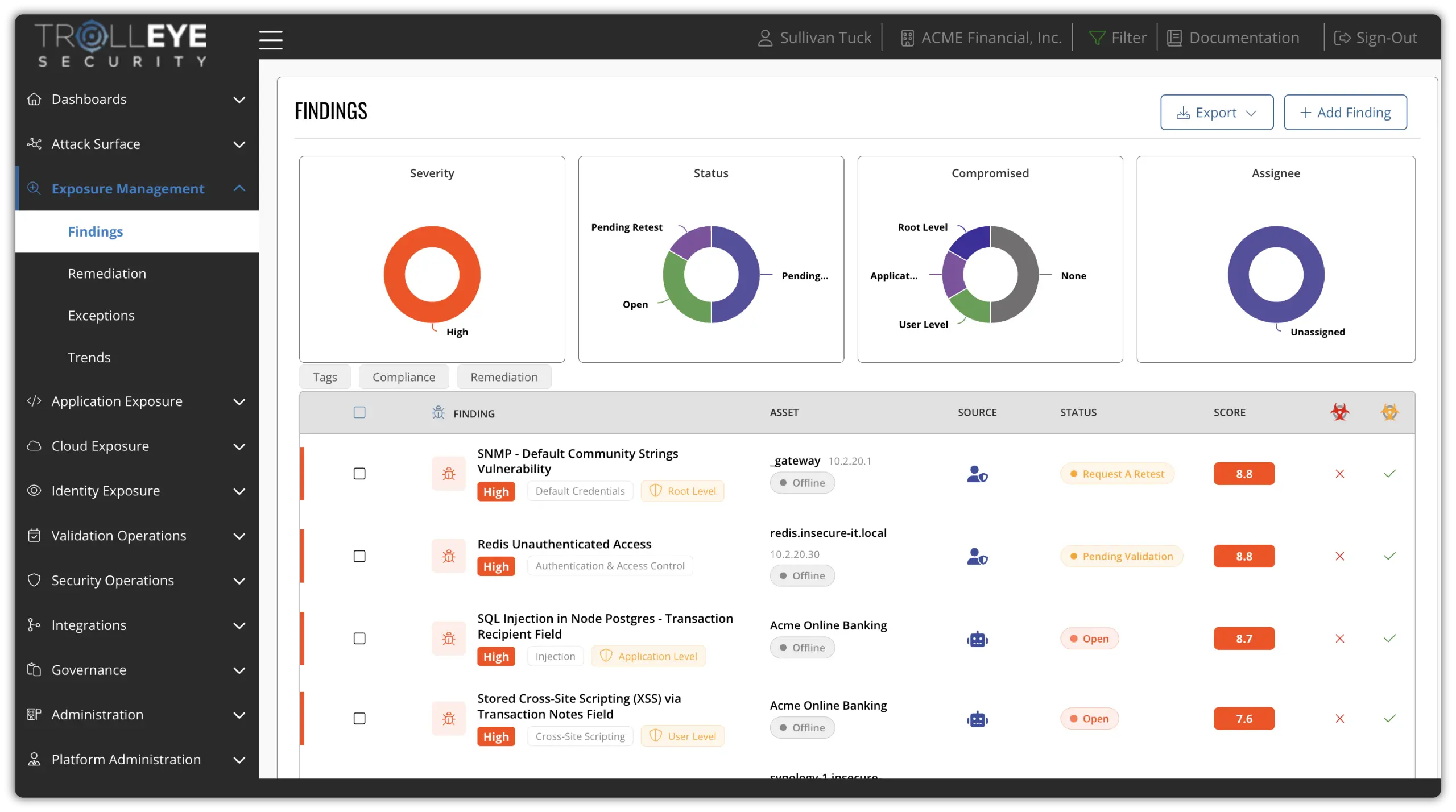
Security findings give teams a centralized starting point for reviewing exposures and determining remediation priorities.
Risk-Based Prioritization
Identify exposures that deserve attention based on more than technical severity.
Use exploitation evidence, exploitability, reachability, severity, and business context to establish priorities.
Limited remediation resources should be directed toward exposures with the greatest potential impact.
Validation
Validation tests whether selected exposures can realistically be exploited and examines the possible consequences. This may include automated validation, attack simulation, penetration testing, and expert investigation.
What the Platform Should Support
- Automated assessment of appropriate attack scenarios.
- Agentic and human testing to prove exploitability.
- Evidence supporting the results of testing.
- Connecting validation outcomes to prioritization and remediation.
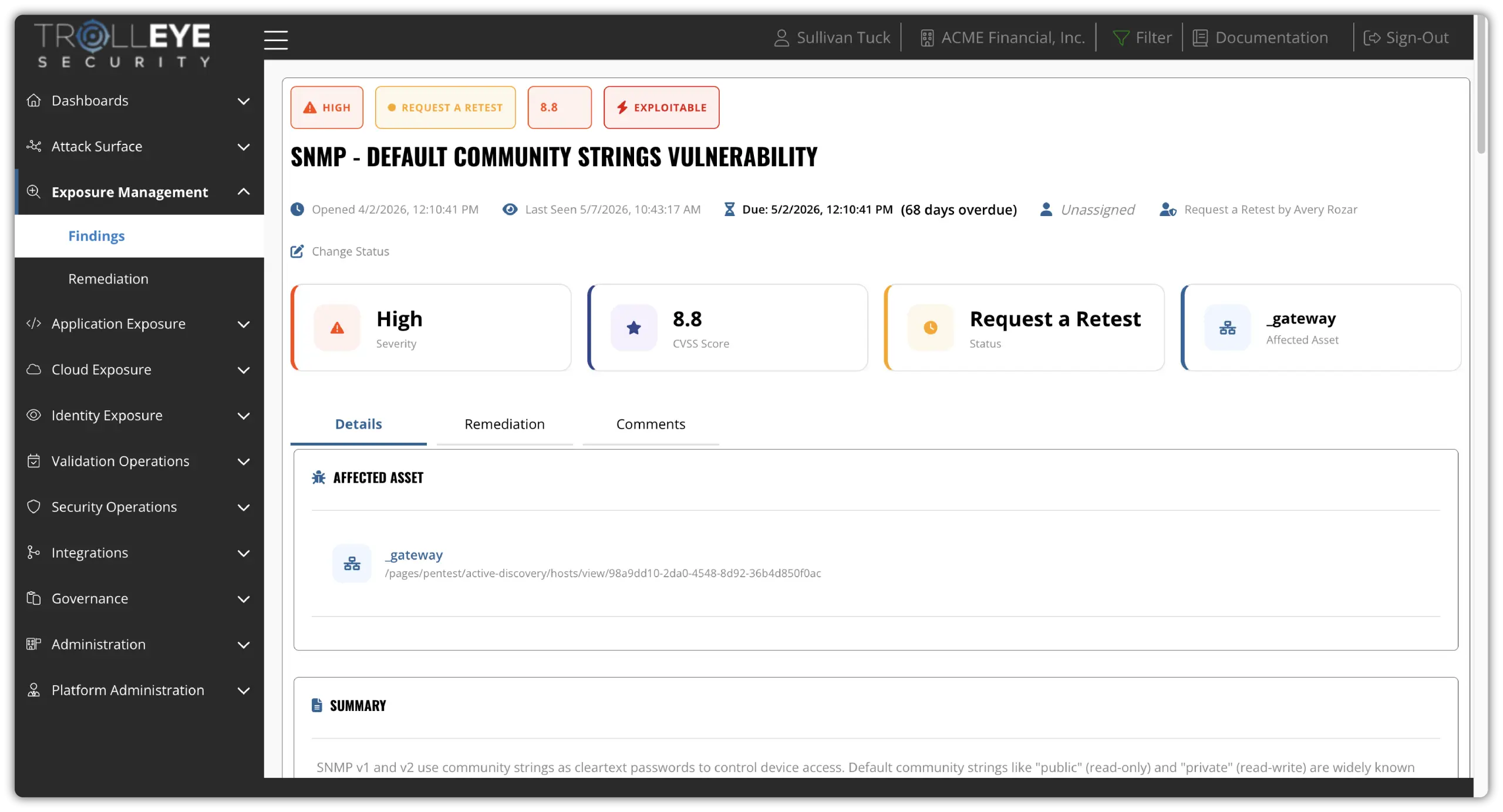
Detailed findings help teams review supporting information and testing evidence when available.
Automated Exposure Validation
Use controlled automated testing to gather evidence about selected exposures and their exploitability.
Perform appropriate checks or simulations and document results, testing scope, and limitations.
Validation helps distinguish theoretical findings from realistic attack opportunities.
Agentic & Human Validation
Combine agentic testing at scale with expert human testers to prove which exposures are actually exploitable and reachable, including complex attack chains that automation alone may miss.
Capture agentic and human testing evidence within the exposure management workflow, linked directly to the findings it confirms.
Expert judgment is essential for chained exploits and business logic weaknesses, while agentic testing extends coverage and frequency.
Mobilization
Mobilization converts security findings into coordinated remediation work. Teams establish accountability, address root causes, track resolution, and confirm that corrective action has eliminated or adequately reduced the exposure.
What the Platform Should Support
- Routing findings to the right teams and owners.
- Integration with ticketing and operational workflows.
- Grouping related findings into remediation initiatives.
- Tracking progress and verifying completed fixes.
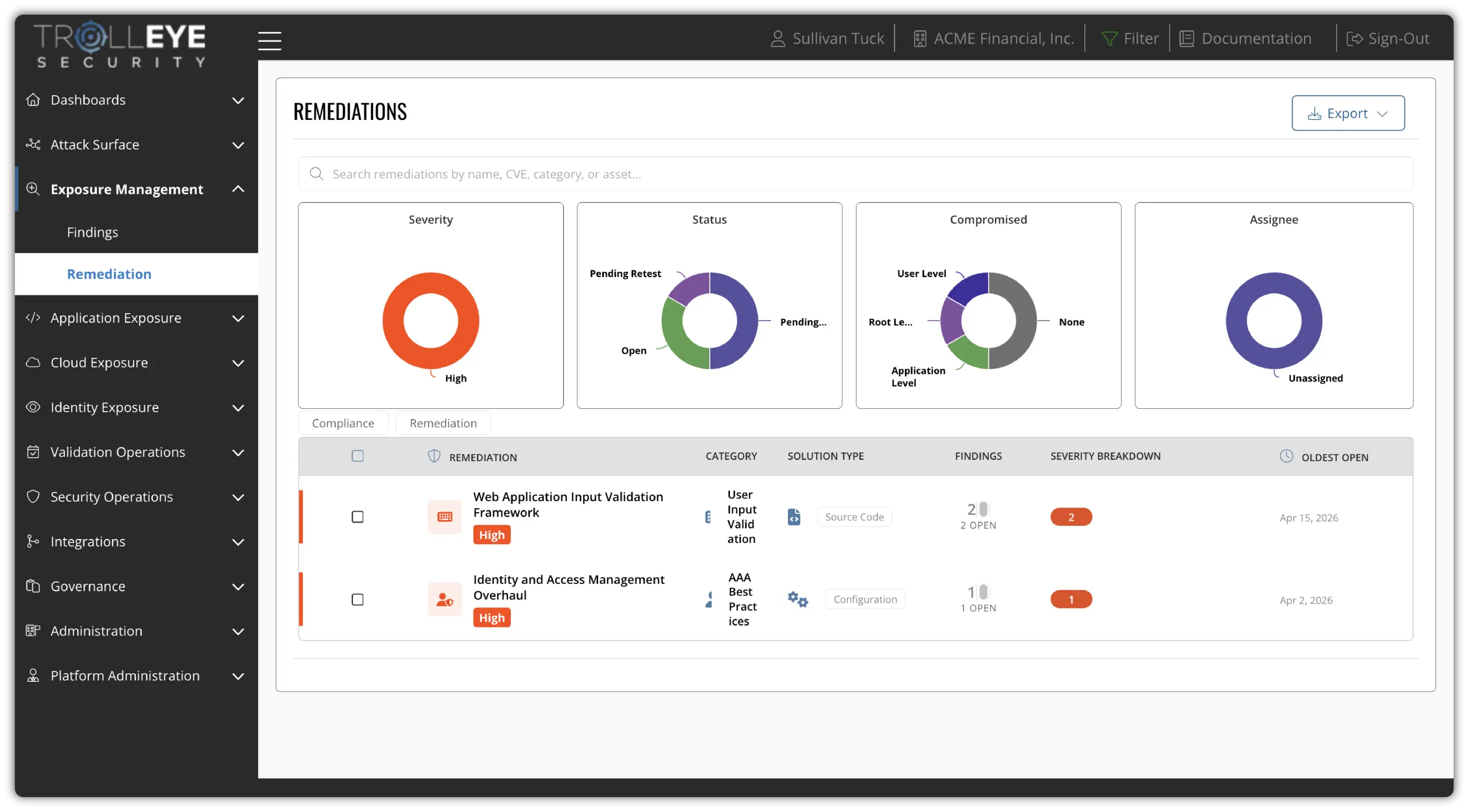
Remediation management helps connect findings with corrective work, ownership, and resolution tracking.
Remediation Management
Turn prioritized exposures into assigned work and verify that corrective actions have been effective.
Manage ownership, remediation initiatives, root causes, progress, and retesting or verification.
Prioritized findings do not reduce risk until the organization acts on them.
Integrations & Workflow Automation
Connect exposure management with existing security tools, ticketing systems, and operational teams.
Exchange data reliably, automate appropriate workflows, and synchronize ownership and remediation status.
Disconnected systems create manual work, inconsistent reporting, and unnecessary operational friction.
Measure changes in meaningful exposure and demonstrate whether the security program is improving.
Report on priority exposure trends, verified remediation, recurring weaknesses, and critical asset coverage.
Leadership needs evidence of improvement, not just counts of vulnerabilities discovered or tickets closed.
Turning CTEM Into an Operating Model: Platform + Expert Services
Technology makes continuous exposure management possible, but people are still needed to validate complex threats and guide remediation. Organizations can use internal expertise, external specialists, or both to turn CTEM into an effective security program.
CTEM Platform
Connects and automates the exposure management lifecycle.
Expert Security Services
Provide specialized testing, judgment, and operational support.
What a Successful CTEM Program Should Deliver
More Efficient Operations
Connect security activities and reduce the friction of disconnected tools and workflows.
Sustained Risk Reduction
Focus on meaningful threats, address root causes, and verify that remediation worked.
Measurable Improvement
Demonstrate progress through exposure trends, remediation verification, and reporting.
TrollEye: Native CTEM Platform + Expert Services
TrollEye brings the five CTEM stages into one native platform, backed by optional expert services, including agentic and human penetration testing. Rather than relying on third-party products for every core capability, it combines integrated workflows with connections to specialist tools where they add value.
Explore the Platform →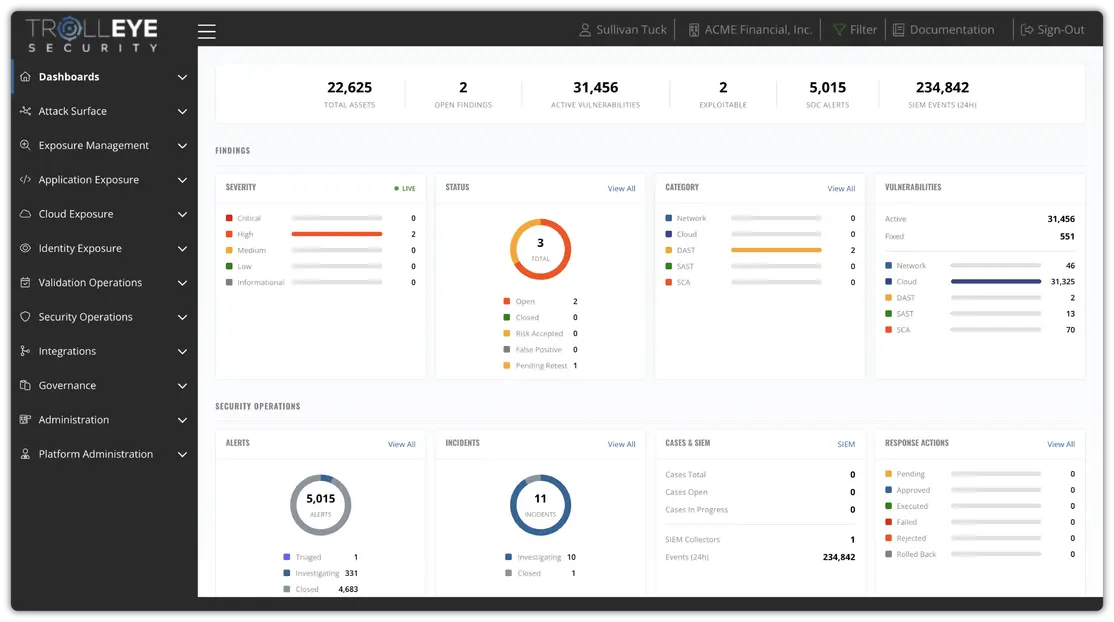
Stop Managing Findings. Start Reducing Risk.
See how TrollEye combines continuous discovery, prioritization, validation, and remediation in a native CTEM platform backed by expert security services.